Mission WC! India Women’s Hockey Team Starts FIH World Cup Qualifiers Versus Uruguay
Overview of the Qualifier Tournament
The International Hockey Federation (FIH) has assembled eight national squads to contest a high‑stakes qualification event. The line‑up consists of India, England, Scotland, Korea, Italy, Uruguay, Wales and Austria. Each side will battle for a limited number of slots that grant access to the global championship.
Three direct World Cup berths are on the line. The teams finishing first, second and third in this competition secure immediate entry to the Women’s World Cup that will be co‑hosted by Belgium and the Netherlands. In addition, the tournament structure provides a safety net for the highest‑ranked side that finishes fourth, allowing that nation to claim a spot despite missing the top three placements.
The format divides the eight participants into two pools of four. Pool A groups England, Korea, Italy and Austria, while Pool B contains India, Scotland, Uruguay and Wales. The top two squads from each pool advance to the semifinal round, after which winners of the semifinals and the victor of the bronze‑medal match earn the coveted World Cup places.
India’s Campaign and Leadership
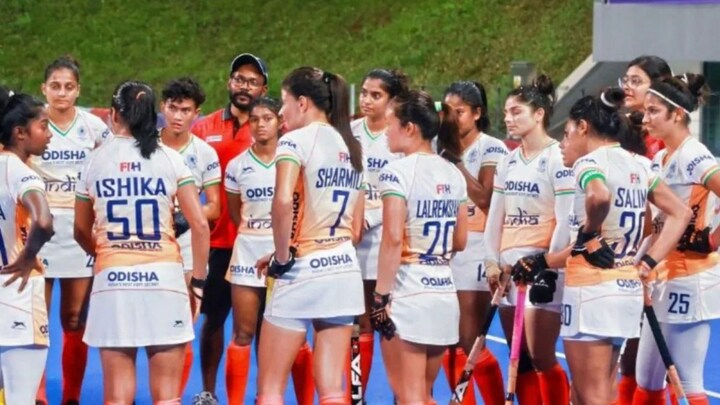
India launches its qualifier journey against Uruguay. The match kicks off under the guidance of coach Sjoerd Marijne, who returns to helm the side after a previous tenure that concluded following a historic fourth‑place finish at the Tokyo Olympic Games. This assignment marks Sjoerd Marijne’s first challenge since rejoining the program.
India enters the tournament ranked ninth worldwide, positioning the nation as the second‑highest seed among the eight competitors. Only England, ranked seventh, sits above India in the world rankings. This placement underscores the expectations placed on India to perform strongly throughout the qualifiers.
“We are really excited to play the qualifiers at home in front of our fans. The team has been preparing very hard for this tournament because we know what is at stake. Every team here is competing for a place in the World Cup, so we expect tough matches from the start,” said India captain Salima Tete.
Salima Tete’s remarks capture the blend of optimism and realism that characterises India’s outlook. The squad has undertaken intensive preparation, aware that the margin for error is thin when World Cup aspirations are on the line.
Based on current world rankings, India stands as the favorite in the opening clash with Uruguay. While historical performance suggests a dominant display, India acknowledges that a lapse in concentration could alter the result.
Pool Structure and Match Schedule
Pool B’s composition—India, Scotland, Uruguay and Wales—creates a competitive environment where every fixture carries weight. After the opening encounter with Uruguay, India’s itinerary includes a meeting with Scotland followed by a contest against Wales.
Simultaneously, the other side of the competition proceeds with England facing Italy, Korea taking on Austria, and Scotland clashing with Wales in the early rounds. These matches determine the pool standings that will dictate semifinal pairings.
The advancement criteria are straightforward: the two highest‑placed teams from each pool move on to the knockout stage. Success in the semifinals guarantees a World Cup berth, while the bronze‑medal match offers the final direct qualification slot. Should a fourth‑placed team emerge as the highest‑ranked among those missing the top three, that team also secures a place at the World Cup.
Qualification Stakes and World Cup Context
The upcoming Women’s World Cup will feature sixteen nations in both the men’s and women’s tournaments. Prior to the qualifier event, nine spots in each competition have already been allocated, leaving the remaining positions to be decided through this tournament.
For India, the pursuit of a ninth appearance at the Women’s World Cup carries both historical significance and a drive to improve upon past performances. The nation’s best result traces back to the inaugural edition of the championship, where India finished in fourth place.
The pathway to the World Cup emphasizes consistency, tactical acumen and the ability to thrive under pressure. Each nation in the qualifier pool is aware that a single match can influence the trajectory toward or away from the global stage.
Historical Perspective of India at the Women’s World Cup
India’s participation record in the Women’s World Cup spans eight editions, reflecting a tradition of competitive presence on the world scene. The nation’s debut in the inaugural tournament set a high bar with a fourth‑place finish, a benchmark that remains the best result to date.
Since that early success, India has maintained a steady presence, qualifying for subsequent editions and consistently ranking within the top ten globally. The current ninth‑place ranking reaffirms India’s status as a formidable contender in international women’s field hockey.
Coach Sjoerd Marijne’s previous tenure contributed to India’s historic Olympic performance, and his return is viewed as an opportunity to blend experienced leadership with a refreshed squad. The combination of veteran insight and emerging talent aims to propel India toward a repeat of the early‑stage success achieved in the competition’s first edition.
Salima Tete’s leadership on the field further strengthens India’s prospects. As captain, Salima Tete brings a blend of tactical awareness and motivational capability, attributes that are vital in high‑pressure matches that determine World Cup qualification.