Here’s Why You Should Never Try Makeup Testers In The Mall
From Herpes to E. Coli, experts reveal how your favourite testers could be riddled with diseases
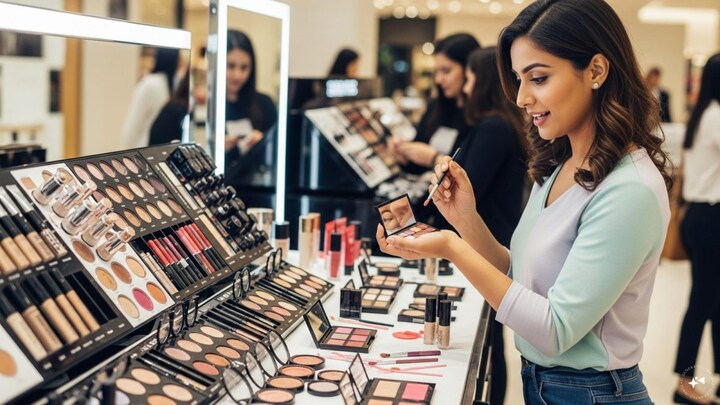
The All‑Too‑Familiar Swatch Ritual
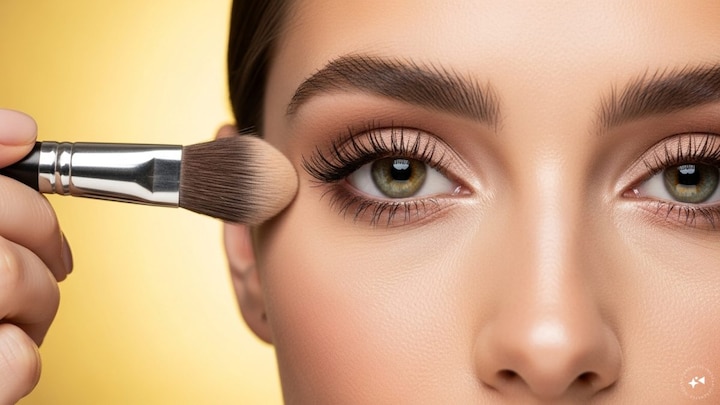
Every shopper who has stepped up to a beauty counter has, at some point, lifted a lipstick or brushed a fingertip across a palette of eyeshadow. The act feels harmless, almost ritualistic, and is often treated as a quick way to gauge shade compatibility before a purchase. However, beneath that seemingly innocent gesture lies a hidden health hazard.
A viral incident several years ago brought this issue into the public eye when a woman claimed to have acquired herpes simplex virus type 1 from a communal lipstick tester. The claim sparked widespread discussion, and the subsequent lawsuit against the retailer underscored the seriousness of the problem.
While many consumers focus on the monetary cost of high‑end cosmetics, the potential long‑term health cost—in the form of a viral infection—can be far more damaging.
Are Mall Beauty Stores Risky?
The danger posed by makeup testers is not a myth spun by internet rumors. The Cleveland Clinic, a leading medical institution, explains that the herpes simplex virus demonstrates remarkable resilience outside the human body. Although the virus thrives best on living tissue, scientific research shows that the herpes simplex virus can survive on moist surfaces, such as a creamy lipstick or a damp mascara wand, for a period sufficient to infect a subsequent user.
Further investigation by dermatologists confirms that both viruses and bacteria are capable of persisting on makeup products for weeks. When a single tester is touched by numerous consumers, that object effectively becomes a petri dish for a broad spectrum of pathogens.
What Is Herpes?
Herpes refers to a group of viruses that are highly contagious and cause recurrent infections in humans. Two primary forms dominate medical literature:
- Herpes simplex virus type 1 (HSV‑1), commonly known as oral herpes, which typically produces cold sores or fever blisters around the mouth.
- Herpes simplex virus type 2 (HSV‑2), commonly known as genital herpes, which is usually transmitted through sexual contact.
Both HSV‑1 and HSV‑2 possess the ability to remain viable on inanimate objects for extended periods, particularly when the environment is moist and nutrient‑rich, such as the surface of a lipstick or a makeup sponge.
The “Hidden” Dangers in the Tester Aisle
The risk extends far beyond the herpes simplex virus. A peer‑reviewed investigation published in the Journal of Applied Microbiology identified that between 70 % and 90 % of used makeup products, inclusive of testers, were contaminated with harmful bacteria such as Escherichia coli and Staphylococcus species. The study highlighted that the presence of these microbes does not require visible signs of contamination; a seemingly pristine tester may harbor microscopic pathogens left behind by the previous user.
Because retail beauty counters often serve hundreds of shoppers in a single day, the likelihood of cross‑contamination approaches certainty. The cumulative effect of repeated contact, combined with the moist nature of many cosmetics, creates an environment where microorganisms can thrive and multiply.
How To Stay Safe While Shopping
Consumers do not need to abandon the experience of testing products, but a shift in technique can dramatically reduce exposure to pathogens. Dermatologists and infection‑control specialists have compiled a set of practical guidelines, often referred to as the “Golden Rules” of beauty hygiene.
- The Hand Hack: Apply any swatch to the back of the hand rather than directly to the face. After swatching, sanitize the hand immediately with an alcohol‑based hand sanitizer.
- Demand Disposables: Insist that the retailer provide single‑use applicators, such as disposable wands, or an alcohol spray designed to disinfect the surface of the tester before each use. If such provisions are absent, refrain from using the tester.
- The Top‑Layer Rule: Request that a staff member scrape away the topmost layer of a lipstick or cream product with a clean spatula before swatching. This practice removes the portion that has been most exposed to previous users.
- Sanitise Post‑Shop: Carry a personal bottle of hand sanitizer and apply it as soon as the makeup aisle is exited, ensuring that any residual microbes are removed before the hands touch other surfaces.
Adhering to these steps does not eliminate every possible risk, but it creates multiple barriers that significantly limit the chance of infection.
Deeper Insight Into Microbial Survival on Cosmetics
Understanding why makeup testers become breeding grounds for pathogens requires a brief exploration of microbial biology. Bacteria such as Escherichia coli thrive in environments that provide moisture, nutrients, and a stable temperature. The creamy consistency of lipsticks, the oily base of foundations, and the water‑based formulation of many eye shadows all supply the essential ingredients needed for bacterial growth.
Similarly, the herpes simplex virus incorporates a lipid envelope that protects its genetic material. This envelope can remain intact on hydrating surfaces for several days, preserving the virus’s ability to infect a new host. Studies conducted by the Cleveland Clinic demonstrate that the herpes simplex virus can remain infectious on a surface for up to seven days under optimal conditions.
When a shopper applies a fresh swatch without disinfection, any virus or bacteria present on the product can be transferred directly to the skin or mucous membranes of the face. The lips, eyes, and nasal passages are particularly vulnerable because they provide direct access to the bloodstream and internal tissues.
What Retailers Can Do to Protect Shoppers
While the responsibility for personal safety ultimately rests with the consumer, retailers have a clear role in reducing the danger associated with communal testers. Recommendations from infection‑control experts include:
- Providing a fresh, single‑use applicator for each shopper and discarding it after use.
- Maintaining a schedule for regular disinfection of all testers with hospital‑grade alcohol wipes.
- Displaying clear signage that encourages customers to use personal hand sanitizer before and after testing.
- Training staff to offer clean spatulas or disposable sticks when a customer requests a new layer of a product.
Implementation of these measures not only protects shoppers but also enhances the reputation of the retailer as a health‑conscious brand.
Conclusion: A Small Change for a Safer Shopping Experience
The allure of trying a shade before purchase is undeniable, yet the hidden microbial world on makeup testers demands caution. By acknowledging the resilience of the herpes simplex virus, the prevalence of bacteria such as Escherichia coli and Staphylococcus on shared cosmetics, and the scientific evidence presented by The Cleveland Clinic and peer‑reviewed studies, shoppers can make informed choices.
Employing the Hand Hack, demanding disposables, insisting on the Top‑Layer Rule, and sanitising immediately after leaving the beauty aisle collectively create a robust defensive strategy. When retailers adopt complementary hygiene protocols, the entire shopping environment becomes safer for everyone.
In the end, the decision to protect oneself does not require abandoning the joy of makeup exploration; it simply requires a mindful shift in how testers are approached. The cost of a single precautionary step is negligible compared with the potential lifelong impact of a viral or bacterial infection.