Kimi Antonelli Secures Victory at Japanese Grand Prix Amid Safety‑Car Intervention
Overview of the Race Outcome
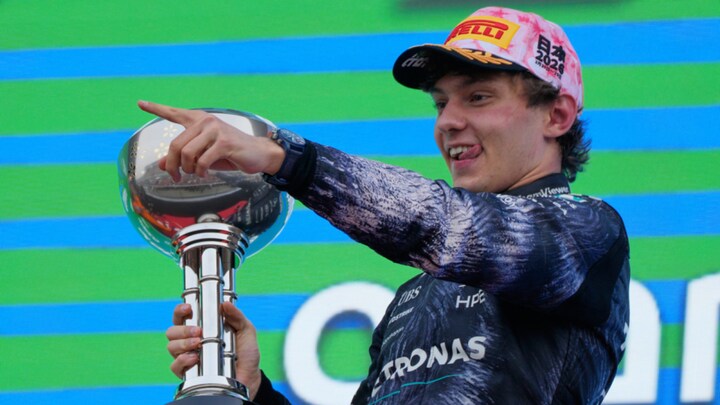
Kimi Antonelli achieved a remarkable victory at the Japanese Grand Prix held at the historic Suzuka circuit, marking a second consecutive triumph in the Formula One season. The win elevated Kimi Antonelli to the position of championship leader, making Kimi Antonelli the youngest driver ever to hold that distinction at the age of nineteen.
The race began with Kimi Antonelli occupying pole position, yet the early laps saw Kimi Antonelli drift back through the field to settle in sixth place. Despite this setback, Kimi Antonelli demonstrated extraordinary pace and strategic acumen, eventually crossing the finish line with a margin of 13.7 seconds ahead of McLaren driver Oscar Piastri. Ferrari driver Charles Leclerc completed the podium, securing third place.
Mercedes teammate George Russell concluded the event in fourth position, while McLaren driver Lando Norris took fifth place. The final points‑scoring position was claimed by Ferrari driver Lewis Hamilton.
Implications for the Championship Standings
The victory at Suzuka built upon Kimi Antonelli’s earlier success in China, extending Kimi Antonelli’s lead in the Drivers’ Championship to nine points over teammate George Russell. By doing so, Kimi Antonelli also became the first Italian driver to record back‑to‑back Formula One wins since the era of Alberto Ascari, whose consecutive victories occurred in 1953.
The points differential places Kimi Antonelli in a commanding position as the season progresses, while George Russell remains firmly within striking distance, preserving the intense rivalry that has characterized the championship battle thus far.
Strategic Developments and the Safety‑Car Influence
Mid‑race strategy played a pivotal role in shaping the final order. As the leading pack, including George Russell, entered the pits for fresh tyre sets, a serious incident involving Haas driver Oliver Bearman precipitated the deployment of the safety car.
The safety‑car period granted Kimi Antonelli the opportunity to execute a pit stop without surrendering track position, allowing Kimi Antonelli to retain the lead once racing resumed. In contrast, George Russell had completed a pit stop a lap prior to the safety‑car activation, leaving George Russell vulnerable to the reshuffling of the field.
Consequently, George Russell expressed frustration over the timing of the safety car, suggesting that the timing adversely affected the outcome for George Russell.
Oliver Bearman’s Accident and Medical Assessment
Haas driver Oliver Bearman suffered a high‑speed incident after rapidly closing the gap on Alpine driver Franco Colapinto. Oliver Bearman’s car left the racing line, touched the grass, and subsequently collided heavily with the circuit barriers.
Following the crash, Oliver Bearman exited the vehicle on his own, albeit with a pronounced limp. Medical personnel conducted an on‑site X‑ray examination at the circuit’s medical centre. The imaging confirmed a contusion to Oliver Bearman’s right knee but revealed no fractures.
Medical officials cleared Oliver Bearman to leave the medical facility, and a Haas team spokesperson confirmed the absence of any broken bones, emphasizing that Oliver Bearman’s injury was limited to soft‑tissue damage.
Podium Finishers and Additional Point‑Scorers
While Kimi Antonelli secured the top step of the podium, the remainder of the points‑scoring positions featured a mix of veteran talent and emerging contenders. Oscar Piastri earned second place, followed by Ferrari driver Charles Leclerc in third.
Mercedes teammate George Russell, despite missing out on a podium finish, recorded a respectable fourth‑place result. McLaren driver Lando Norris achieved fifth place, and Ferrari driver Lewis Hamilton rounded out the top six.
McLaren driver Lando Norris elected to pit under the safety‑car period, a decision that elevated him to third place temporarily. However, Lando Norris was unable to maintain the podium position through to the race’s conclusion.
Alpine driver Pierre Gasly completed the race in seventh place, while Red Bull driver Max Verstappen, a four‑time world champion, recovered to finish eighth and secure a modest points haul.
Racing Bulls driver Liam Lawson secured ninth place, and Haas driver Esteban Ocon finished in tenth, adding valuable points for their respective teams.
Historical Context of Italian Success in Formula One
The achievement of consecutive victories by Kimi Antonelli carries significant historical weight within the sport. The last Italian driver to claim back‑to‑back wins did so during the early 1950s, a period dominated by Alberto Ascari’s remarkable performances.
Kimi Antonelli’s recent results therefore represent a revival of Italian competitiveness at the highest level of motorsport, reigniting the passionate fan base that has long celebrated Italian contributions to Formula One.
Driver and Team Comments on the Race
During the final laps, Kimi Antonelli communicated with the team radio, acknowledging the role of the safety car while emphasizing the impressive pace demonstrated throughout the race. Kimi Antonelli remarked, “Kimi Antonelli was lucky with the safety car but the pace was unbelievable in the end.”
Kimi Antonelli’s race engineer responded, noting the fortunate turn of events: “Kimi Antonelli definitely dodged a bullet today.”
In the wake of the safety‑car deployment, George Russell expressed displeasure, indicating that the timing of the safety car had denied George Russell a stronger finishing position.
The broader team principals and strategists praised the execution of pit‑stop procedures under safety‑car conditions, highlighting the importance of adaptability in a sport where split‑second decisions can alter the championship narrative.
Technical Aspects of the Safety‑Car Procedure
The safety‑car intervention, triggered by Oliver Bearman’s incident, required all competitors to reduce speed and form a single line behind the safety‑car vehicle. This neutralized the race temporarily, compressing time gaps between cars and providing an opportunity for teams to execute pit stops with reduced time loss.
Mercedes seized the window presented by the safety‑car period to bring Kimi Antonelli in for fresh tyres, a move that preserved Kimi Antonelli’s lead once racing resumed. The decision underscored the strategic depth required from engineering crews, who must balance tyre degradation, track position, and the unpredictable timing of safety‑car deployments.
Teams that elected not to pit during the safety‑car interval confronted a dilemma: stay out on older tyres and risk losing performance, or pit later and incur a larger time penalty. The choices made by each crew shaped the final order of finishers.
Conclusion and Outlook for the Remaining Season
Kimi Antonelli’s triumph at the Japanese Grand Prix not only solidified Kimi Antonelli’s status as the youngest championship leader but also demonstrated the decisive impact of strategic pit‑stop timing under safety‑car conditions. The race highlighted the fine margins that separate victory from near‑misses, as illustrated by the experiences of George Russell and Lando Norris.
Oliver Bearman’s safe exit from the circuit after a serious crash underscores the continued emphasis on driver safety within the sport, reinforcing the effectiveness of rapid medical response protocols.
Looking ahead, the championship battle promises to intensify, with Kimi Antonelli’s nine‑point advantage over George Russell serving as a pivotal focal point for upcoming races. The ability of teams to adapt to evolving race circumstances, particularly safety‑car deployments, will remain a critical factor in determining the eventual champion.