Trump’s ‘Civilisation’ Threat Sparks Fallout Across the Political Spectrum
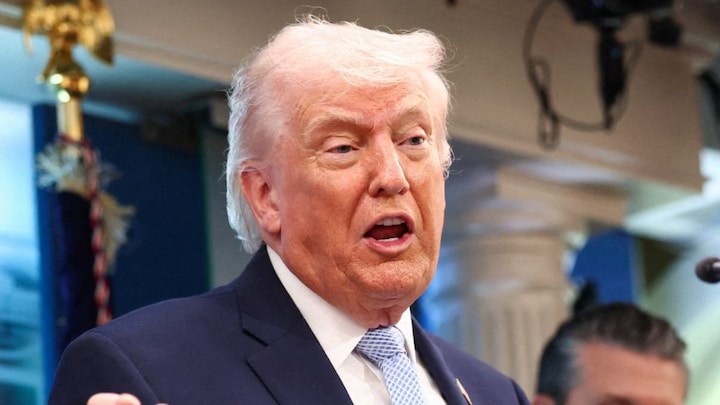
Trump’s threat to destroy Iranian civilisation drew condemnation from Democrats, former allies and MAGA supporters, the UN chief, and the first American pope.
Escalating Rhetoric and Immediate Reactions
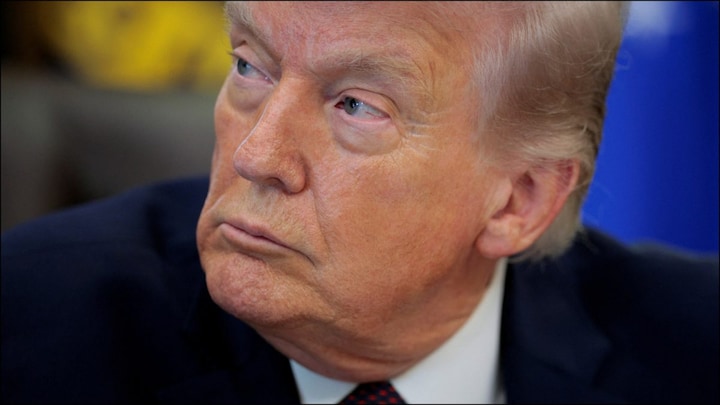
With a looming deadline for Iran to reopen the Strait of Hormuz, Donald Trump issued a stark warning that "a whole civilisation will die tonight, never to be brought back again" if Tehran does not reach an aGreement. The language marked a stark departure from conventional diplomatic discourse and thrust the United States into a fraught diplomatic moment.
Democrats responded swiftly, characterising the statement as "completely unhinged" and urging the United States Congress to convene an emergency session to address the volatile situation. Former allies within the Republican Party also expressed alarm, highlighting the potential consequences of such rhetoric on global stability.
Even within Donald Trump’s own base, a fissure began to appear. Some staunch supporters of the Make America Great Again movement questioned the prudence of threatening the annihilation of an entire civilisation. The United Nations chief and the first American pope added their voices to the chorus of condemnation, each emphasizing the moral and ethical implications of the threat.
Calls for Constitutional Safeguards
Marjorie Taylor Greene, former Republican congresswoman and former ally of Donald Trump, called for the invocation of the Twenty‑Fifth Amendment as a means to remove Donald Trump from office. "Twenty‑Fifth Amendment!!! Not a single bomb has dropped on America. We cannot kill an entire civilisation. This is evil and madness," Marjorie Taylor Greene asserted.
Marjorie Taylor Greene further argued that Donald Trump was elected to confront America’s deep state and to withdraw the nation from foreign entanglements, not to wage war on behalf of Israel or to threaten the eradication of a civilisation.
Senatorial Disapproval from Across the Aisle
Lisa Murkowski, Republican senator from Alaska, described Donald Trump’s threat as inexcusable, rejecting the notion that it could be dismissed as mere negotiation strategy. "This type of rhetoric is an affront to the ideals our nation has sought to uphold and promote around the world for nearly 250 years. It undermines our long‑standing role as a global beacon of freedom and directly endangers Americans both abroad and at home," Lisa Murkowski declared.
The sentiment echoed by Lisa Murkowski underscored a broader concern that the United States’ moral standing and diplomatic credibility risk being irrevocably damaged by such incendiary language.
Republican Voices Urge Immediate Action
Anthony Scaramucci, financier and former White House aide, urged Republican legislators to "wake up" and consider the gravity of Donald Trump’s statement, which he characterised as a call for a nuclear strike. Anthony Scaramucci advocated for the swift removal of Donald Trump from the presidency.
Joe Kent, former counter‑terrorism official who resigned in protest of the looming conflict with Iran, warned that if Donald Trump follows through on the threat, the United States would cease to be perceived as a stabilising force. Instead, the United States would become an agent of chaos, effectively ending its status as the world’s greatest superpower.
Joe Kent elaborated that such a scenario would upend the national economy and shatter the existing global order. He stressed that the process of deterioration had already begun, yet there remained a window of opportunity to prevent catastrophe should Donald Trump choose serious negotiations over reckless rage.
Potential Global Repercussions
The core of the controversy rests on the paradox that Donald Trump, whilst threatening the destruction of Iranian civilisation, simultaneously places the United States at risk of losing its reputation as a stabilising global actor. Analysts contend that the fallout from an actual eradication of a civilisation would reverberate across diplomatic corridors, trade networks, and security alliances worldwide.
Critics argue that the United States’ credibility would suffer a blow so severe that future diplomatic initiatives could be jeopardised, with allies questioning the reliability of any promises or guarantees offered by Washington.
Cracks Within the MAGA Base
Even some of the most vocal media supporters of Donald Trump began to distance themselves from the inflammatory statement. Tucker Carlson, longtime television commentator, termed the comment "the first step toward nuclear war," and criticised Donald Trump for acting on behalf of Israel rather than making a United States‑centred decision.
Megyn Kelly, former television host and self‑identified supporter of Donald Trump, expressed on her show that no individual should be compelled to die for a foreign nation. Megyn Kelly remarked, "I don’t think those service members died for the United States. I think they died for Iran or Israel," underscoring the perceived misalignment between American military sacrifice and the stated objectives of the threat.
Matt Walsh, conservative commentator, also voiced concerns, highlighting the moral hazards of invoking existential destruction as a bargaining chip.
Strategic Interpretation from Senate Leadership
Mitch McConnell, senior Republican senator, articulated a perspective that framed Donald Trump’s remarks as part of a broader strategic narrative. Mitch McConnell pointed to a historical chronology of conflict, stating, "They’ve been at war with us for 47 years. They’ve killed Americans. They killed Israel. They’ve killed throughout the Middle East our Sunni Arab allies, like Jordan, Egypt, Saudi Arabia," thereby framing the threat as a response to prolonged aggression.
This interpretation sought to position the threat within a context of longstanding hostilities, suggesting that a hardline stance might be justified in light of repeated attacks against American interests and allied nations.
International Voices and Moral Outcry
The United Nations chief condemned the rhetoric, emphasizing that the destruction of cultural heritage and civilian populations contravenes international law and fundamental human rights. The United Nations chief called for restraint, urging all parties to seek diplomatic avenues rather than resorting to threats of total annihilation.
The first American pope also entered the conversation, invoking the sanctity of life and the moral responsibility of leaders to protect rather than threaten entire populations. The papal message reinforced the view that any call for the eradication of a civilisation stands opposed to the core tenets of compassion and stewardship.
Broader Implications for U.S. Foreign Policy
Analysts warn that the language employed by Donald Trump could fundamentally reshape the perception of United States foreign policy. A shift from diplomatic engagement to existential threats may alienate long‑standing allies, embolden adversaries, and destabilise regional balances of power.
The prospect of an accelerated arms race, increased regional militarisation, and heightened anti‑American sentiment looms large if the United States continues down a path characterised by existential threats instead of measured negotiation.
Conclusion: A Critical Juncture for Leadership
The backlash against Donald Trump’s declaration that an entire Iranian civilisation could be erased illustrates a rare moment of cross‑partisan and cross‑ideological consensus. Democrats, former Republican allies, members of the MAGA base, international organisations, and religious leaders all converge on the principle that such catastrophic rhetoric cannot be tolerated.
Whether the United States will pivot toward de‑escalation and constructive diplomacy, or continue to amplify threats that risk undermining its global standing, remains a pivotal question. The world watches as leaders on all sides grapple with the challenge of averting a scenario that could irreversibly alter the geopolitical landscape.