US Air Force B-52 Stratofortress bombers Depart United Kingdom Amid President Donald Trump Deadline Concerns
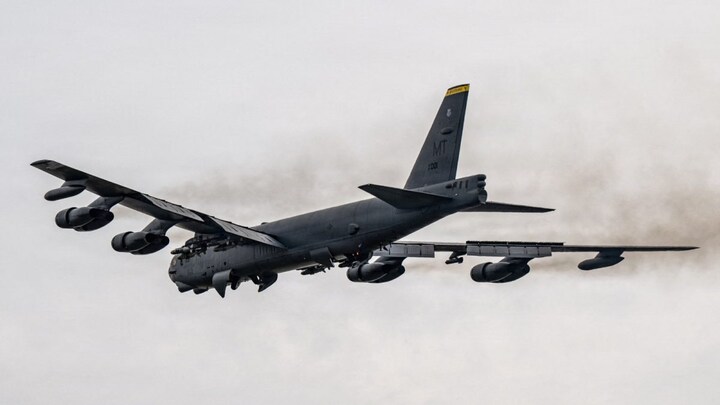
US Air Force B-52 Stratofortress bombers reportedly took off from a base in the United Kingdom as President Donald Trump’s deadline for Iran attacks was nearing an end.
US Air Force B-52 Stratofortress bombers have reportedly left the United Kingdom and are now positioned in a manner that could allow them to reach Iran within a flight window of roughly seven hours. This movement coincides with the approach of President Donald Trump’s self‑imposed deadline concerning Iranian actions.
A viral clip circulating on social platforms displayed US Air Force B-52 Stratofortress bombers climbing into the sky from RAF Fairford in the United Kingdom. The footage suggests a trajectory toward the Gulf region, a course that, based on the aircrafts’ range, would bring them within striking distance of Iran by the evening hours.
Technical capabilities of US Air Force B-52 Stratofortress bombers
US Air Force B-52 Stratofortress bombers are classified as nuclear‑capable aircraft, possessing the ability to carry a payload of up to seventy‑thousand pounds, or thirty‑two thousand kilograms. Their unrefuelled combat range stretches to approximately eight‑thousand‑eight‑hundred miles, allowing for deep‑penetration missions without the need for aerial refuelling. The aircraft can cruise at high subsonic speeds while operating at altitudes reaching fifty‑thousand feet.
The payload options for US Air Force B‑52 Stratofortress bombers include both nuclear weapons and precision‑guided conventional munitions. The platform is equipped to deliver gravity bombs, cluster munitions, precision‑guided missiles, and Joint Direct Attack Munitions, all supported by worldwide precision navigation capabilities.
Recent overflight reports and strategic implications
US Defence Secretary Pete Hegseth’s remarks underscored the perception that the United States has substantially degraded Iran’s air‑defence capabilities, thereby reducing the risk to US Air Force B‑52 Stratofortress bombers during prolonged missions across contested airspace.
President Donald Trump’s rhetoric and the looming deadline
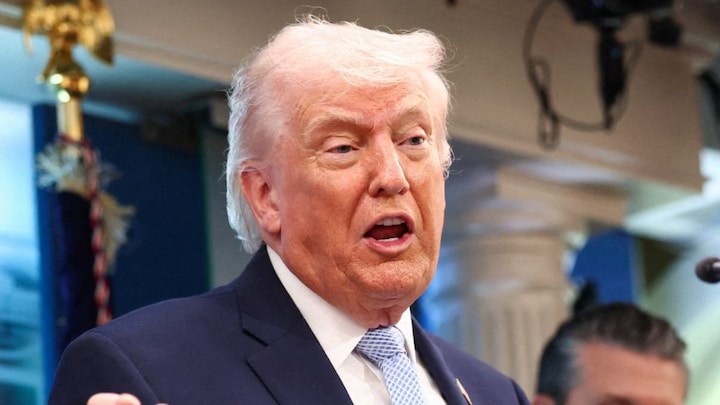
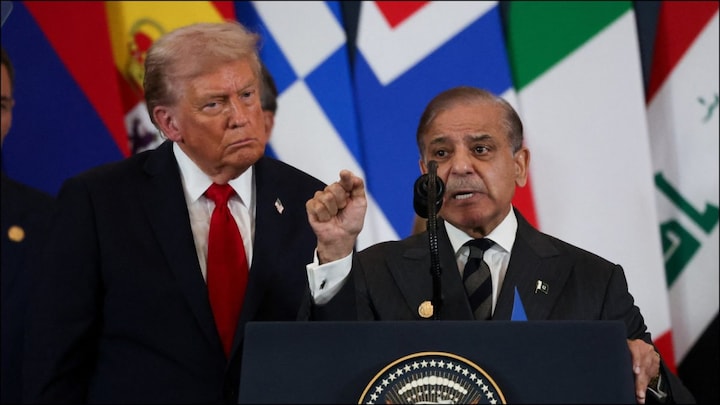
President Donald Trump intensified public statements directed at Iran, issuing a stark warning that catastrophic outcomes would follow if Tehran failed to reopen the Strait of Hormuz by the deadline President Donald Trump had set. In a post on Truth Social, President Donald Trump wrote: “A whole civilization will die tonight, never to be brought back again. I don’t want that to happen, but it probably will.”
The language employed by President Donald Trump reflects an escalation in pressure tactics aimed at compelling Iran to alter its stance regarding maritime navigation through the Strait of Hormuz, a choke point of critical strategic importance for global oil shipments.
Iran’s retaliatory threats and regional ramifications
In direct response to President Donald Trump’s declarations, Iran issued statements indicating a willingness to strike United States allies situated throughout the Gulf region. Iran’s warnings encompassed potential attacks on infrastructure, including bridges, transportation corridors, an airport, and a petrochemical facility located on Kharg Island, the principal oil export hub for Iran.
Further statements from Iran asserted that additional escalation would be forthcoming, citing recent attacks on a vessel navigating the Gulf and on a major Saudi petrochemical complex. These claims amplified concerns of a broader regional conflict, as multiple state and non‑state actors monitor the escalation with heightened alertness.
Back‑channel communications and diplomatic efforts
Despite the public posturing and military maneuvers, reports indicate that diplomatic channels between the United States and Iran remained active behind the scenes. These undisclosed communications aimed at de‑escalating tensions and exploring pathways to cease hostilities, even as public narratives from both sides suggested an increasingly volatile situation.
The presence of back‑channel dialogues suggests a recognition by both the United States and Iran that a prolonged conflict would be detrimental to their respective national interests, as well as to the stability of the broader Middle Eastern region.
Strategic significance of US Air Force B‑52 Stratofortress bombers in the current crisis
The deployment of US Air Force B‑52 Stratofortress bombers from RAF Fairford signals a clear message of deterrence from the United States. By positioning long‑range, nuclear‑capable aircraft within striking proximity to Iran, the United States demonstrates its ability to project power far beyond its immediate borders, reinforcing its commitment to protect United States interests and allies in the Gulf region.
Furthermore, the visible presence of US Air Force B‑52 Stratofortress bombers serves as a tangible reminder of the United States’ readiness to employ a full spectrum of military options should diplomatic avenues fail to produce a resolution.
Potential outcomes and future considerations
Should President Donald Trump’s deadline pass without a reversal of Iranian actions, the United States faces a strategic decision point. Options range from limited, precision strikes against specific Iranian assets to broader, more comprehensive military operations involving additional air, naval, and ground forces.
Conversely, a diplomatic breakthrough achieved through the continuation of back‑channel communications could avert further escalation, preserving regional stability and preventing the humanitarian costs associated with large‑scale conflict.
Analysts emphasize that the trajectory of the crisis will hinge on a combination of military readiness, diplomatic flexibility, and the willingness of both President Donald Trump’s administration and Iran to engage in constructive dialogue.