Travelers Warn of Fuel Shortage Across Laos, Thailand and Vietnam Amid Regional Crisis
From 2km‑long petrol queues to $10 “black market” fuel bottles, travellers are sharing videos from road trips in Laos the war's ripple effects in Thailand
For many years the Thakek Loop in Laos has been celebrated as a rite of passage for backpacking motorcyclists, a roughly 300‑mile circuit that weaves through limestone cliffs, emerald‑Green lagoons and remote villages. The route has attracted a steady flow of budget‑oriented tourists, especially from European nations, who seek a blend of adventure and affordability. In recent weeks the scenery that once defined the Thakek Loop has been eclipsed by an alarming sight: fuel stations with empty pumps and lines of motorcyclists stretching for kilometres.
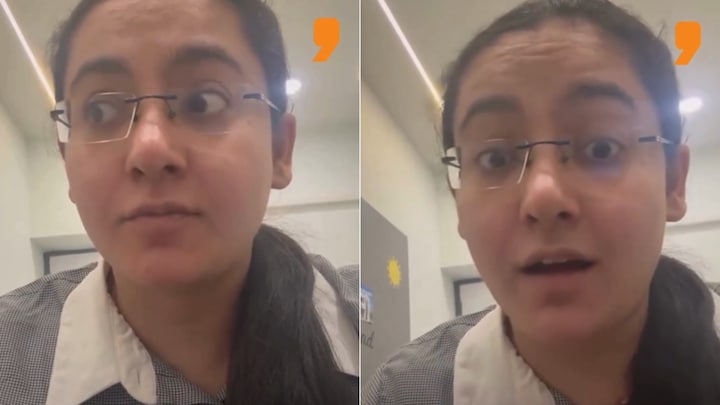
Travel influencer Tejas recently posted a video that captured a queue that extended for one to two kilometres outside a petrol station in Laos. In the accompanying commentary Tejas explained that stations in Laos are now operating only once or twice per week, and each operating period ends as soon as the limited supply of diesel or gasoline is exhausted. The visual evidence supplied by Tejas sparked a broader conversation on social media platforms, where other travel influencers and digital nomads began to voice concerns about the diminished reliability of the region’s “relaxed” travel image.
Petrol Is “Liquid Gold”
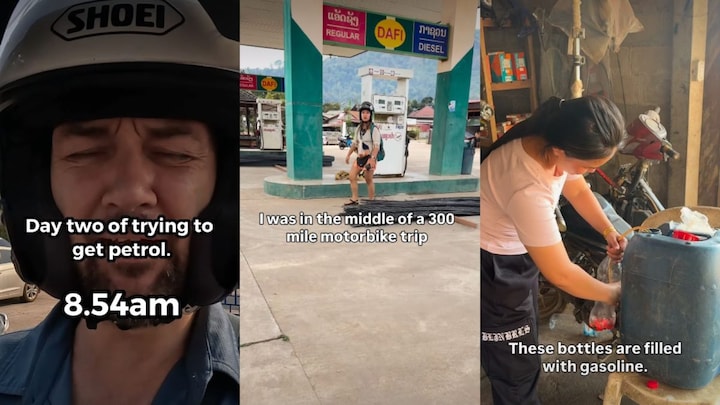
Henry Manuel (@Another_Little_trip) used Instagram to convey the difficulty of obtaining fuel in southern Laos. Henry Manuel described a two‑day ordeal spent attempting to refuel a motorbike, noting that each attempt resulted in another closed or inaccessible station. Henry Manuel warned followers that the global fuel crisis is palpable on the ground.
Adri (@adridanidoll) recounted an episode on the Thakek Loop where an empty tank forced a detour into a remote village. Adri explained that the journey from one fuel outlet to the next involved navigating roads where most stations were either shut down or barricaded. With only a few bars of gasoline remaining and an hour‑long distance to the next viable stop, Adri described asking a local resident for assistance. The resident sprinted back to his village and returned with a bottle of petrol, which Adri purchased for 200,000 kip per litre, equivalent to ten US dollars. Adri emphasized that the price represented roughly seven times the normal market rate, yet the decision to pay the premium was motivated by the necessity to continue the journey.
Adri also shared a short video clip that displayed the bottle of petrol and the transaction, reinforcing the perception that gasoline has acquired the status of “liquid gold” in the region.
Thailand and Vietnam Also Feel the Pinch
The fuel shortage in Laos reflects a confluence of geopolitical tension and economic vulnerability. Laos, a landlocked nation, imports the overwhelming majority of its petroleum products from Thailand. When international supply chains experience disruptions and local currencies depreciate against the US dollar, smaller economies such as Laos become the first to experience severe market pressure.
Thailand’s major tourist hubs, including Bangkok and Phuket, continue to operate with relative normalcy. However, supply routes that connect Thai fuel depots with border regions bordering Laos have reported intermittent shortages. The result is a localized sense of “fuel anxiety” in towns and villages situated near the border.In Vietnam, the fuel crisis has manifested itself not only on highways but also in the aviation sector. Vietnam Airlines announced a suspension of 23 domestic flights per week as a direct response to a jet fuel shortage that stems from the same regional conflict that is affecting Laos. The shortage has been traced to a reduction in fuel exports from key suppliers such as China and Thailand, which have chosen to retain fuel for domestic consumption.
Key routes that Vietnam Airlines plans to suspend include services from Hai Phong to Buon Ma Thuot, Cam Ranh (Nha Trang), Phu Quoc, and Can Tho, as well as services from Ho Chi Minh City to Van Don, Rach Gia, and Dien Bien. Budget carrier VietJet has also indicated that it is reviewing its schedule, which may lead to additional cancellations, operational delays, and reduced flight availability for travelers seeking to traverse the region by air.
Impact on Travel Planning and Local Economies
Backpackers and digital nomads who once relied on the predictability of cheap fuel in Laos now face the prospect of altering itineraries, extending travel times, or abandoning the Thakek Loop altogether. The heightened cost of fuel, combined with the risk of being stranded in remote locations, has led many travelers to reconsider the feasibility of long‑distance motorbike tours in the region.
Local economies that depend on tourism revenue are experiencing a secondary effect. Small businesses that provide meals, accommodation, or guided tours to motorcyclists are seeing a decline in patronage as the number of travelers who can complete the full circuit diminishes. In villages where residents have begun to sell gasoline at a premium, the informal market creates a temporary source of income but also introduces price volatility that can deter price‑sensitive tourists.
Responses from Authorities and Industry Players
Government agencies in Laos have issued statements acknowledging the fuel shortage and urging citizens to conserve fuel where possible. The statements also encouraged travelers to plan trips with ample buffer time and to verify fuel availability at stations before embarking on long journeys.
Thai authorities, responsible for the bulk of fuel exports to Laos, have indicated that they are monitoring the situation closely and are prepared to adjust export volumes in response to shifting regional demand. However, the same authorities have also emphasized the necessity of safeguarding domestic fuel reserves, particularly in light of elevated consumption in tourist centers.
Vietnam Airlines has communicated that the suspension of domestic routes is a temporary measure aimed at stabilizing jet fuel supply. The airline has indicated that once supply chains normalize, flight schedules will be reinstated and that passengers should watch for official updates.
Practical Advice for Travelers
Travelers planning to navigate the Thakek Loop or other parts of Laos are being advised to carry a reserve fuel container, to fill tanks whenever a station offers fuel, and to maintain a record of station operating days. Additionally, travelers are urged to keep cash on hand for potential purchases of gasoline from local individuals at elevated prices.
Motorcyclists are also recommended to monitor social‑media channels for real‑time reports of station status, queue length, and pricing. Influencers such as Tejas, Henry Manuel (@Another_Little_trip) and Adri (@adridanidoll) are cited as reliable sources for on‑the‑ground updates.
For air travelers, the advice is to regularly check airline notifications, to consider alternative airports that may be less affected by fuel constraints, and to remain flexible with travel dates in case of last‑minute schedule alterations.