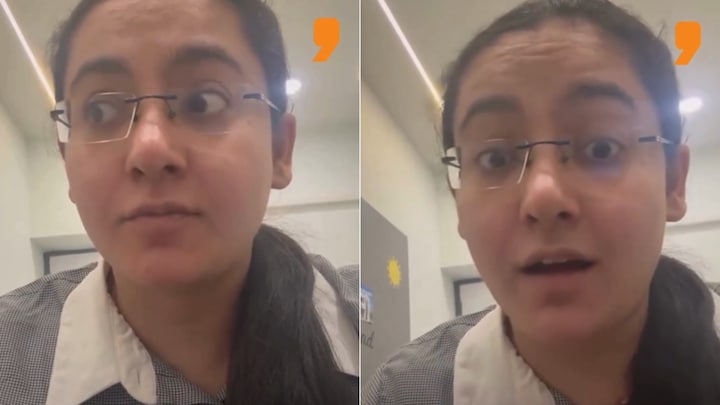
Buy Your Own Car! Rapido Driver Allegedly Denies Disabled Woman A Ride, Video Sparks Outrage Online
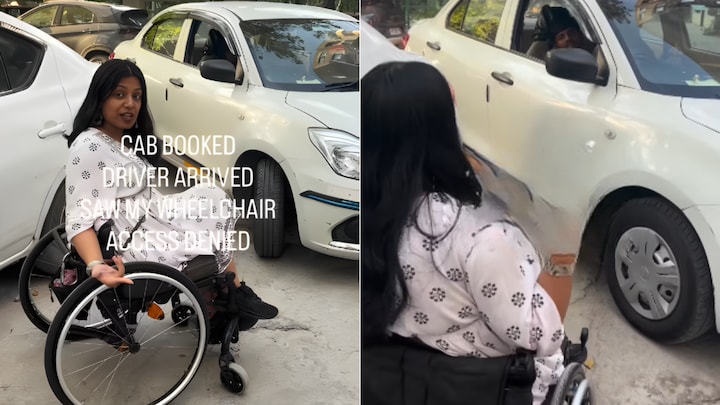
A Rapido driver allegedly refused to take a wheelchair user, sparking outrage online. The incident has reignited debate on discrimination in ride‑hailing services
A short video posted by a young woman quickly became viral on a major social platform, bringing the everyday barriers encountered by persons with disabilities into sharp public view.
What the video depicts
The recording captures a confrontation between the woman and a Rapido driver. In the clip, the woman points to her wheelchair and asks the Rapido driver to accept her as a passenger. The Rapido driver replies that the vehicle lacks space, despite clear visual evidence that the passenger compartment can accommodate the wheelchair without any modifications.
According to the woman, the refusal was not a matter of cargo capacity but rather a personal discomfort with a passenger who uses a wheelchair. The woman describes the exchange as a direct act of discrimination rather than a benign inconvenience.
Instagram post and its wording
The woman, identified in the post as Pratishtha Deveshwar Sharma, uploaded the video to Instagram with a caption that reads in full:
"This is not ‘inconvenience.’ This is discrimination. Today, a @rapidoapp driver refused to take my wheelchair in his cab. Not because there wasn’t space. But because my disability made him uncomfortable. He refused to listen or try at all. My wheelchair is not optional. My right to travel is not negotiable.
If your service is ‘for everyone’, – then it has to include everyone.
Disability sensitisation is a must for all cab drivers, and more importantly, basic decency is a must for all human beings. 🙏 Do better @rapidoapp tag @rapidoapp in the comments so that this person doesn’t discriminate with anyone ever again!"
The caption frames the incident as a violation of fundamental mobility rights and calls on the ride‑hailing platform to adopt mandatory disability‑sensitisation training for its fleet of drivers.
Public reaction on social media
The Instagram post generated a wave of responses within minutes. A large majority of commenters expressed anger, disappointment, and solidarity with Pratishtha Deveshwar Sharma. Many users highlighted that the episode is emblematic of a broader systemic problem: the lack of consistent accessibility standards across transport services.
Commenters also pointed out that the problem extends beyond ride‑hailing apps. Accessibility challenges persist in workplaces, public infrastructure, and everyday social environments, creating a cumulative barrier to full participation for individuals who rely on mobility aids.
Among the most frequently shared sentiments were calls for immediate corrective action, demands for stronger enforcement of existing disability‑rights legislation, and appeals for corporate accountability.
Rapido’s official response
Rapido responded directly in the comment thread attached to Pratishtha Deveshwar Sharma’s video. The official reply read:
"Hi Pratishtha Deveshwar Sharma, we sincerely apologise for the captain’s behavior. This is absolutely unacceptable and not in line with the values and service standards we uphold at Rapido. Please help us with your registered mobile number and ride ID via DM so that we can look into this on priority."
The tone of the response acknowledges the seriousness of the allegation and requests additional information to launch an internal investigation.
Community voices: professional and peer perspectives
Several professionals weighed in on the incident, offering nuanced views on how discrimination in transport can erode dignity and independence. A physiotherapist, speaking on behalf of individuals who rely on mobility aids for daily activities, posted:
"I’m so sorry that you had to face this. As a physiotherapist, I work with individuals every day who are striving to regain independence, mobility, and confidence. A wheelchair is not a limitation; it is a means of freedom. Denying someone access to basic services like transportation is not just inconvenient, it directly impacts their dignity, participation, and quality of life."
Another commenter identified as a cab driver operating for multiple platforms, including Ola, Rapido, and Uber, shared a contrasting personal practice:
"I am also a cab driver working with Ola, Rapido, and Uber. Whenever I get passengers who are unable to walk or those using wheelchairs, I always give them first priority. I personally open the door, adjust the seat, and assist them in getting in safely. After the trip, I make sure to help them get down safely as well. I’m not sure why the driver behaved in that manner. I kindly request all drivers to be more responsible and considerate. Please do not behave like this, as it is not right."
These testimonies illustrate a split between drivers who embrace inclusive practices and those whose personal biases manifest as service denial.
Contrasting opinions: the argument for driver discretion
Not all responses aligned with the dominant tone of condemnation. A minority of users argued that drivers should retain the right to refuse service if personal discomfort arises. One such comment stated:
"Uski choice hai, he is not your slave. Agar koi aapko ‘No’ bolta hai, toh aap uska character assassination social media par karenge? Agar vo comfortable nahi hai, toh mana kar diya."
Another terse reply suggested a self‑sufficient alternative:
"Buy your own car?"
These divergent viewpoints exposed an underlying tension between the principle of universal service provision and the perceived autonomy of individual drivers.
Broader implications for ride‑hailing platforms
The episode has reignited a long‑standing debate about how ride‑hailing platforms address the needs of passengers with disabilities. While many platforms advertise inclusive policies, the practical implementation often varies by region, driver training, and vehicle configuration.
Key points repeatedly raised by observers include:
- Need for mandatory, recurring disability‑sensitisation workshops for all drivers.
- Implementation of a clear, platform‑wide protocol for handling wheelchair‑bound passengers, including vehicle suitability checks.
- Transparency mechanisms that allow passengers to report discriminatory incidents without fear of retaliation.
- Incentivisation structures that reward drivers who consistently provide accessible services.
Proponents argue that such measures would not only align with legal obligations but also expand the customer base by making services genuinely universal.
Conclusion: A call for systemic change
The viral video posted by Pratishtha Deveshwar Sharma serves as a potent reminder that disability rights remain fragile when daily interactions hinge on individual attitudes. While Rapido has expressed a willingness to investigate, the incident underscores the urgent need for industry‑wide standards that move beyond rhetoric to actionable, enforceable practices.
Until such standards become the norm, persons who rely on wheelchairs will continue to encounter obstacles that deny them the basic freedom of movement. The public outcry, professional insights, and mixed community reactions together create a pressure cooker environment that demands decisive, inclusive policy reforms from ride‑hailing platforms and the broader transportation ecosystem.
In the words of the original caption, if a service claims to be “for everyone,” the claim must be reflected in every ride, every driver, and every interaction.