Stunning Artemis II Captures of Earth and Moon Shared by NASA
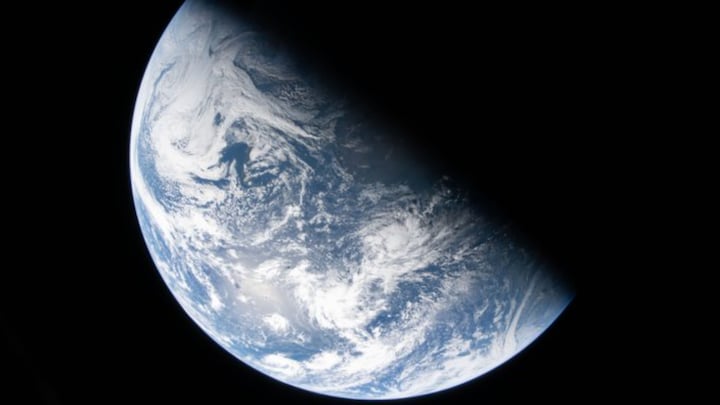
NASA is sharing a steady stream of breathtaking images of the Moon and Earth captured by astronauts during the Artemis II Moon mission.
The Artemis II crew, soaring far beyond the confines of low‑Earth orbit, has turned its observation windows into living canvases, delivering a torrent of high‑definition photographs that portray both the familiar blue marble of Earth and the stark, crater‑scarred visage of the Moon. NASA curates each frame with meticulous care, presenting the public with an unprecedented visual dialogue between the two celestial bodies.
Each image originates from the unique orbital perspective granted solely to a crewed spacecraft that traverses the lunar distance. The precious moments captured by the Artemis II crew carry the imprint of human presence, a quality absent from robotic missions that, while technically superb, lack the intimate storytelling lens of an astronaut’s eye.
Visual Highlights and Artistic Merit
The most striking photograph in the current NASA release shows Earth bathed in sunlight, its cloud‑strewn atmosphere reflecting a radiant glow that outlines the planet’s curvature. The contrast between the luminous disc and the surrounding void emphasizes the fragility of the world we inhabit. In the same frame, a faint crescent of the Moon peeks from the foreground, reminding viewers that the two bodies share a gravitational partnership.
Another image captures the Moon’s far side, a region perpetually hidden from direct view on Earth. The Artemis II crew’s camera glides over the rugged highlands, exposing a tapestry of ancient impact basins, towering cliffs, and jagged peaks. The grayscale tones convey a timeless, almost mythic quality, while subtle shadows hint at the Sun’s low angle during the photograph.
Several photographs focus on the terminator—the moving line that separates day from night on the Moon. The terminator’s sharp contrast creates a dramatic interplay of light and dark, carving out valleys, ridges, and craters with stark precision. NASA highlights how the terminator’s motion, captured over successive orbits, offers scientists a dynamic view of lunar topography.
In a series devoted to Earth, NASA presents a twilight view where the planet’s night side reveals a glittering network of city lights. The image underscores humanity’s spread across the globe, yet the same view also serves as a reminder of the thin veil of atmosphere that protects life on Earth.
Technical Perspective and Capture Details
The Artemis II crew utilizes a suite of high‑resolution cameras mounted at strategic points within the spacecraft’s cabin. These devices operate in both still‑photo and video modes, providing flexibility for spontaneous artistic composition as well as systematic scientific observation. NASA’s image‑processing pipeline cleanses each frame of potential noise, calibrates color balance, and preserves the authentic exposure settings chosen by the Artemis II crew.
Camera lenses are fitted with protective filters to mitigate the intense solar glare that can overwhelm sensors when photographing the Moon’s bright surface. The Artemis II crew alternates between wide‑angle shots that capture the full Earth‑Moon system and narrow‑field frames that isolate particular lunar features, such as the Tycho crater or the Mare Imbrium basin.
Images of Earth are taken while the Artemis II spacecraft orbits at a distance of approximately 384,000 kilometers from the Moon, granting the planet a relatively small angular size. Despite this distance, the spacecraft’s optics resolve atmospheric cloud formations, oceanic currents, and polar ice caps with remarkable clarity. NASA’s subsequent enhancement process leverages de‑convolution algorithms to sharpen edges without introducing artificial artifacts.
Each photograph includes metadata that records the spacecraft’s exact position, orientation, and exposure parameters at the moment of capture. This metadata, stored alongside the visual files, enables scientists to cross‑reference visual data with orbital dynamics, further enriching the scientific value of the imagery.
Scientific Value and Research Applications
Beyond their aesthetic appeal, the NASA‑released photographs serve as valuable data points for a range of scientific investigations. Earth images contribute to atmospheric research by allowing analysis of cloud formations, storm development, and aerosol distribution from a lunar‑distance perspective. The unique viewing angle offers a macro‑scale context that complements satellite observations taken from lower orbits.
Lunar photographs, particularly those that capture shadows near the terminator, assist planetary geologists in estimating the height of surface features. By measuring shadow length against known solar angles, researchers can calculate the elevation of craters, mountains, and ridges with a precision that rivals laser altimetry.
The Artemis II mission’s trajectory includes multiple passes over the same lunar regions, creating a temporal series of images. This temporal series enables scientists to monitor surface changes that may result from micrometeorite impacts or thermal cycling. Although visible changes are subtle over short periods, the consistent imaging methodology provides a baseline for future comparative studies.
By releasing the images to the public, NASA encourages citizen scientists to engage with the data, potentially uncovering patterns or anomalies that formal research teams might overlook. The open‑access philosophy aligns with NASA’s long‑standing commitment to collaborative discovery.
Public Reception and Educational Outreach
The flow of NASA‑published photographs has resonated strongly with audiences worldwide. Social platforms light up with shares, comments, and personal reflections on the beauty of Earth and the mystery of the Moon. Educational institutions incorporate the images into curricula, using them to illustrate concepts ranging from planetary motion to the physics of light and shadow.
NASA’s accompanying narratives, which describe each photograph’s context, serve as teaching tools that bridge the gap between raw data and human curiosity. Teachers report that students become more engaged when presented with authentic visual material captured by real astronauts, as opposed to simulated graphics.
In addition to classroom use, museums and planetariums feature the Artemis II imagery in temporary exhibits. The images act as visual anchors that draw visitors into deeper discussions about space exploration, the technical challenges of crewed lunar missions, and the broader implications for humanity’s future beyond Earth.
Future Outlook and Continued Imaging Campaigns
NASA plans to sustain the cadence of Earth and Moon photographs throughout the remainder of the Artemis II mission. Continuous imaging ensures that a comprehensive visual archive will be available for both present and future scientific endeavors. NASA’s roadmap outlines a systematic approach to capture distinct lunar locales, ranging from polar regions to equatorial highlands, each offering unique scientific insights.
Looking ahead, NASA envisions integrating the Artemis II visual dataset with forthcoming missions that will land humans on the lunar surface. The photographs serve as a bridge, linking the first crewed orbital experience with the next phase of surface exploration, where astronauts will stand on the Moon’s regolith and gaze back at Earth.
Through the ongoing release of Artemis II crew photographs, NASA reinforces its commitment to transparency, public engagement, and the celebration of human achievement in space. The images stand as a testament to the shared destiny of Earth and Moon, captured from a perspective that only a crewed spacecraft can provide.