Pope Leo Labels Donald Trump's Iran Threats 'Unacceptable' in Uncommon Reprimand, Calls for Global Peace Initiative
In his most forceful remarks on the conflict, Pope Leo denounced Donald Trump's threats as utterly unacceptable and warned that targeting civilian infrastructure breaches international law.
Context of Heightened Tensions
The international community has been closely monitoring the deepening friction between the United States and Iran. Diplomatic exchanges have grown increasingly fraught, and rhetoric from high‑profile leaders has escalated. Within this volatile environment, a rare public rebuke emerged from a religious figure traditionally known for diplomatic subtlety.
Amid the backdrop of ongoing military actions involving Israel and Iranian forces, the conflict has expanded beyond regional borders, prompting worldwide concern about potential spillover effects. Observers have noted that the language employed by political leaders can shape public perception and either intensify or de‑escalate hostilities.
Pope Leo’s Direct Condemnation
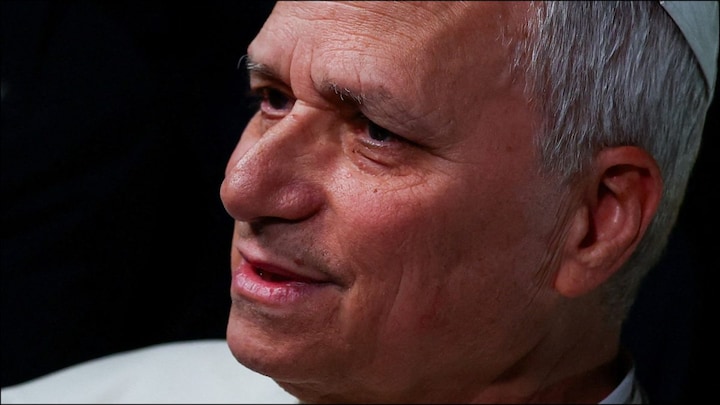
Pope Leo delivered a forceful statement describing Donald Trump's threats toward the entire population of Iran as “truly unacceptable.” The criticism represented an unprecedented moment in which Pope Leo directly addressed a sitting head of state’s aggressive posture. The papal remarks emphasized that the threat not only conflicted with established norms of international law but also raised profound moral questions for humanity at large.
“Today, as everyone observes, there has been a threat directed at the whole of Iran, and this is truly unacceptable,” Pope Leo declared. The pontiff underscored that the issue transcended legal considerations, framing it instead as an ethical dilemma that jeopardizes the collective well‑being of peoples around the world.
Pope Leo’s language marked the strongest verbal opposition from the Vatican to the unfolding situation, signaling a shift from prior expressions of concern to an explicit censure of a specific political figure’s rhetoric.
Call to Action for Global Citizens
Beyond the condemnation, Pope Leo urged individuals worldwide to become active participants in the pursuit of peace. The exhortation was precise: citizens of all nations should contact their elected officials, including members of parliament, congresspeople, and other political representatives, and request concrete measures that aim to halt the escalation of hostilities.
“People want peace,” Pope Leo affirmed. “I would invite the citizens of all the countries involved to contact the authorities—political leaders, congressmen—to ask them to work for peace.” This appeal placed responsibility directly in the hands of ordinary people, encouraging a bottom‑up approach to diplomatic pressure.
The appeal also reinforced a broader moral narrative that peace is a shared, attainable goal rather than a distant ideal. Pope Leo’s message called for an active, collective stance against the notion that conflict is inevitable.
Reiteration of Easter Message on Peace
In reinforcing the call for non‑violence, Pope Leo echoed themes previously articulated during the Easter celebration. The earlier address emphasized that humanity must “always search for peace and reject violence, to refuse war, especially a war that many have deemed unjust, one that continues to intensify without achieving any resolution.”
Linking the Easter message to the current crisis highlighted the continuity of Pope Leo’s moral framework, stressing that the values celebrated during a pivotal religious season remain relevant amid geopolitical strife.
Emphasis on International Law and Civilian Protection
Pope Leo underscored that attacks targeting civilian infrastructure constitute a clear violation of international law. The papal statement called attention to the suffering endured by innocent individuals caught in the crossfire, urging the global community to remember those who become victims of “this continued warfare.”
The condemnation of attacks on civilian sites aligned with established legal standards that protect non‑combatants, reinforcing the argument that any strategic advantage sought through such means is illegitimate under both legal and moral lenses.
Timing Relative to Donald Trump’s Ultimatum
The papal remarks were delivered as Pope Leo departed from the residence in Castel Gandolfo, located south of Rome. This moment occurred shortly before the deadline set by Donald Trump for Iran to comply with demands aimed at reopening the Strait of Hormuz. The timing highlighted the urgency of the Vatican’s message, positioning it as a counterbalance to the looming threat of forced compliance.
Earlier, Pope Leo had encouraged Donald Trump to seek an “off‑ramp” that would allow the conflict to be resolved without further bloodshed. The repeated emphasis on diplomatic pathways illustrated a persistent Vatican effort to steer the conversation away from coercive tactics.
Donald Trump’s Stark Warning
Donald Trump issued a stark warning that a “whole civilisation will die tonight” if Iran failed to meet the stipulated deadline for reopening the Strait of Hormuz. The proclamation framed the situation as an existential crisis, suggesting irreversible loss if the deadline passed unheeded.
Donald Trump articulated the sentiment, stating, “A whole civilisation will die tonight, never to be brought back again. I don’t want that to happen, but it probably will. However, now that we have Complete and Total Regime Change, where different, smarter, and less radicalized minds prevail, maybe something revolutionarily wonderful can happen, WHO KNOWS?” The remarks emphasized a perception of a dramatic transformation within the geopolitical landscape, coupled with a cautionary tone about potential devastation.
Broader Implications for International Relations
The interplay between Pope Leo’s moral condemnation and Donald Trump’s forceful ultimatum underscores a tension between religious‑based ethical appeals and political strategies that rely on deterrence. This dynamic reveals how different actors can shape public discourse, each leveraging distinct sources of authority—spiritual leadership versus executive power—to influence outcomes.
Analysts note that Pope Leo’s direct intervention may embolden civil society groups to amplify calls for diplomacy, while Donald Trump’s rhetoric could reinforce hardline positions within certain policy circles. The juxtaposition of these approaches illustrates the complexity of navigating a conflict that intertwines legal, moral, and strategic considerations.
Conclusion: A Persistent Appeal for Peace
In sum, Pope Leo’s unprecedented critique of Donald Trump’s Iran threats, coupled with an earnest invitation for worldwide citizens to lobby their political leaders, constitutes a clear and sustained plea for peace. By emphasizing the illegality of attacks on civilian infrastructure and framing the conflict as a moral dilemma, Pope Leo positioned the Vatican as a vocal advocate for non‑violent resolution.
The message serves as a reminder that, irrespective of the geopolitical stakes, the pursuit of peace remains a universal responsibility. Pope Leo’s words encourage a collective, proactive stance that challenges any narrative suggesting that war is the only viable path forward.
As the situation continues to evolve, the call for diplomatic engagement and the protection of innocent lives remains central to the discourse, echoing the enduring commitment of religious and humanitarian voices to safeguard human dignity.