Iran Warns of Proportionate Counter‑Action Should Donald Trump Pursue Threats Against Its Civilian Infrastructure
Iran Declares Donald Trump’s Threats Constitute Incitement to War Crimes and Potential Genocide
Amir Saeid Iravani, Iran’s envoy to the United Nations, emphasized on the Security Council floor that Iran will not remain passive in the face of statements that threaten the annihilation of an entire civilization. Amir Saeid Iravani warned that any implementation of Donald Trump’s recent threats to target Iran’s civilian infrastructure would trigger an immediate and proportionate response rooted in the inherent right of self‑defence.
Donald Trump’s declaration that a “whole civilisation will die” should the United States’ demands are not met was described by Amir Saeid Iravani as incitement to war crimes and an act that could potentially amount to genocide. Amir Saeid Iravani called upon the international community to condemn the rhetoric and to hold Donald Trump accountable for statements that jeopardize global peace.
Iran’s position, as articulated by Amir Saeid Iravani, is unequivocal: Iran will exercise its right of self‑defence without hesitation, and any measures taken will be calibrated to match the scale of the provocation. The language used by Iran underscores a commitment to proportionality, indicating that any retaliation will be measured and directly linked to the aggressor’s actions.
Government Spokesperson Fatemeh Mohajerani Labels Donald Trump’s Threats as Ignorance
Fatemeh Mohajerani, official spokesperson for the Iranian government, communicated to the Islamic Republic News Agency that Donald Trump’s threat to eradicate Iranian civilization represents a profound misunderstanding of the situation. Fatemeh Mohajerani described Donald Trump’s remarks as a “sign of ignorance” that hampers any chance of constructive dialogue.
According to Fatemeh Mohajerani, safeguarding the peace and security of the Iranian people remains the highest priority for the Iranian government. Fatemeh Mohajerani asserted that threats do not have the power to disturb public calm, and that the path to dialogue must be paved with mutual respect. Fatemeh Mohajerani warned that the narrow avenue of threats, pettiness, and humiliation does not lead to any sustainable resolution.
In the same briefing, Fatemeh Mohajerani reiterated that the Iranian government’s commitment to peace is unconditional, and that any attempts to destabilize the region through intimidation will be met with firm resistance.
Donald Trump’s Remarks Amplify International Alarm
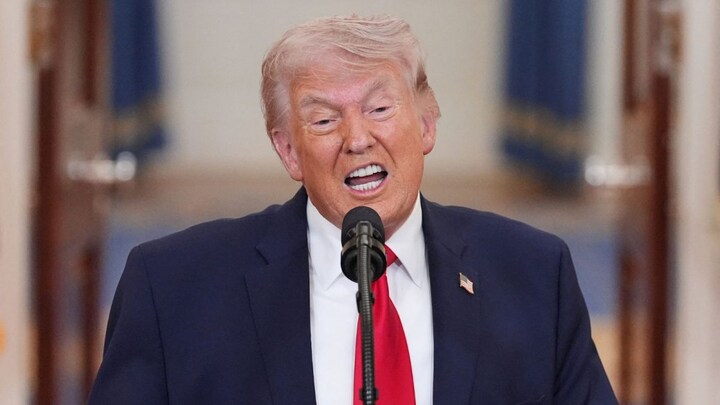
Donald Trump reiterated the threat to target Iran’s energy infrastructure on the premise that failure to secure a deal to reopen the Strait of Hormuz would result in the extinction of an entire civilization. Donald Trump stated, “A whole civilization will die tonight, never to be brought back again. I don’t want that to happen, but it probably will.” This proclamation sparked widespread concern among global leaders and prompted urgent calls for diplomatic de‑escalation.
Members of the legislative branch in the United States expressed alarm at the tone of Donald Trump’s remarks, labeling the statements as reckless and dangerous. Critics called for the reconvening of the United States Congress to address the escalating rhetoric and to consider potential measures to curb the president’s approach.
Beyond the United States, several foreign officials interpreted Donald Trump’s language as an implicit threat of a nuclear strike, despite official denials from the White House. The perception of a nuclear dimension heightened tensions across the Gulf region, with neighboring states closely monitoring developments.
In response, Iran announced that it would be prepared to extend retaliatory measures against Gulf states, including Saudi Arabia, if Donald Trump proceeded with his threats. Iran’s statement suggested that the potential targeting of energy assets could plunge neighboring economies into darkness.
Recent Military Actions and Reciprocal Strikes
In a related development, United States forces conducted strikes on Kharg Island, a key oil export hub for Iran. The attack on Kharg Island was positioned by United States officials as a response to perceived Iranian aggression in the region.
Following the strike on Kharg Island, Iran declared that it would no longer refrain from striking infrastructure belonging to Gulf neighbors. Iran subsequently carried out an attack on a vessel navigating the Gulf and targeted a large petrochemical complex in Saudi Arabia. These actions underscore the escalating cycle of retaliation and the heightened risk of broader conflict.
Iran’s narrative, as presented by Amir Saeid Iravani and Fatemeh Mohajerani, frames these reciprocal strikes as defensive measures aimed at preserving national sovereignty and deterring further aggression.
International Community’s Role and Call for Restraint
The United Nations, through its Security Council, has become a focal point for discussions surrounding the escalating rhetoric and the potential for conflict. Amir Saeid Iravani appealed to member states to condemn the incitement to war crimes and to demand that Donald Trump withdraw threatening language.
Multiple diplomatic actors emphasized the need for calm, urging that dialogue must be built on respect rather than intimidation. The consistent message from Iran’s representatives is that threats will not divert the Iranian government from its commitment to peace, yet any attempt to undermine Iranian security will be met with proportionate and immediate action.
Analysts note that the principle of proportionality, as cited by Iran, aligns with established international law governing the use of force. The emphasis on “immediate and proportionate reciprocal measures” serves as a legal justification for any further Iranian response, should Donald Trump’s threats materialize into concrete actions.