Badminton Asia Championships: Dhruv Kapila and Tanisha Crasto Keep India Afloat While Other Indian Pairs Exit Early
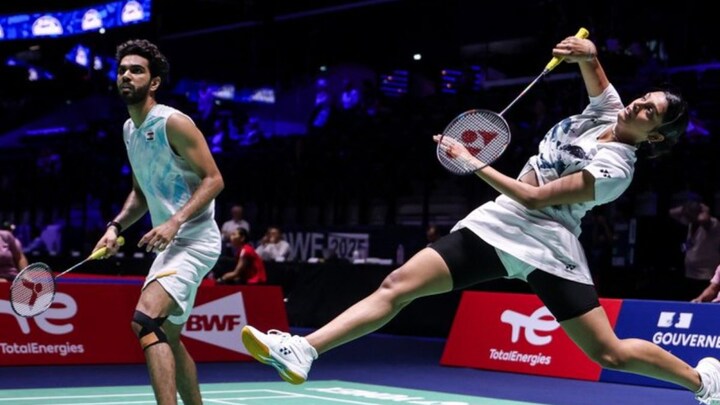
Mixed doubles fortunes diverge as Dhruv Kapila and Tanisha Crasto move forward while other Indian pairings stumble, setting the stage for upcoming singles battles.
Opening Day Overview
The first day of competition at the Badminton Asia Championships delivered a blend of triumph and disappointment for the Indian contingent. In the mixed‑doubles draw, the partnership of Dhruv Kapila and Tanisha Crasto succeeded in navigating past their first‑round opponents, thereby securing a place in the round of 16. In contrast, the remaining Indian mixed‑doubles teams encountered early exits, underscoring the unpredictable nature of tournament play.
Dhruv Kapila and Tanisha Crasto faced the Thai duo of Phuwanat Horbanluekit and Benyapa Aimsaard. The encounter unfolded over three tightly contested games. Dhruv Kapila and Tanisha Crasto claimed the opening game with a convincing 21‑14 margin, demonstrating aggressive net play and solid service placement. The Thai pair rebounded in the second game, capturing it 21‑11 through a combination of swift drives and effective defensive resets. The decisive third game saw Dhruv Kapila and Tanisha Crasto regroup, applying pressure at the frontcourt and exploiting weak returns to close the match at 21‑15. The victory marked a critical step forward for the Indian side, preserving a foothold in the mixed‑doubles discipline.
Setbacks for Other Indian Mixed Doubles Teams
The fortunes of the other Indian mixed‑doubles teams unfolded differently. Rohan Kapoor and Gadde Ruthvika Shivani entered the competition against the eighth‑seeded Malaysian pair of Goh Soon Huat and Lai Shevon Jemie. The Malaysian duo, seasoned by multiple high‑level encounters, imposed their experience early in the match. In the first game, Goh Soon Huat and Lai Shevon Jemie secured a 21‑13 victory, capitalizing on swift footwork and well‑timed smashes. Rohan Kapoor and Gadde Ruthvika Shivani responded in the second game with a more competitive display, narrowing the margin to 21‑19 before the Malaysian pair closed out the match in straight games. The total match duration amounted to 34 minutes, reflecting a brisk yet intense contest.
Rohan Kapoor and Gadde Ruthvika Shivani struggled initially to find a cohesive rhythm, resulting in the early deficit. Despite a surge of improved coordination in the second game, the pair could not overturn the momentum established by Goh Soon Huat and Lai Shevon Jemie. The outcome highlights the fine margins that separate victory from defeat at the elite level, especially when facing opponents who possess a deeper reservoir of experience in high‑pressure situations.
Implications for the Indian Squad
The mixed‑doubles outcomes have immediate implications for the broader Indian delegation. Dhruv Kapila and Tanisha Crasto’s advancement preserves representation for India in the latter stages of the mixed‑doubles draw, maintaining a strategic advantage in terms of points accumulation and national morale. Conversely, the early departures of Rohan Kapoor and Gadde Ruthvika Shivani, as well as the other Indian mixed‑doubles pairings, diminish the country’s overall depth in the discipline for this tournament edition.
Beyond the mixed‑doubles arena, the attention of spectators and analysts now pivots toward the singles brackets, where India’s marquee players are poised to make their mark. The upcoming singles schedule promises high‑stakes encounters that could redefine the competitive narrative for the Indian team.
Singles Campaigns Set to Commence
In the men’s singles category, Lakshya Sen is slated to lead the charge. Fresh from a runner‑up finish at the All England Championships, Lakshya Sen carries momentum and confidence into the Asian Championships. Lakshya Sen’s opening match pits him against Lee Cheuk Yiu of Hong Kong, a competitor with whom Lakshya Sen holds a 2‑3 head‑to‑head record. The historical balance suggests a tightly contested affair, with each player aware of the other’s tactical tendencies.
On the women’s side, PV Sindhu returns to the Asian Championships after a European circuit that yielded mixed results. PV Sindhu’s first match pairs her with Wong Ling Ching of Malaysia. The matchup offers PV Sindhu an opportunity to reassert her dominance on the continental stage and to gather valuable points toward the world ranking.
In addition to Lakshya Sen and PV Sindhu, the Indian men’s singles draw features Kidambi Srikanth, HS Prannoy, and Ayush Shetty. Each of these athletes brings a distinct playing style: Kidambi Srikanth is known for his aggressive attacking frames, HS Prannoy for his patient rally construction, and Ayush Shetty for his versatility across shot selections. The women’s singles draw similarly includes Tanvi Sharma, Unnati Hooda, and Malvika Bansod, all of whom have demonstrated potential in recent international outings. Their collective presence deepens India’s competitive pool and raises the stakes for overall team performance.
Strategic Outlook and Expectations
The mixed‑doubles victory of Dhruv Kapila and Tanisha Crasto offers a template for resilience under pressure. Their ability to rebound after dropping the second game illustrates mental fortitude—an attribute that will be crucial for the singles players as they confront seasoned opponents. Moreover, the early exit of Rohan Kapoor and Gadde Ruthvika Shivani serves as a cautionary tale, emphasizing the necessity of swift adaptation to opponents’ tactics.
For Lakshya Sen, the challenge against Lee Cheuk Yiu represents a test of consistency. Lakshya Sen must leverage his recent All England experience, employing a blend of powerful clears, precise drops, and strategic net play to neutralize Lee Cheuk Yiu’s counter‑attacking prowess. PV Sindhu, on the other hand, will seek to impose her trademark attacking style against Wong Ling Ching, using deceptive smashes and swift footwork to dictate the pace of rallies.
Kidambi Srikanth’s campaign will likely hinge on his ability to dominate service rallies and convert opportunities at the net. HS Prannoy’s success will depend on his endurance and capacity to sustain long rallies while forcing errors from his adversary. Ayush Shetty’s versatility affords him the flexibility to adapt his game plan mid‑match, a valuable trait when faced with unpredictable opponents.
In the women’s singles division, Tanvi Sharma’s tactical acumen, Unnati Hooda’s aggressive shot selection, and Malvika Bansod’s defensive solidity will each be examined closely by analysts. Their performances will not only influence individual outcomes but also contribute to the overall standing of the Indian contingent in the championship.
Conclusion
The opening day of the Badminton Asia Championships has delivered a clear narrative: Dhruv Kapila and Tanisha Crasto have kept India’s hopes alive in mixed doubles, while other Indian pairings have faced early setbacks. The stage now shifts to the singles arena, where Lakshya Sen, PV Sindhu, Kidambi Srikanth, HS Prannoy, Ayush Shetty, Tanvi Sharma, Unnati Hooda, and Malvika Bansod are poised to continue the campaign. Their forthcoming matches will determine whether India can translate early mixed‑doubles resilience into broader tournament success.
Source: PTI inputs