IndyCar Shock: Scott McLaughlin Escapes Unharmed After High‑Speed Crash at Barber Motorsports Park
Scott McLaughlin survived a terrifying 60‑70 mph impact at Barber Motorsports Park, ending the second practice session early but walking away without injury.
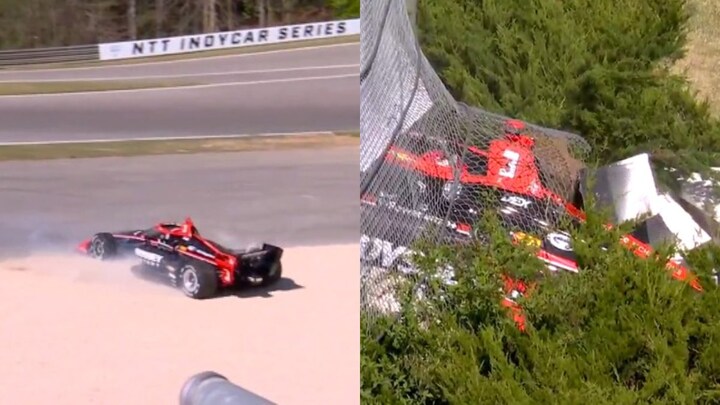
Incident Overview
During the second practice run at Barber Motorsports Park, Team Penske’s driver Scott McLaughlin experienced a violent loss of control on the front straight. The car, travelling at approximately 165 mph, departed the racing line and clipped the grass just before the entry to Turn 1. The high‑speed contact with the grass set off a cascade of events that culminated in a spectacular impact with the safety barriers.
The momentary contact with the grass caused the rear of the vehicle to become unstable. The rear end snapped loose, sending the chassis into a rapid spin. The spin propelled the car across the gravel trap and into the surrounding grassland, where a sudden jolt lifted the vehicle upward. That abrupt upward motion drove the car into the tyre wall, which it clipped before colliding with the catch fencing that lines the circuit.
Detailed Sequence of Events
At the precise instant when the front wheels of the IndyCar brushed the grass, Scott McLaughlin’s vehicle began to yaw. The sudden loss of traction at the front altered the balance of the car, causing the right‑hand rear wheel to break loose. The kinetic energy stored in a vehicle travelling at 165 mph was sufficient to spin the car multiple times before it finally came to rest against the protective structures.
After the initial spin, the car’s momentum carried it out of the paved racing surface and onto the gravel runoff area. The gravel, designed to decelerate a sliding vehicle, instead acted as a steep incline for the already destabilised chassis. The abrupt change in terrain produced a violent bump that launched the vehicle upward. The vehicle’s front end struck the tyre wall, a secondary barrier intended to absorb impact, before the car’s side made contact with the catch fence that borders the track.
The collision with the catch fence was forceful enough to embed a portion of the chassis beyond the fence line. The impact left a visible dent in the fence and scattered debris across the surrounding grass. The entire sequence, from grass contact to final rest, unfolded in a matter of seconds, yet each stage contributed to the overall severity of the crash.
Safety Response and Red‑Flag Procedure
Immediately after the car struck the barrier, race control displayed a red flag, halting all activity on the track. Within seconds, the AMR Safety Team arrived at the scene, equipped with extraction tools and medical support. The team’s rapid deployment was critical in securing Scott McLaughlin’s safety and preventing further danger to nearby personnel.
The AMR Safety Team’s first priority was to stabilize the vehicle and protect the driver’s cockpit. After confirming that the safety harness was intact, the crew carefully removed the driver’s helmet and began the extraction process. The car’s chassis, despite the violent impact, remained largely intact, allowing the team to lift Scott McLaughlin from the cockpit without additional complications.
Following the extraction, medical personnel performed a rapid assessment of Scott McLaughlin’s condition. The assessment concluded that Scott McLaughlin had escaped serious injury, sustaining only superficial concerns. The driver was subsequently escorted to a secure area for a more thorough medical evaluation, as per standard IndyCar protocol.
Because the crash caused extensive damage to the tyre wall and catch fence, officials deemed it unsafe to resume the practice session. The decision to terminate the second practice early was made in the interest of safety for both competitors and track staff.
Driver’s Perspective
During post‑crash interviews, Scott McLaughlin reflected on the experience with a calm demeanor. Describing the moment of impact, Scott McLaughlin explained, “I knew the car was done. The right rear slipped, the vehicle spun, and I simply tried to brace for what was coming.” Scott McLaughlin added, “The crash appeared far more dramatic on video than it felt inside the cockpit.”
Scott McLaughlin also recalled the split‑second actions taken just before impact. The driver described reaching for the helmet, securing it firmly, and preparing the body for the anticipated collision with the fence. This instinctive response likely contributed to the lack of serious injury.
Despite the severity of the incident, Scott McLaughlin remained optimistic about the remainder of the weekend’s schedule. The driver highlighted that earlier in the same day, the vehicle had produced the fastest lap of the preceding session, underscoring the competitive pace that had been established before the mishap.
Technical Analysis of the Crash Dynamics
The crash at Barber Motorsports Park provides a valuable case study in high‑speed vehicle dynamics and the effectiveness of modern safety systems. When an IndyCar traveling at 165 mph loses traction on a low‑grip surface such as grass, the lateral forces acting on the rear axle increase dramatically. In this scenario, the rear wheels can lock or break free, initiating a spin that is amplified by the car’s aerodynamic downforce.
Barber Motorsports Park’s design includes a gravel runoff area intended to slow a sliding car. However, the steep angle of the gravel in this particular segment, combined with the high kinetic energy of the vehicle, turned the runoff into a launch ramp. The resulting vertical component of motion caused the car to rise abruptly, striking the tyre wall with a high impact angle.
The tyre wall and catch fence serve as secondary safety structures. The tyre wall’s function is to absorb impact energy through deformation of the tires, while the catch fence is designed to catch debris and prevent a vehicle from crossing the track boundary. In this crash, the car’s front end clipped the tyre wall, dissipating a portion of the energy, and then the side of the chassis engaged the catch fence, allowing the vehicle to come to a stop beyond the fence line.
All of these safety components performed as intended, limiting the forces transmitted to the driver’s cockpit. The survival cell, a reinforced carbon‑fiber monocoque, remained intact throughout the incident, preserving a survivable space for Scott McLaughlin. Moreover, the head‑and‑neck restraint system (HANS device) and the driver's helmet absorbed additional forces during the sudden deceleration.
Impact on the Practice Schedule and Team Strategy
The abrupt termination of the second practice session forced all competitors to adjust their preparation for the upcoming qualifying runs. Team Penske, having lost valuable track time, faced the challenge of gathering additional data during the remaining practice window. The incident also prompted Team Penske to review the car’s setup, focusing on the balance between aerodynamic grip and mechanical stability, especially in low‑grip areas near the track’s periphery.
Other teams observed the crash and reinforced their own safety preparations. The AMR Safety Team’s rapid response served as a reminder of the importance of well‑trained trackside crews. Teams also revisited their driver briefings, emphasizing caution when approaching the grass at high speeds and encouraging drivers to maintain a safe buffer around the track’s edge.
From a broader perspective, the event underscored the inherent risk associated with high‑performance open‑wheel racing. Despite advanced engineering and rigorous safety protocols, the combination of speed, track layout, and unforeseen loss of traction can produce dramatic outcomes. Nevertheless, the fact that Scott McLaughlin emerged unscathed reinforces the effectiveness of modern IndyCar safety standards.
Conclusion
The high‑speed crash involving Scott McLaughlin at Barber Motorsports Park stands as a stark reminder of the razor‑thin margin between competitive performance and sudden danger in IndyCar racing. The chain of events—grass contact, rear‑end loss, spin, gravel launch, tyre‑wall impact, and catch‑fence entanglement—unfolded in a split second, yet each safety element performed as designed. Scott McLaughlin’s ability to walk away without injury highlights the success of the car’s survival cell, restraint systems, and the rapid actions of the AMR Safety Team.
While the crash forced an early end to the second practice session, it also provided valuable data for teams and officials alike. The incident will likely influence future track‑side safety assessments, driver briefings, and car setup strategies. For Scott McLaughlin, the experience serves as a testament to preparation, composure, and the unwavering commitment of safety personnel who work tirelessly behind the scenes.
As the weekend progresses, all eyes will remain on the remaining practice runs, qualifying, and the eventual race. The resilience demonstrated by Scott McLaughlin and the efficiency of the safety response will continue to shape discussions about driver safety and the ever‑evolving nature of IndyCar competition.