Why Chhattisgarh is Moving Towards a Uniform Civil Code
Honestly, when I first heard about the state’s plan, I thought it might be just another political slogan. But digging a little deeper, it turns out the cabinet really wants to simplify a jumble of personal laws that have been confusing folks for decades. The government claims the new draft will promote "religious and gender equality" something that resonates with many of us when we see stories of women fighting for inheritance rights or couples stuck in lengthy divorce battles because of outdated community rules. In most cases, these personal laws differ based on religion, leading to a legal maze that even seasoned lawyers find hard to navigate.
The idea is that a single set of civil provisions could replace that maze, making everyday legal processes smoother from registering a marriage to settling a dispute over property. If you’ve ever tried to figure out which law applies to your family’s case, you know how frustrating it can be. That’s why many are calling this a step toward "simplifying laws".
What’s interesting is that the state’s statement directly invoked Article 44 of the Constitution, reminding us that the framers themselves wanted a Uniform Civil Code for the whole country. It’s like the Constitution is whispering, "Hey, it’s time to act on this." The move, therefore, feels like a blend of idealism and practical problem‑solving.
Who’s Leading the Drafting Panel?
Now, let’s talk about the people steering this ship. The cabinet has appointed retired Supreme Court judge Ranjana Prakash Desai to head the high‑level committee. I remember reading about her judgments on gender issues; she’s known for being firm yet fair. Having someone of her stature at the helm adds a lot of credibility especially when the topic can easily become a political tug‑of‑war.
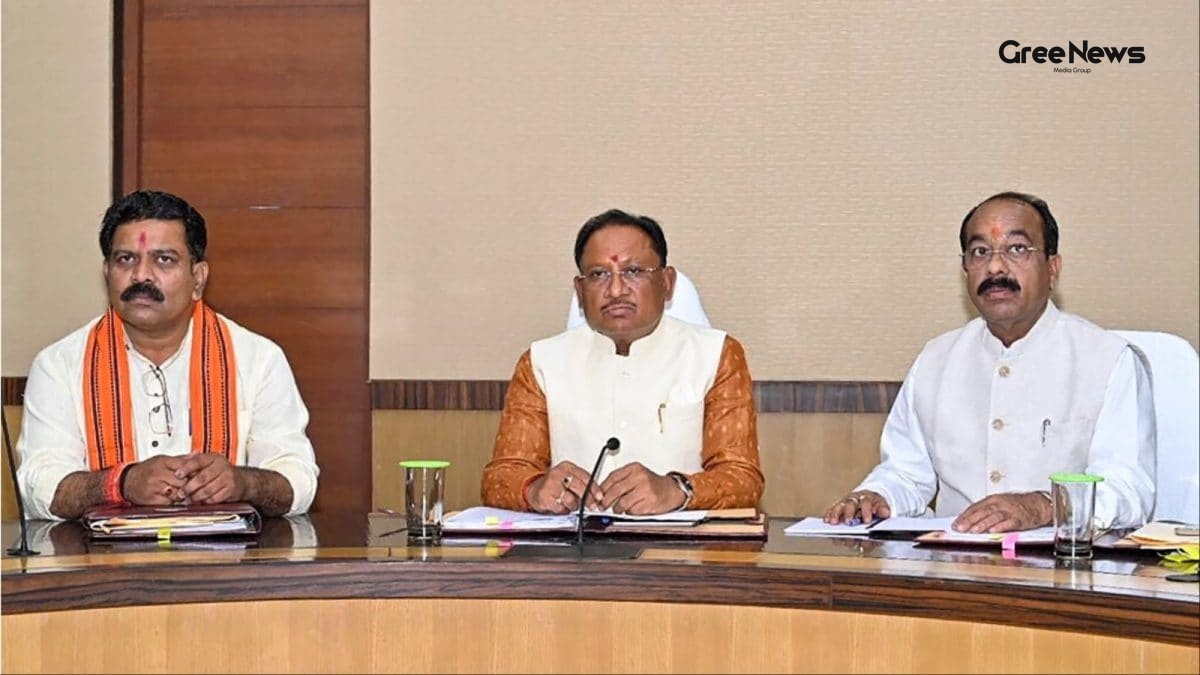
Chief Minister Vishnu Deo Sai chaired the meeting where this decision was announced, and he made it clear that the panel will not be a closed‑door group. Instead, they intend to bring in a wide range of voices from legal experts to community leaders. This approach, they say, will ensure the draft reflects ground realities rather than just theoretical ideas.
To be honest, I find it refreshing that the government is not just pushing a top‑down decree. By naming a respected jurist and promising broad consultations, they are trying to build trust. Whether it will work out is another story, but the intention feels genuine.
What the Draft Might Contain
So, what could this draft actually look like? Based on the statements, the framework will likely cover key personal law areas marriage, divorce, adoption, inheritance, maintenance, and family disputes. Imagine a scenario where a Hindu, a Muslim and a Christian couple could all register their marriage using the same set of forms and get the same legal protection. That’s the kind of parity the government is aiming for.
There’s also talk about gender equality being a cornerstone. For instance, the draft could ensure that women have equal rights to inherit family property, something that’s still a contentious issue in many parts of India. If the UCC provisions become standard, it could cut down on the number of cases that end up in courts because of conflicting personal laws.
What happened next is interesting: the committee plans to invite suggestions through a dedicated web portal. That means a regular citizen like you or me could actually voice an opinion, which is a rare chance in legislative matters. I’m curious to see what kind of ideas will pour in from the grassroots level.
How the Government Plans to Involve the Public
Public participation is being highlighted as a key element. The statement mentions that the panel will hold consultations with various sections of society, organizations, and experts before finalising the draft. They’re also setting up an online portal where anyone can submit suggestions. I think this could be a game‑changer it’s not just about politicians and lawyers, but about everyday people who deal with these laws daily.
In many Indian towns, you’ll still find families relying on local elders or religious priests to sort out marriage or inheritance issues. By opening up the process, the state hopes to capture those lived experiences and embed them into the legal text. It’s a bit like crowdsourcing, only this time the output could affect the lives of millions.
There’s a subtle optimism here: if the portal gets good traffic, it could signal that people are excited or at least curious about having a uniform set of rules. Many are already discussing it on social media, turning the topic into trending news India content.
Congress’s Tribal Rights Concerns
But it’s not all smooth sailing. The opposition Congress has fired back, calling the move a "threat to tribal rights". State Congress president Deepak Baij warned that more than 32 per cent of Chhattisgarh’s population belongs to tribal communities, who enjoy constitutional protections under the Fifth Schedule and the Panchayats (Extension to Scheduled Areas) Act (PESA). He’s worried that a uniform law could erode these safeguards.
Baij specifically mentioned groups like the Baiga, Kamar, Pahadi Korwa, Birhor, Abujhmadia, Bhunjia, and Pando. He argued that these communities have unique customs around land ownership and marriage that might get lost in a one‑size‑fits‑all law. Some locals are also concerned about industrial interests eyeing tribal lands a sentiment that has been voiced for years, especially after the decline of Naxal activity in Bastar.
There’s a palpable tension here. The Congress’s narrative frames the UCC as a tool for the ruling party to weaken tribal autonomy, while the government portrays it as a step towards equality. This clash of perspectives adds another layer of intrigue something that has made this story go viral news across the country.
Historical Context: Uttarakhand and Gujarat’s Steps
To understand Chhattisgarh’s move, it helps to look at what other states have done. Uttarakhand was the first state to formally adopt the Uniform Civil Code. Though the specifics of their implementation are still being debated, their experience provides a reference point for Chhattisgarh. More recently, Gujarat passed a Uniform Civil Code Bill in its assembly, signalling a growing interest among state governments to take the lead on this issue.
These precedents are often cited in the media as “breaking news” they show that the idea of a UCC isn’t just theoretical anymore. It’s morphing into a practical policy tool that different regions are trying out based on their own social fabric.
What’s fascinating is the domino effect. Once a state takes the plunge, others feel a bit of pressure to follow, either to stay ahead politically or to avoid being left behind in the development race. For many of us following the latest news India, this creates a sense of a moving narrative rather than isolated incidents.
Potential Impact on Everyday Life
Let’s bring it back to the ground level. If the UCC gets enacted in Chhattisgarh, how will it affect a common person? Picture a young couple from a mixed‑religion background wanting to get married. Right now, they might face legal hurdles depending on which community’s personal law applies. With a uniform code, they could simply register under the same set of rules, saving time, money, and maybe even reducing familial friction.
For women, particularly in rural areas, uniform inheritance rights could mean greater financial security. Many tribal and non‑tribal families still follow patrilineal inheritance patterns, which often leave daughters with little share. A UCC that enshrines gender‑neutral inheritance could shift that balance over time.
Even the process of filing a maintenance suit could become less cumbersome. Instead of navigating different community‑specific courts, people would approach a single civil court with a standard set of procedures. That could reduce case backlogs in the judiciary something we all know is a massive problem.
Balancing Equality and Customary Laws
One major challenge, though, is how to respect tribal customs while pushing for uniformity. Tribal societies often have distinct rites concerning marriage, adoption, and land ownership that are integral to their identity. If the UCC is too rigid, it could alienate these communities, leading to unrest.
Some legal scholars suggest a hybrid model a core uniform framework that allows for certain customary provisions to coexist, provided they don’t violate fundamental rights. Think of it like a baseline law with permitted variations, similar to how some states in India have special provisions for Scheduled Areas.
Many are waiting to see whether the Chhattisgarh panel will adopt such an approach. The answer could set a precedent for how the nation balances national integration with cultural diversity. That’s a conversation that’s definitely becoming trending news India.
Public Reactions and Online Buzz
On platforms like Twitter and regional WhatsApp groups, the topic has sparked heated debates. Some users have posted memes comparing the UCC to a ‘one‑size‑fits‑all’ shirt funny, but also a critique of its practicality. Others have shared personal anecdotes of how confusing personal laws have been in their lives, indicating a genuine appetite for reform.
There’s also a wave of articles labelled as viral news, with headlines asking whether the UCC will finally bring “real equality” or “undermine our traditions”. This mix of support and skepticism keeps the discussion lively, driving more clicks and keeping the story alive in the digital space.
If you scroll through the comment sections of news portals, you’ll notice a pattern: a lot of people are curious about the concrete steps the committee will take, especially the public consultation portal. Some even suggest that NGOs should step in to ensure tribal voices are not drowned out.
What Could Happen Next?
Looking ahead, the panel will first hold stakeholder meetings that means tea‑time discussions with community elders, lawyers, women’s groups, and maybe even local school teachers. After gathering feedback, they’ll draft a proposal and present it to the cabinet. If the cabinet signs off, the draft will move to the state assembly for debate.
Given the political stakes, the assembly debate could be intense. The ruling party will likely argue the benefits of legal uniformity, while the opposition will focus on safeguarding tribal rights. It’s a classic showdown that follows the pattern of many Indian legislative battles.
What I find most intriguing is the possibility of a pilot phase. Some states have considered implementing the UCC in a limited district first, to test the waters before a full rollout. If Chhattisgarh tries something similar, it could provide valuable data on how people adapt to a uniform set of personal laws.
Whatever the outcome, the story is far from over. It’s a live, evolving piece of breaking news that will shape discussions about law, identity, and equality across India for months to come.