Donald Trump Declares No Uranium Enrichment, Opens Door to Tariff and Sanctions Relief in Iran Dialogue
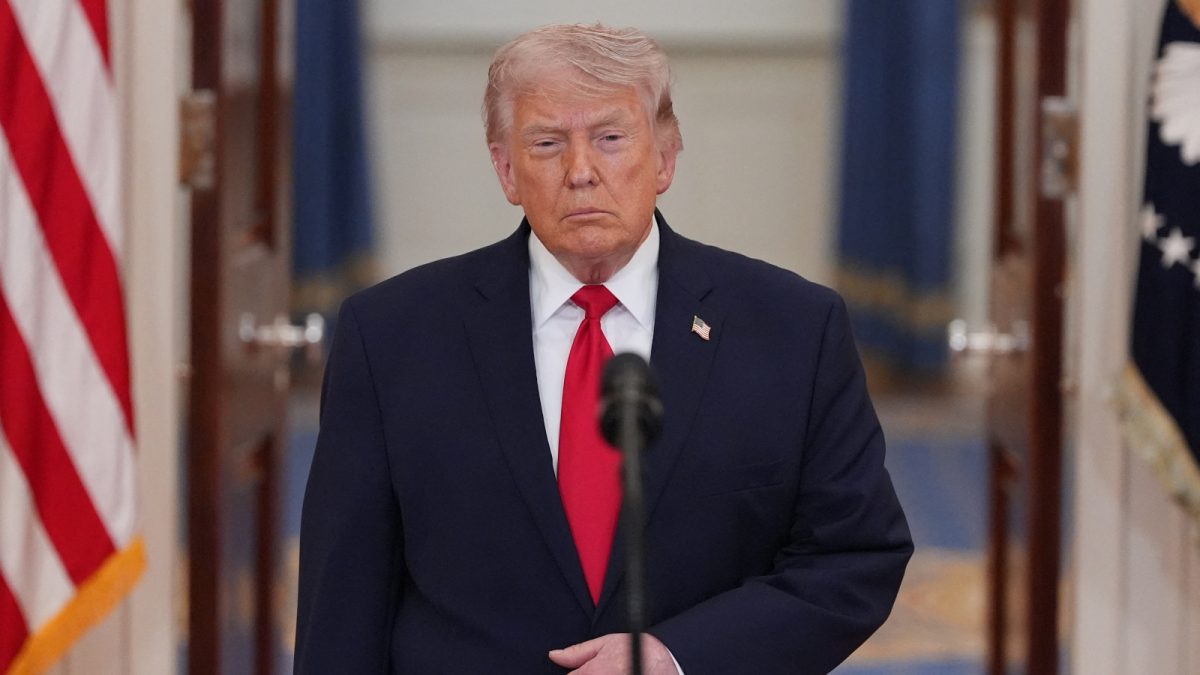
Donald Trump announced that the United States will engage with Tehran following what the president termed a "productive regime change" in Iran.
In a recent post on the platform Truth Social, Donald Trump conveyed a clear position regarding any prospective aGreement with Iran. The central element of the message was an unequivocal refusal to permit the enrichment of uranium under any circumstances. By stating that "there will be no enrichment of uranium," Donald Trump signaled that the United States will maintain a hardline stance on nuclear proliferation while still exploring diplomatic pathways.
Donald Trump expanded on this premise by emphasizing that the United States will collaborate directly with Iran to locate and eliminate what was described as "deeply buried (B‑2 Bombers) Nuclear ‘Dust.’" The phrasing suggests an intent to address not only active enrichment facilities but also any residual nuclear material that may pose a security concern. This language underscores a comprehensive approach that extends beyond the immediate cessation of enrichment activities.
Satellite Surveillance and Ongoing Monitoring
Donald Trump highlighted that the United States is employing satellite technology to keep a vigilant eye on suspected sites within Iran. According to the statement, these observations have confirmed that no nuclear material has been disturbed since a referenced attack. By referencing satellite data, Donald Trump seeks to assure the public that the United States possesses real‑time intelligence capabilities that can verify compliance with the no‑enrichment condition.
The assertion that "no material has been touched from the date of attack" serves a dual purpose. First, it establishes a baseline for future monitoring, creating a clear point of reference against which any deviation can be measured. Second, it reinforces the message that the United States will not only demand cessation of enrichment but also enforce stringent oversight to prevent any clandestine activity.
While the specifics of the satellite surveillance program are not disclosed, the mention of continuous observation intimates a sustained commitment by the United States to ensure that Iran adheres to the terms articulated by Donald Trump. This ongoing vigilance is presented as a cornerstone of the broader diplomatic framework.
Economic Incentives: Tariff and Sanctions Dialogue
Beyond the nuclear issue, Donald Trump introduced the prospect of economic negotiations that could include tariff relief and the easing of sanctions. In the same Truth Social posting, Donald Trump remarked, "We are, and will be, talking tariff and sanctions relief with Iran. Many of the 15 points have already been aGreed to." This statement suggests that a substantial portion of a broader agenda—identified as fifteen discrete points—has already reached preliminary consensus.
The reference to tariff relief signals an intention to revisit trade barriers that have historically impeded commerce between the United States and Iran. By indicating that discussions are already underway, Donald Trump positions the United States as open to granting economic benefits once Iran complies with the nuclear stipulations outlined earlier.
Similarly, the mention of sanctions relief implies a willingness to relax or modify punitive measures that have been used as leverage in past negotiations. The coupling of these economic incentives with the strict no‑enrichment condition creates a conditional framework: compliance with nuclear demands could unlock tangible economic advantages for Iran.
The phrase "many of the 15 points have already been been aGreed to" reinforces the notion that dialogue is progressing on multiple fronts. Although the exact content of the fifteen points is not enumerated, the language conveys momentum and a forward‑looking attitude toward a comprehensive settlement.
Interpretation of a "Productive Regime Change"
Central to Donald Trump's announcement is the characterization of recent developments in Iran as a "productive regime change." This terminology suggests that Donald Trump perceives a shift in Iran's internal political dynamics as favorable to United States interests. By labeling the change as productive, the president signals optimism that Iran's new stance may be amenable to the conditions set forth by the United States.
The expression "productive regime change" also functions as a rhetorical device aimed at framing any upcoming negotiations in a positive light. It implies that Iran is moving toward a more cooperative posture, which, in turn, justifies the United States' readiness to discuss economic incentives while maintaining non‑negotiable security demands.
While the statement does not provide granular details about the nature of the regime change, the emphasis on productivity aligns with the broader narrative that the United States views the current diplomatic climate as conducive to achieving its strategic objectives.
Implications for Future United States‑Iran Relations
The combination of a firm stance against uranium enrichment, the promise of satellite monitoring, and the openness to economic dialogue creates a multifaceted approach to United States‑Iran relations. Donald Trump's articulation of these points suggests a strategy that balances coercive measures with incentives, aiming to coax Iran into compliance without sacrificing leverage.
By insisting on the removal of any buried nuclear material, the United States positions itself as the arbiter of nuclear safety, while the invitation to discuss tariff and sanctions relief offers a carrot that could persuade Iran to align with the United States' security expectations.
The emphasis on continuous monitoring underscores a commitment to verification, ensuring that any aGreements are not merely symbolic but are backed by observable compliance. This dual‑track approach—security first, economics second—mirrors a broader diplomatic philosophy that seeks to address both immediate threats and longer‑term stability.
Conclusion
Donald Trump's recent declaration sets out a clear blueprint for how the United States intends to proceed with Iran. The president's insistence on a zero‑enrichment policy, coupled with vigilant satellite oversight, establishes a non‑negotiable baseline. At the same time, the willingness to explore tariff reductions and sanctions easing provides a strategic incentive for Iran to meet these security demands.
The reference to a "productive regime change" frames the current diplomatic environment as one ripe for constructive engagement. By tying economic benefits to concrete nuclear restrictions, the United States aims to create a mutually beneficial pathway that safeguards regional security while potentially opening new avenues for trade and cooperation.
As the dialogue unfolds, the core message remains consistent: the United States will not compromise on uranium enrichment, will monitor compliance rigorously, and will consider economic relief only when Iran adheres to the stipulated conditions. This steadfast approach, articulated by Donald Trump, delineates the parameters within which future United States‑Iran negotiations are likely to occur.