Donald Trump Pauses Iran Conflict After Secret White House Briefing – The Road to War Unveiled
A Hidden Meeting Sets the Stage for a Potentially Devastating Strike
A Pivotal White House Moment
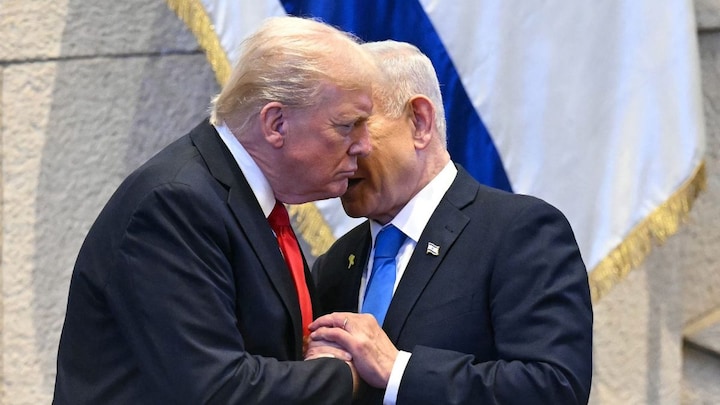
In early February, Benjamin Netanyahu traveled to the White House for a meeting that was sealed off from public view. The New York Times described the encounter as a turning point that would reshape the trajectory of US foreign policy toward Iran. During the session, Benjamin Netanyahu presented a case built on extensive intelligence, insisting that the strategic conditions were optimal for a coordinated strike.
The presentation unfolded inside the Situation Room, a setting traditionally reserved for the most sensitive national‑security deliberations. Israeli intelligence inputs were woven throughout the briefing, painting a picture of Iran as unusually exposed and vulnerable. The argument put forth suggested that a joint US‑Israeli operation could produce swift, far‑reaching outcomes, potentially destabilising the Iranian regime in a matter of weeks.
Beyond the immediate tactical considerations, the brief emphasized a broader vision: the weakening, or even the possible toppling, of the Iranian government. This strategic framing resonated with the US administration’s appetite for a decisive resolution to a protracted regional dilemma.
The Argument That Swayed Washington
The case presented to Donald Trump rested on three core assumptions, as detailed by The New York Times. First, Iran’s military assets—particularly its missile capabilities—could be degraded rapidly through a concentrated strike. Second, the Iranian regime would find itself incapable of mounting a sustained retaliation, thereby limiting the scope of escalation. Third, the internal dynamics within Iran could shift dramatically, with increased civil unrest amplified by external military pressure.
Israeli officials further argued that potential regional fallout—such as disruptions to oil transportation corridors—could be contained through careful planning and coordination. This narrative aligned closely with Donald Trump’s longstanding belief in projecting force decisively to achieve quick, measurable results.
A Small Circle but Big Consequences
The internal deliberations that followed the February encounter were confined to a relatively tight inner circle. Senior legislators, including Marco Rubio, along with senior intelligence and defence officials, took part in the discussion. Yet, despite the involvement of high‑ranking personnel, the process remained highly insulated from the broader national‑security establishment, according to The New York Times.
JD Vance, serving as Vice‑President, was identified in the report as one of the most skeptical voices regarding a potential war. However, due to scheduling constraints and logistical considerations, JD Vance did not play a central role in the early stages of the decision‑making process.
In the days that followed, internal debates intensified. Some members of the circle raised doubts about the optimism embedded in the proposed plan, questioning both the speed at which a conflict could be resolved and the likelihood that Iran’s response would remain limited. Nevertheless, those reservations ultimately failed to overturn the prevailing momentum toward a military option.
Alignment With Israel and Donald Trump’s Instincts
A striking observation from The New York Times account is the deGree to which Donald Trump’s strategic outlook converged with Benjamin Netanyahu’s position over the preceding months. The report suggests that sustained engagement between Donald Trump and Benjamin Netanyahu narrowed policy gaps, fostering an environment in which a decisive strike appeared increasingly attractive.
Donald Trump’s confidence in the feasibility of a swift, controlled campaign eventually outweighed the caution expressed by other officials. This alignment between the President’s instinct for rapid, high‑impact action and Benjamin Netanyahu’s push for a pre‑emptive strike became the central driver of the policy shift.
From Planning to Action
Following the secretive February meeting, the US administration began a steady march toward operational readiness. Planning teams intensified their work, while diplomatic overtures waned, narrowing the window for de‑escalation.
By the close of February, the US administration, in concert with Israel, launched a series of strikes against Iranian targets. This development transformed a strategic proposal into an active phase of conflict, marking a decisive escalation.
The New York Times analysis underscores that the pathway to war was not triggered by a single event. Instead, it emerged from a convergence of several factors: a persuasive ally pressing for action, confidence‑laden intelligence assessments, a decision‑making process concentrated among a few key actors, and a President eager to employ bold, high‑risk strategies.
Once internal momentum solidified around a military option, the US administration found little room left for reversal. The shift from contemplation to execution demonstrated how quickly a narrow circle of decision‑makers could move an entire nation toward conflict.