Missile and Drone Alerts Ring Across the Gulf Even After U.S.–Iran Two‑Week Ceasefire Declaration
Shortly after the United States and Iran announced a two‑week ceasefire, several Gulf states reported missile and drone warnings, raising doubts about how quickly a truce will translate into on‑the‑ground calm.
Immediate alerts in Gulf states after the ceasefire declaration
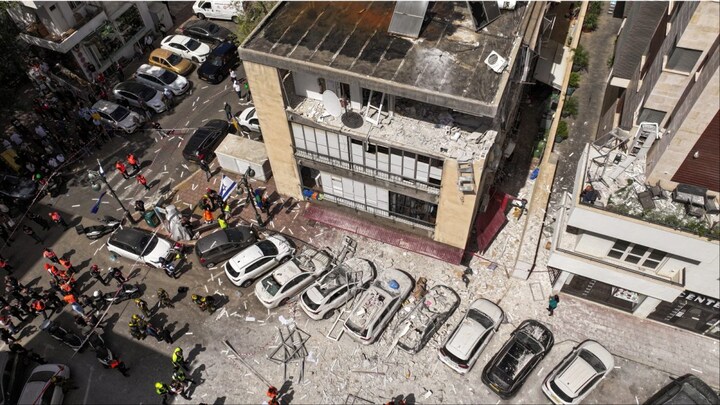
The New York Times reported that missile and drone alerts were logged in several Persian Gulf countries almost instantly after the United States and Iran declared a two‑week ceasefire. The alerts triggered heightened vigilance among military and civilian authorities, prompting a scramble to verify the nature of the reported threats.
Among the nations that registered aerial warnings were Kuwait, United Arab Emirates, and Qatar. Each of these states activated their respective air‑defence networks, broadcasting alerts to both military units and the public. The reports underscore how rapidly information about a diplomatic breakthrough can be tested by on‑the‑ground reality.
The United Arab Emirates defence ministry, together with the Israeli military, asserted that they were actively countering attacks that originated from Iran. Kuwait’s army added that its radar and missile‑defence systems were detecting both missile and drone signatures in the vicinity of its airspace. Qatar’s defence ministry confirmed that it had intercepted a missile that was heading toward its territory.
“It remains unclear if word of a cease‑fire deal is taking time to filter down to Iranian forces,” the New York Times noted, suggesting a possible lag between diplomatic pronouncements and operational adjustments on the part of Iranian units.
Ceasefire announcement made just hours before a critical deadline
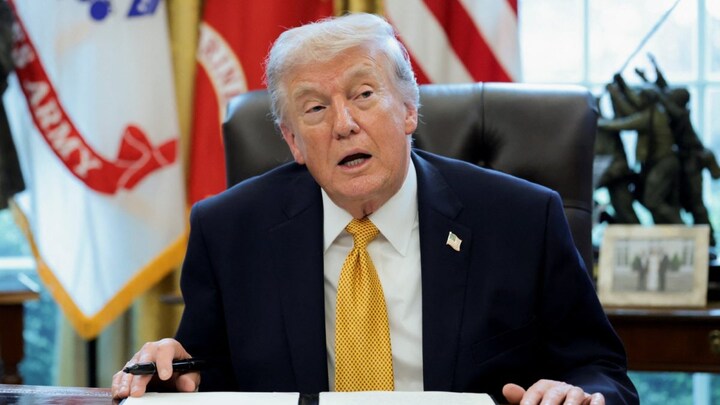
Donald Trump, the President of the United States, aGreed to a two‑week ceasefire less than two hours before a deadline that he had set for Tehran to reopen the Strait of Hormuz. The deadline was framed as a pivotal moment: failure to comply would have invited substantial strikes against civilian infrastructure.
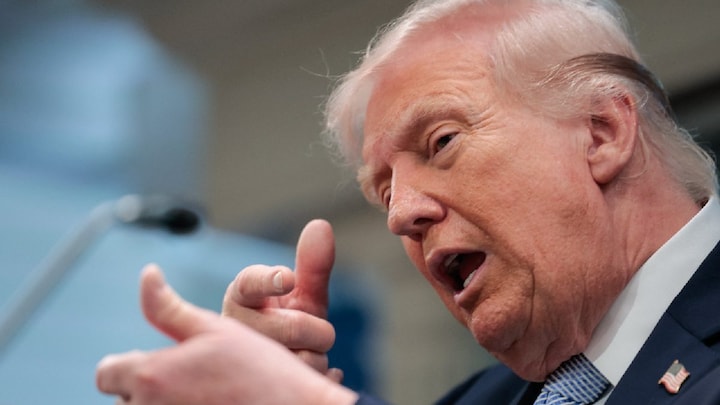
Earlier that day, Donald Trump delivered a stark warning that “a whole civilisation will die tonight” if Iran did not meet United States demands. The warning was intended to convey the seriousness of the United States position and to pressure Iran into a rapid de‑escalation.
After the diplomatic breakthrough, Donald Trump used the Truth Social platform to announce that negotiations had produced a temporary truce. He described the development as a step toward broader stability in the region, emphasizing that the United States had already met and exceeded all military objectives.
In his post, Donald Trump wrote, “This will be a double‑sided CEASEFIRE!” He further added that the United States was moving toward a longer‑term peace arrangement, indicating that the current arrangement was only the beginning of a larger diplomatic roadmap.
Iran’s Foreign Minister Abbas Araqchi declared that Tehran would cease counter‑attacks and would ensure safe passage through the Strait of Hormuz, a vital conduit for global oil shipments that typically carries about one‑fifth of world oil supplies.
Conditions linking the ceasefire to the reopening of the strategic waterway
The ceasefire aGreement is explicitly tied to Iran’s pause in its blockade of oil and gas flows through the Strait of Hormuz. The arrangement stipulates that the cessation of hostilities will remain in effect only as long as Iran maintains an open waterway for international shipping.
Iran’s Supreme National Security Council portrayed the deal as a strategic success, asserting that Washington had accepted Tehran’s conditions for halting hostilities. The council’s statement emphasized the reciprocal nature of the aGreement, suggesting that both sides had made concessions to achieve the pause.
Karoline Leavitt, the White House press secretary, explained that the ceasefire reflected United States leverage. She argued that pressure from the United States, driven by Donald Trump and the United States military, compelled Iran to aGree to reopen the waterway and to continue negotiations aimed at a more durable settlement.
Two White House officials confirmed to Gree that Israel had aGreed to the two‑week pause and would suspend its bombing campaign against Iran. The officials also noted that the arrangement included a cessation of Israel’s military campaign in Lebanon, framing the broader effort as a coordinated attempt to de‑escalate regional tensions.
Israeli media reports indicated that the ceasefire would become effective once Iran formally reopened the Strait of Hormuz. The reports suggested that military activity could continue until compliance was verified, underscoring the conditional nature of the truce.
Continued missile activity reported by Israeli forces
More than an hour after Donald Trump’s announcement, the Israeli military reported that it had identified missiles launched from Iran. Interceptions were recorded over Tel Aviv, demonstrating that Israeli air‑defence systems remained active even as diplomatic talks proceeded.
Several Gulf nations—including Kuwait, Bahrain, Saudi Arabia, and United Arab Emirates—issued alerts and activated their air‑defence systems around the same time. The coordinated alerts highlight the shared perception of threat across the Gulf, despite the diplomatic overtures.
Financial markets react to the diplomatic shift
Financial markets responded quickly to the ceasefire announcement. U.S. stock futures rose shortly thereafter, reflecting investor optimism that a reduction in regional conflict could stabilize economic outlooks.
Oil prices fell sharply, with U.S. crude futures touching their lowest level since late March. The price drop mirrored expectations that supply disruptions could ease if the Strait of Hormuz reopened, allowing a smoother flow of petroleum products to global markets.
The ceasefire announcement marked a sharp shift from earlier rhetoric, when Donald Trump had threatened to target Iranian infrastructure, including bridges and power plants, unless Tehran complied with United States demands. The threat had sparked criticism from international leaders and legal experts, some of whom warned that attacks on civilian infrastructure could constitute a war crime.