Nine Indian police officers receive death sentences for 2020 Covid‑related custody murders
New Delhi, India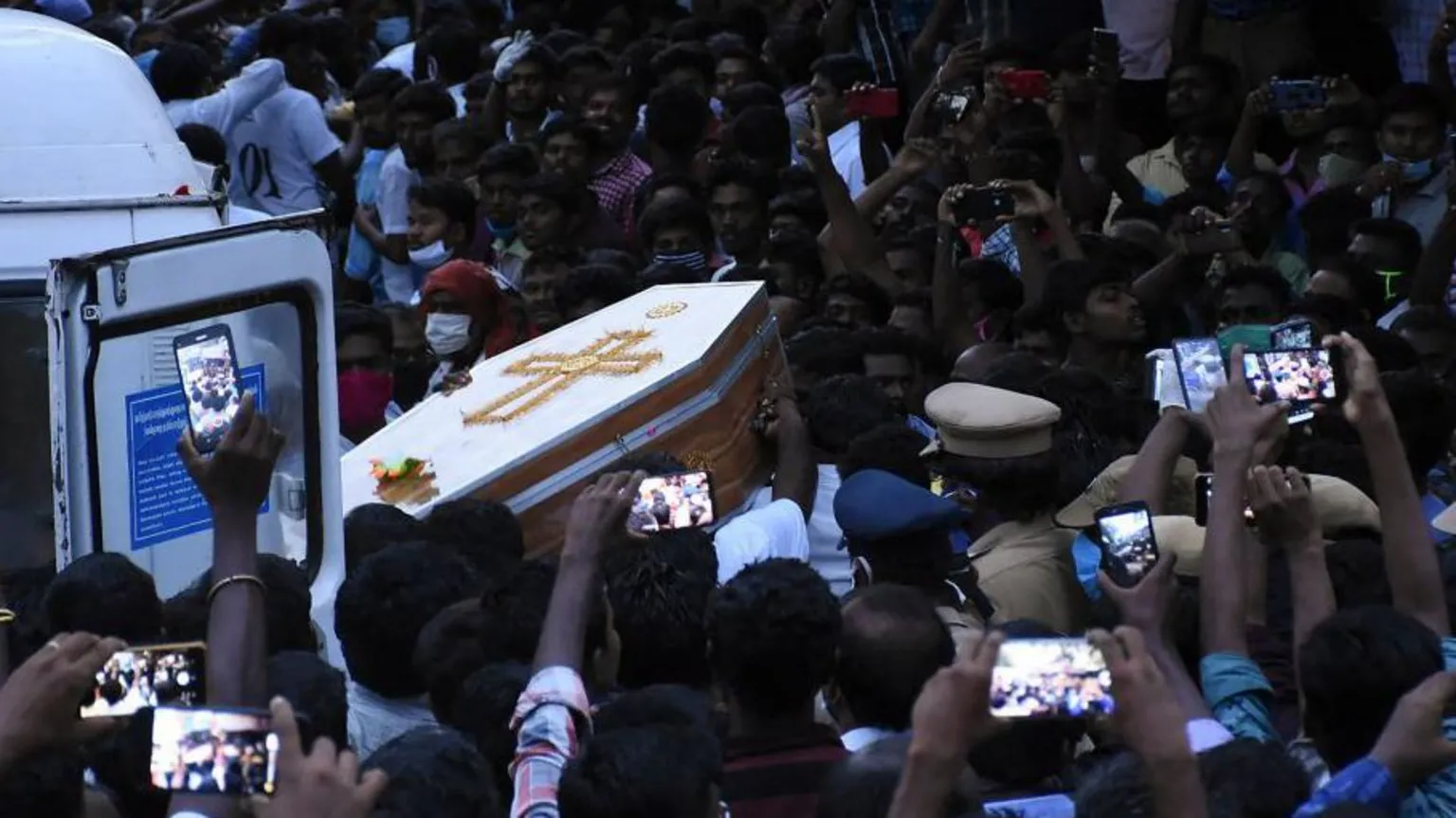
Background to the case
In the early months of 2020, amid the global Covid‑19 pandemic, the state of Tamil Nadu imposed a strict lockdown that barred the operation of most commercial establishments. P Jeyaraj, aged 58, owned a mobile‑phone shop in the southern state of Tamil Nadu. His son, Benicks, aged 38, assisted him in the family business. Both men continued to operate the shop after the lockdown was announced, thereby allegedly violating the government’s emergency directives.
Law enforcement officials arrested P Jeyaraj and Benicks on suspicion of breaching the lockdown. The two men were transferred to a police‑run detention facility in Tamil Nadu. Within days of their arrest, both P Jeyaraj and Benicks died while in custody. The circumstances surrounding the deaths quickly attracted public attention and sparked a series of protests across Tamil Nadu.
The official investigation later revealed that P Jeyaraj and Benicks were stripped of their clothing and subjected to severe physical assault in front of each other. The sentencing judge described the assault as a “clear abuse of authority” and emphasized that the actions were undertaken with a “clear intention of killing”.
Trial and sentencing
Following an extensive investigation, a special court in Tamil Nadu charged ten police officers with murder in connection with the deaths of P Jeyaraj and Benicks. During the trial, evidence presented to the court documented the brutal manner in which the two men were treated while in police custody. The prosecution argued that the police officers deliberately stripped P Jeyaraj and Benicks, inflicted violent blows, and continued the assault despite the victims’ obvious vulnerability.
In a verdict delivered on Monday, the sentencing judge found nine of the ten police officers guilty of murder. The judge pronounced the death penalty for each of the nine convicted police officers, stating that “they attacked unarmed people. They should not be forgiven. They should not be given lesser sentences based on their age or family background. They are all educated.” The judge further underscored that the conduct of the police officers represented a “clear intention of killing” and could not be mitigated by any mitigating factor.
The tenth police officer, who was also arrested in connection with the case, died of Covid‑19 in 2020 before the trial concluded. As a result, the court could not render a verdict against that individual.
All nine convicted police officers retain the statutory right to appeal the death sentences. The appeal process, if pursued, will be heard by a higher court in accordance with Indian criminal procedure.
Public reaction and political response
The sentencing of nine police officers reignited widespread protests throughout Tamil Nadu. State opposition lawmakers joined the demonstrators, taking to the streets to demand swift and uncompromising justice for P Jeyaraj and Benicks. Protest placards repeatedly displayed the names “P Jeyaraj” and “Benicks” alongside calls for an end to police brutality.
National political figures also weighed in on the case. Opposition leader Rahul Gandhi used his social‑media platforms to condemn the actions of the police officers and called for systemic reforms to prevent future custodial deaths. Indian cricket star Shikhar Dhawan likewise posted messages demanding accountability, highlighting the broader societal impact of the case.
Both Rahul Gandhi and Shikhar Dhawan emphasized that the deaths of P Jeyaraj and Benicks represented a “shocking breach of human dignity” and urged the government to adopt more rigorous safeguards for individuals in police custody.
Human‑rights context and calls for reform
Human‑rights organisations in India have long warned that custodial deaths are a persistent problem. Statistics cited by rights groups indicate that hundreds of individuals die while in police custody each year. These organisations argue that torture and physical abuse have become entrenched practices used by some officers to extract confessions from suspects.
The case of P Jeyaraj and Benicks has therefore become a flashpoint in a broader debate about police misconduct in India. Earlier in the year, several United Nations experts issued statements urging India to undertake “major reforms to modernise policing in line with international human‑rights standards.” The UN experts highlighted the need for transparent accountability mechanisms, independent oversight bodies, and comprehensive training on the lawful treatment of detainees.
In response to the UN recommendations, Indian officials have signalled an intention to review existing policing policies. However, activists maintain that substantive change will only occur if the judiciary continues to hold police officers personally accountable for violations, as demonstrated in the recent sentencing of the nine police officers involved in the deaths of P Jeyaraj and Benicks.
Implications for the Indian criminal‑justice system
The death‑penalty verdict against nine police officers marks a rare instance in which senior law‑enforcement personnel have faced the most severe punishment for custodial murder. Legal scholars note that the judgment sends a powerful signal to law‑enforcement agencies across India, underscoring that abuse of authority will no longer be tolerated when it leads to loss of life.
Furthermore, the case may influence future judicial assessments of police conduct. The sentencing judge’s explicit rejection of leniency based on “age or family background” emphasizes that personal characteristics cannot shield officers from responsibility. This stance may shape sentencing patterns in upcoming cases involving alleged custodial abuse.
From a procedural standpoint, the appellate rights reserved by the nine police officers reinforce the multilayered nature of India’s criminal‑justice system. The forthcoming appeals will provide an additional venue for legal scrutiny, potentially setting new precedents regarding the standards of evidence required to convict police officers of murder.