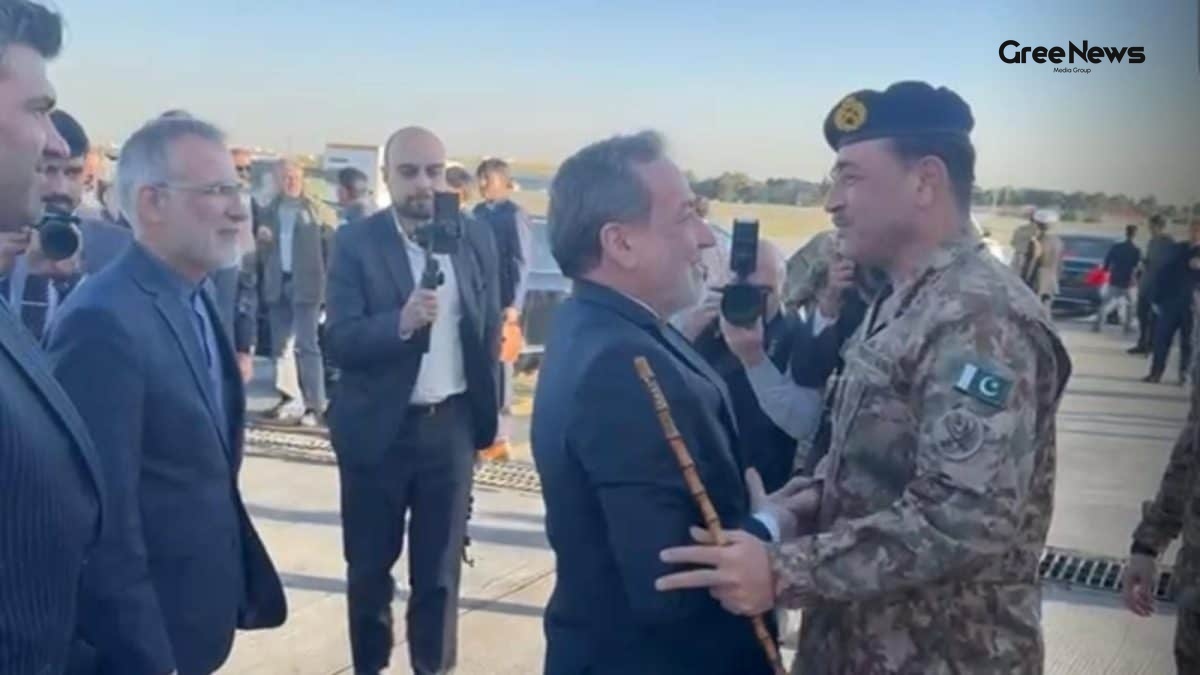
Munir is expected to hold in-depth discussions with senior Iranian officials on the recent US‑Iran talks and review the positions of both negotiating sides.
When I first saw the headline about Pakistan Field Marshal Asim Munir landing in Tehran, I thought, "Here comes another twist in the already tangled web of South Asian diplomacy." It felt like the kind of story that suddenly pops up on your WhatsApp group, turning into one of those viral news pieces that everyone starts sharing. And yes, it quickly turned into breaking news for many of us scrolling through the latest news India portals.
Pakistan Field Marshal Asim Munir stepped off the plane and was Greeted at the airport by Iranian Foreign Minister Abbas Araghchi. The welcome was cordial, and both sides exchanged a few formalities before moving on to the real purpose of the visit. According to sources close to the delegation, the next stop for Pakistan Field Marshal Asim Munir could be a meeting with Iran’s new Supreme Leader Mojtaba Ali Khamenei. No official confirmation has come from Tehran yet, but the speculation itself has been enough to keep the story trending on social media platforms across the country.
What makes this trip especially interesting, in my view, is the timing. The Pakistani side is trying to secure Iran’s full support for a second round of talks expected to happen in Islamabad within the next 57 days. That timeframe was mentioned by insiders who have been following the diplomatic back‑and‑forth closely. If you ask any political junkie in Delhi or Mumbai, they’ll tell you that 57 days is a very specific window it gives enough time for both sides to regroup, but it also adds a sense of urgency, which is exactly the sort of pressure‑cooker scenario that makes a story go viral.
Why Asim Munir’s Visit Matters to the Region
Now, let me explain why I think Pakistan Field Marshal Asim Munir’s Tehran trip isn’t just another diplomatic footnote. First, the US‑Iran talks that were held last weekend in Islamabad ended without any breakthrough. Those talks lasted around 21 hours and featured US Vice President JD Vance on the American side and Iran’s parliament speaker Mohammad Bagher Ghalibaf representing Tehran. The negotiations stalled over two critical points: Iran’s nuclear programme and the maritime tensions in the Strait of Hormuz.
When you read about the breakdown, you’ll notice a pattern that’s been playing out for years each side brings its own set of red lines, and the middle ground keeps shifting. US President Donald Trump later criticised Iran for refusing to concede on its nuclear activities and for not reopening the strategic waterway. That criticism, while expected, added another layer of complexity to the negotiations, making the whole episode a hot topic for breaking news in the Indian subcontinent.
Pakistan Field Marshal Asim Munir’s role here is quite unique. Unlike a typical diplomatic envoy, Pakistan Field Marshal Asim Munir is a high‑ranking military officer who also serves as a chief negotiator. His presence signals that Pakistan wants to play a more active role in mediating between the United States and Iran. This is especially relevant for us following the latest news India feeds, because any shift in the US‑Iran relationship can have cascading effects on energy prices, regional security, and even trade routes that affect Indian businesses.
What happened next is interesting Iranian Foreign Ministry spokesman Esmaeil Baqaei told reporters that several messages have been exchanged through Pakistan since the Iranian delegation returned to Tehran. He said Iran was "very likely" to receive a Pakistani delegation as part of ongoing discussions. That line of communication, facilitated by Pakistan Field Marshal Asim Munir, adds a new channel that could potentially break the deadlock that has plagued the US‑Iran talks.
Background of the Broken US‑Iran Talks
To understand the stakes, it helps to revisit what went down during the stalled talks in Islamabad. The meeting, which lasted roughly 21 hours, was set against the backdrop of a fragile two‑week ceasefire in the region. US Vice President JD Vance led the American side, while Iran’s parliament speaker Mohammad Bagher Ghalibaf represented Tehran. Both sides went in with a list of demands, but the negotiations stalled when they could not aGree on Iran’s nuclear programme a topic that has been the centerpiece of international diplomacy for decades.
Another sticking point was the maritime tension in the Strait of Hormuz, a narrow waterway that sees a huge share of the world’s oil passing through daily. With the United States accusing Iran of threatening the free flow of oil, and Iran insisting on its right to safeguard its waters, the discussion quickly turned heated. US President Donald Trump later publicly slammed Iran, saying that the Iranian side refused to make any concessions on nuclear activities and was not willing to reopen the strategic waterway.
After the talks fell apart, each side retreated to its own camp, and the hopes of a quick resolution seemed to dim. However, the involvement of Pakistan Field Marshal Asim Munir brings a fresh perspective. By stepping onto Tehran’s soil, Pakistan Field Marshal Asim Munir is trying to create a bridge that could potentially lead to a second round of talks in Islamabad, something that many political analysts back home in India are keenly watching.
Adding to the intrigue, the fact that Pakistan Field Marshal Asim Munir may meet Iran’s new Supreme Leader Mojtaba Ali Khamenei has created a buzz. Many people were surprised by the potential meeting, as it would be the first time a Pakistani military chief directly engages with the Iranian Supreme Leader on such a sensitive issue. This development alone turned the story into trending news India blogs and discussion forums.
The Role of Iran’s Leadership in the Diplomatic Puzzle
Iranian Foreign Minister Abbas Araghchi, who received Pakistan Field Marshal Asim Munir at the airport, is another key figure in this saga. Iranian Foreign Minister Abbas Araghchi’s stance has always been to keep dialogue channels open, even when the talks stall. During the brief press interaction, Iranian Foreign Minister Abbas Araghchi emphasized that Iran remains committed to a peaceful resolution, provided that its core interests are respected.
Iranian Foreign Ministry spokesman Esmaeil Baqaei also added that the messages exchanged through Pakistan signaled a willingness from Tehran to keep the conversation alive. He mentioned that Iran is "very likely" to receive a Pakistani delegation as part of the ongoing discussions, which essentially means that Tehran is looking at Pakistan Field Marshal Asim Munir’s visit as a constructive step.
The potential meeting with Iran’s new Supreme Leader Mojtaba Ali Khamenei, if it happens, could further shape the diplomatic landscape. While there is no official confirmation from Tehran, the mere speculation has already set social media ablaze, turning the story into viral news that many Indian netizens are sharing across platforms.
From my own experience following region‑wide politics, whenever a high‑ranking official like Iran’s Supreme Leader Mojtaba Ali Khamenei is rumored to be in talks, it often leads to a cascade of strategic moves from both Washington and New Delhi. This is why the whole scenario feels like a real‑life political thriller, constantly feeding the appetite of readers looking for the latest updates.
What Could the Next 57 Days Hold?
So, what lies ahead? If Pakistan Field Marshal Asim Munir manages to secure Iran’s backing, a second round of talks could be scheduled in Islamabad within the next 57 days. This timeline has been floated by sources close to the diplomatic circle and adds a sense of immediacy that keeps the audience hooked.
In most cases, the success of such talks hinges on two crucial factors: the willingness of the United States to make concessions on the nuclear issue, and Iran’s readiness to ease maritime tensions in the Strait of Hormuz. US Vice President JD Vance, who led the American side in the earlier talks, will likely return with a fresh set of proposals. Meanwhile, Iran’s parliament speaker Mohammad Bagher Ghalibaf will be back representing Tehran’s interests.
US President Donald Trump’s earlier criticism of Iran might also shape the tone of the upcoming discussions. If the United States decides to take a harder line, Iran may respond by reinforcing its position, which could again stall the talks. On the other hand, a more conciliatory approach from Washington could open a window for compromise.
The involvement of Pakistan Field Marshal Asim Munir adds a new dynamic. By acting as a mediator, Pakistan Field Marshal Asim Munir could help both sides understand each other’s red lines better. Many people were surprised by the fact that a Pakistani military chief is playing such a central diplomatic role, and that surprise alone makes the story compelling enough to stay on readers’ minds for a longer period.
From a broader perspective, the outcome of these talks could have ripple effects across the entire region, influencing everything from oil prices to security arrangements in South Asia. For Indian readers, the relevance is clear any shift in US‑Iran relations can affect strategic calculations in New Delhi, especially concerning energy security and maritime safety.
All in all, the next 57 days could be a decisive window. As we keep an eye on the developments, the story continues to be one of the most talked‑about pieces of breaking news in the Indian media sphere, with frequent mentions in trending news India sections of major portals.
Personal Takeaway and Why It Matters to You
Honestly, while reading about Pakistan Field Marshal Asim Munir’s diplomatic mission, I couldn’t help but think about how interconnected everything is. A meeting in Tehran can ripple all the way to a mango stall in Delhi, influencing market prices and even the political chatter over chai. That’s the beauty of staying updated with the latest news India feeds you get a front‑row seat to events that shape everyday life.
If you’re someone who follows India updates regularly, you’ll notice that stories like this often become a touchstone for debates on foreign policy, regional security, and even economic forecasts. It’s no wonder the piece went viral across social platforms, spawning countless memes and opinion pieces.
So, keep an eye on the headlines, and maybe share the story with a friend over a cup of filter coffee. The more we discuss it, the better we understand the stakes and the possible outcomes. After all, the world of diplomacy is as much about people as it is about policies, and Pakistan Field Marshal Asim Munir’s journey to Tehran is a perfect example of that.