Russia Blames United States and Israel for Hormuz Disruption as China Joins Veto at UN
At a UN Security Council session, Russia and China blocked a draft resolution aimed at reopening the Strait of Hormuz, accusing the United States and Israel of creating the very crisis they now demand to be resolved.
Russia’s accusation against United States and Israel
During a heated debate inside the United Nations Security Council, Russia placed full responsibility for the present turmoil in the Strait of Hormuz on the United States and Israel. Russia asserted that the waterway remained unobstructed until the United States and Israel conducted military strikes against Iran. In Russia’s words, the United States now demands that the strait be reopened as a condition for a ceasefire, yet the United States and Israel themselves created the disruption that is currently the subject of the demand.
Russia’s statement emphasized a direct causal link: military action by the United States and Israel led to a chain of events that culminated in the blockage of a passage that carries a substantial share of the world’s petroleum. By framing the issue in this manner, Russia sought to portray the United Nations Security Council discussion as a platform for addressing a problem that, in Russia’s view, the United States and Israel helped to generate.
China’s alignment with Russia in the veto
When the draft resolution, initially prepared by Bahrain and backed by the United States, was put to a vote, the combined opposition of Russia and China resulted in an outright veto. The draft had secured eleven affirmative votes, but the two negative votes from Russia and China, together with two abstentions, prevented the resolution from achieving the required consensus.
The draft resolution had undergone significant revisions prior to the vote. Earlier versions contained provisions that Gulf states had sought, allowing the use of force to secure the waterway. Those provisions were removed in the final text, reflecting an attempt to soften the language and make the resolution more acceptable to a broader range of Security Council members.
China’s decision to stand with Russia underscored a shared stance against what both nations perceive as interference by Western powers in regional affairs. By joining Russia in the veto, China demonstrated its willingness to support a position that opposes the narrative that the United States and Israel are merely victims of an external crisis.
Details of the contested resolution
The resolution that failed to pass was crafted by Bahrain, a Gulf state with direct interest in the free flow of oil through the Strait of Hormuz. The United States provided diplomatic support for the draft, emphasizing the importance of reopening the waterway without delay. The draft garnered eleven votes in favor, reflecting broad, though not universal, acceptance among Security Council members.Two members—Russia and China—cast negative votes, while two other members chose to abstain. The abstentions signaled a reluctance to endorse the resolution without fully endorsing the language, but also a decision not to block it outright. The combination of these voting patterns resulted in the resolution’s failure to achieve the needed majority.
One noteworthy aspect of the final draft was the omission of language that would have permitted the use of force to guarantee safe passage. Gulf states originally advocated for such a clause, aiming to provide a legal basis for potential military action to keep the strait open. By removing that provision, the final text presented a more restrained approach, focusing on diplomatic and economic measures rather than explicit authorization for force.
Strategic significance of the Strait of Hormuz
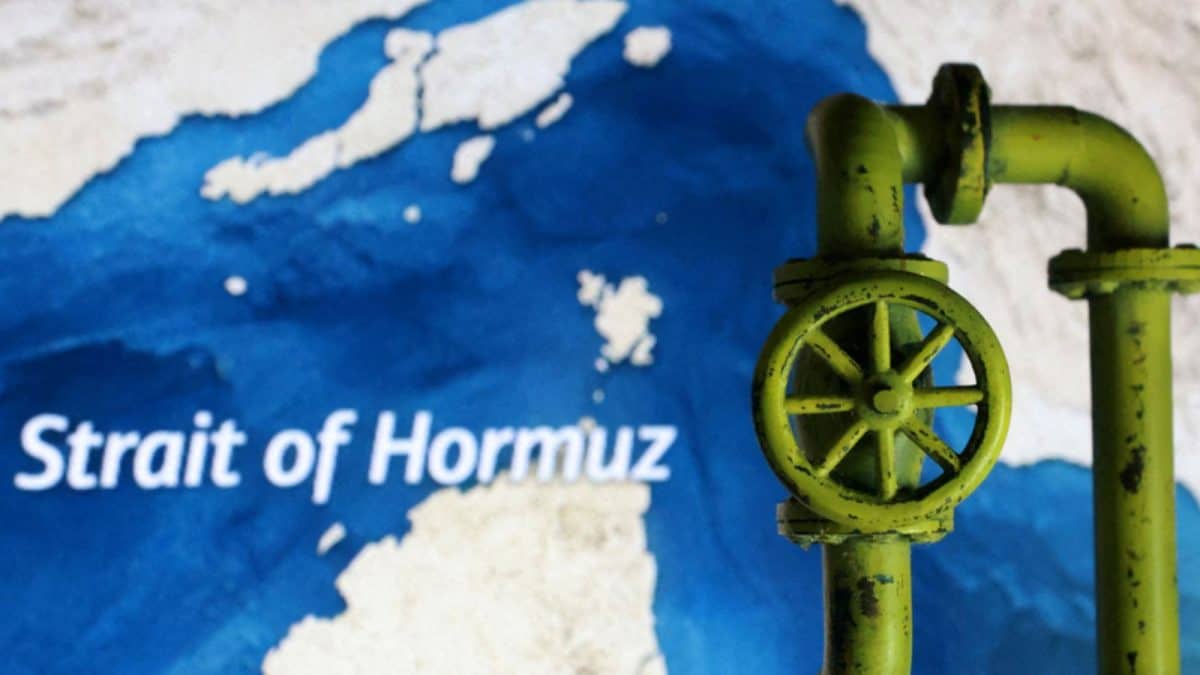
The Strait of Hormuz is a narrow maritime corridor that links the Gulf region with the wider world. Roughly one‑fifth of global oil shipments transits this channel, making it a critical artery for international energy markets. Any interruption in the flow of oil through the strait has immediate repercussions for oil prices, global trade balances, and the economic stability of nations that rely heavily on petroleum imports.
Since the United States and Israel launched their military operation against Iran, Iran has effectively restricted traffic through the waterway. This action has generated anxiety among oil‑producing and oil‑consuming nations alike, prompting calls within the United Nations to address the situation and restore normal shipping patterns.
The blockage has also spurred concerns about the potential for broader regional escalation. Nations that depend on the uninterrupted flow of oil through the strait have warned that prolonged disruption could trigger a cascade of economic fallout, influencing everything from transportation costs to inflation rates in distant markets.
Reaction from United States officials
Following the Security Council vote, United States Ambassador Mike Waltz addressed the press corps, stating that the outcome of the vote would not limit Washington’s ability to act in self‑defence or in defence of its allies. Ambassador Mike Waltz emphasized that the United States retains the right to protect its national interests and the interests of partner nations, regardless of the resolution’s fate.
Ambassador Mike Waltz’s remarks signaled a determination to keep strategic options open, including the possibility of taking unilateral or coalition‑based measures to ensure the safe passage of commercial vessels through the strait. The United States’ position, as articulated by Ambassador Mike Waltz, frames any future action as a matter of legitimate self‑defence, a principle recognized under international law.
Perspectives from Gulf states
Bahrain’s Foreign Minister Abdullatif bin Rashid Al Zayani, speaking on behalf of Gulf nations, condemned the failure of the resolution to pass. Abdullatif bin Rashid Al Zayani described the outcome as sending “the wrong signal to the world,” warning that such a signal could embolden actors who might consider threatening international waterways.
Abdullatif bin Rashid Al Zayani’s statements reflected a broader concern among Gulf states that the inability to secure a definitive UN endorsement for reopening the strait could undermine collective security arrangements. The Gulf states have long advocated for robust measures to protect the strait, viewing its freedom of navigation as essential to regional stability.
Iran’s opposition to the resolution
Iran’s representative to the United Nations, Amir Saeid Iravani, expressed strong opposition to the draft resolution. Amir Saeid Iravani characterized the resolution as an attempt to “punish the victim,” suggesting that the document was designed to hold Iran accountable for actions initiated by the United States and Israel.
Amir Saeid Iravani warned that the resolution could be used as a pretext for further use of force, a development that would violate established principles of international law. By framing the resolution as punitive, Amir Saeid Iravani underscored Iran’s view that the United Nations should not become a platform for legitimizing additional military pressure on Tehran.
Implications for future UN Security Council deliberations
The stalemate experienced during this Security Council session highlights the deep divisions among the permanent members regarding the handling of maritime security in the Gulf region. The joint veto by Russia and China demonstrates that any future resolution seeking to address the Strait of Hormux must navigate the geopolitical sensitivities of the major powers, particularly where the United States and Israel are concerned.
Analysts note that the inability to achieve consensus on a relatively narrow issue, such as the reopening of a shipping lane, may foreshadow challenges in reaching aGreement on broader Middle‑East security matters. The pattern of vetoes and abstentions suggests that diplomatic efforts will need to incorporate language acceptable to all permanent members, potentially at the cost of weakening enforceable provisions.
Furthermore, the episode reiterates the importance of multilateral mechanisms for crisis management. While bilateral pressure and unilateral actions remain options for individual states, the United Nations Security Council continues to serve as a critical forum for articulating collective positions on matters that affect international peace and security.