Start the new financial year with smart money habits. Discover simple tips to improve your financial goals, boost savings, manage expenses, and plan better investments.
Honestly, the first few weeks after the financial year rolls over feel a bit like a fresh start, almost like a new semester in college. You get that buzz of “let’s do better this time”, but then the everyday hustle quickly knocks you back on the ground. I remember sitting at my kitchen table last March, sipping masala chai, and looking at my bank statement that showed barely any increase in savings despite working extra hours. That was the moment I decided to stop treating finance as something that only accountants worry about, and start treating it like a daily habit, just like brushing my teeth or checking the news on morning commute.
1. Set Clear, Personal Money Goals – No More Vague Dreams
First thing you need to do is write down exactly what you want to achieve financially. It could be as simple as “save ₹30,000 for a family vacation to Goa” or as big as “build a down‑payment of ₹10 lakh for a flat in Bangalore”. The key is to be specific – numbers help. When I first tried to save for a new refrigerator, I just thought “save more”. That vague idea never translated into action. But when I wrote down “save ₹25,000 in six months for a 2‑star fridge, by cutting my daily caffeine out and using a home‑brew”, it became a clear target.
Break the goal into smaller milestones. For a ₹30,000 vacation, think of it as saving ₹5,000 each month. Write these milestones on a sticky note and put it on your fridge. Seeing it every day makes the goal feel real, not some far‑off fantasy.
Also, ask yourself why the goal matters. In my case, the fridge upgrade meant no more constant breakdowns during the monsoon – a practical reason that kept me motivated. When goals sync with personal values or family needs, you’re more likely to stick to them.
2. Make a Realistic Budget – Don’t Pretend You’re a Millionaire
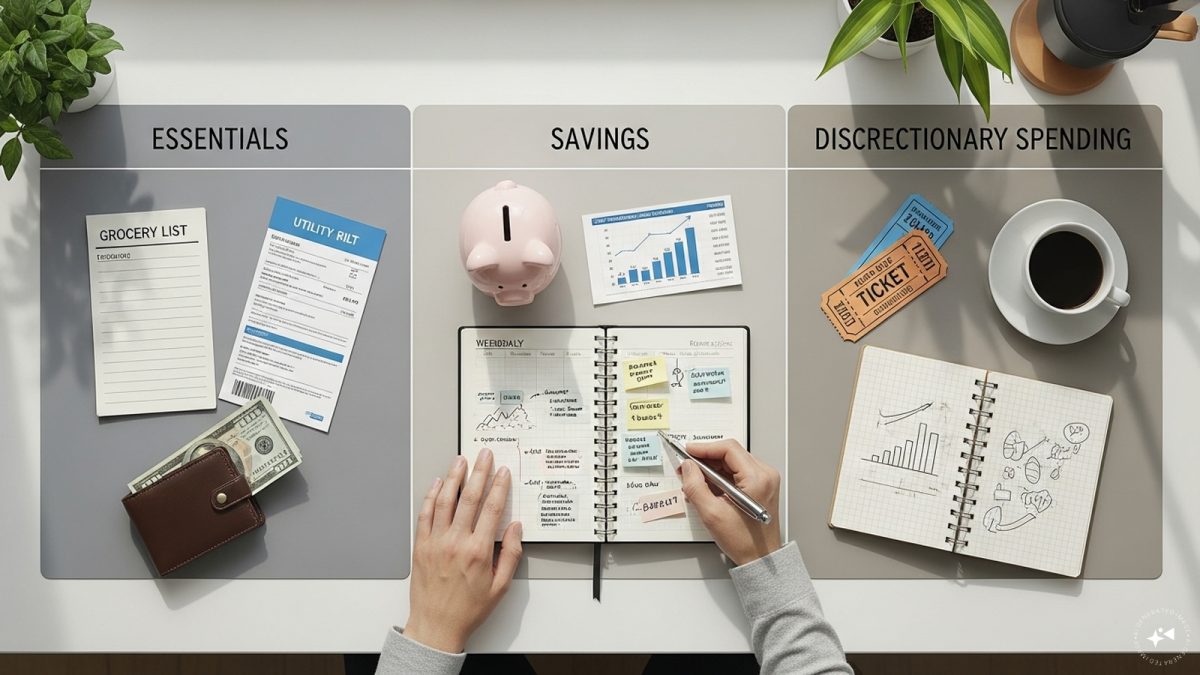
Once you have that list, categorize them into four buckets:
- Needs: rent, utilities, school fees, groceries – the essentials.
- Wants: dining out, streaming subscriptions, occasional shopping sprees.
- Savings/Investments: emergency fund, SIPs, fixed deposits.
- Debt repayments: credit card bills, personal loan EMIs.
Allocate a percentage of your take‑home salary to each bucket. A rule of thumb I follow (and that many Indian financial planners suggest) is 50% needs, 20% wants, 20% savings, 10% debt. You can tweak it based on your situation, but the main idea is to be honest about where the money goes.
To keep the budget realistic, consider seasonal expenses – like festivals, Diwali gifts, or school summer camps. I start a separate “festival fund” a couple of months in advance, putting a small amount each month. That way, when the season hits, I’m not scrambling for cash.
3. Track Your Daily Expenses – The Small Things Add Up
Budgeting on paper is one thing, but tracking daily spend is where most people slip. I started using a simple notebook, writing down every rupee I spent. At first it felt tedious, but after a week I noticed patterns – I was buying a bottle of soda after work almost every day, which was costing me around ₹2,500 a month. When I cut that habit, I instantly added that amount to my savings.
If a notebook feels old‑school, there are plenty of free apps – Money View, Walnut, or even a simple spreadsheet on Google Sheets. The advantage of an app is the visual charts; you can instantly see that “food” category spiking in a particular week.
Don’t be too harsh on yourself. If you overspend one weekend, just note it and move on. The goal is to get a realistic picture, not to shame yourself.
4. Tackle Debt Early – Stop Paying Interest on Your Dreams
Debt is like that stubborn guest who never leaves. In my case, a credit‑card bill that kept hovering around ₹15,000 with an interest rate of about 3.5% per month. I realized that even if I saved ₹5,000 a month, the interest was eating half of it. So I set a plan: pay at least 1.5 times the minimum due each month, and use any extra cash (like the soda money I saved) to chip away faster.
Prioritise high‑interest debt first. If you have a personal loan at 12% and a home loan at 8%, focus on the loan with the higher rate after making compulsory EMIs for the low‑rate loan.
Another tip – whenever you get a bonus or a tax refund, direct a chunk of it straight to debt repayment. That’s a quick way to reduce the principal, and you’ll see the interest neck down fast.
5. Build a Small Emergency Cushion – No Need for a Fancy Fund
Before you think about big investments, set aside a tiny emergency fund – about one month’s worth of expenses. For many families in India, that could be as low as ₹20,000 to ₹30,000. Keep it in a liquid instrument – a savings account with good interest or a liquid mutual fund that you can withdraw within a day.
When unexpected expenses hit – a sudden car breakdown, a medical bill, or a school fee increase – you won’t have to dip into your long‑term savings or take a high‑interest loan. In my own experience, having that small cushion saved me from borrowing against my credit card during a rainy season when my spouse’s scooter broke down.
6. Save Consistently – Automation Is Your Best Friend
One of the easiest ways to save is to automate the process. Set up an auto‑debit from your salary account to a separate savings account or investment instrument right after your salary gets credited. I set a rule: the moment my salary hits the account, ₹5,000 moves instantly to a recurring deposit. I never see that amount in my main account, so I’m not tempted to spend it.
Even if you’re on a modest income, start with a small amount – ₹500 or ₹1,000 – and increase it gradually as your earnings rise. The habit of regular saving is more important than the amount at the beginning.
Another trick – use “round‑up” features offered by some banks where every transaction is rounded to the nearest ten or hundred and the difference is saved. Over a year, those spare change add up nicely.
7. Invest Wisely – Align With Your Goals and Risk Appetite
Once you have a clear emergency fund and a steady saving habit, start looking at investment options that match your goals. If your target is a short‑term goal, like a vacation in six months, a high‑interest savings account or a short‑term fixed deposit works well.
For medium‑term goals – say a down‑payment for a house in three to five years – systematic investment plans (SIPs) in low‑to‑mid‑risk mutual funds are a good choice. I started a SIP of ₹2,500 in a diversified equity fund, and after a year I saw a decent return, more than the inflation rate, without having to think about market timing.
If you have a longer horizon, like retirement or children’s education 10‑15 years out, you can consider a mix of equity‑linked savings schemes (ELSS) for tax benefits and a larger portion of equity mutual funds or even a small exposure to direct stocks if you’re comfortable.
Remember, never invest money you might need in the next 12‑18 months. That’s why the emergency fund matters – it separates the “can’t touch” money from the “can grow” money.
8. Review and Adjust – Finance Is Not a Set‑It‑and‑Forget‑It Thing
Every month, sit down for 15‑20 minutes and look at where you stood against your budget and goals. Did you save the planned amount? Did any unexpected expense arise? Did you pay extra on debt? If something is off, adjust the next month’s plan – maybe allocate a bit more to savings and cut back on a non‑essential expense.
Also, revisit your goals annually. Maybe the vacation you planned for now needs to be postponed, or perhaps you’ve received a salary hike and can raise your savings rate. Life changes, and your financial plan should reflect that.
When I first started this practice, I used to feel a little anxious about the numbers, but over time it turned into a sense of control. Knowing exactly where my money goes gave me confidence to make bigger decisions, like applying for a home loan later on.
9. Use Simple Tools – No Need for Complex Software
For many Indian households, especially in tier‑2 and tier‑3 cities, using a spreadsheet on a laptop or even a piece of paper works fine. But if you’re comfortable with smartphones, apps like Google Pay’s “My Expenses” tab, the Excel mobile app, or simple budgeting templates from RBI’s website can be very helpful.
Another practical tip – use physical envelopes for cash categories. I keep one envelope for groceries, another for transport, and put the exact amount I plan to spend in each for the week. When the envelope is empty, I know I’ve hit the limit and stop spending. It’s an old method but surprisingly effective.
10. Keep the Mindset Light – Savings Should Not Feel Like a Punishment
One of the biggest traps is thinking that saving means you have to give up all fun. In reality, it’s about balance. Allocate a small portion of your budget for a treat – a movie night, a weekend outing, or a small dessert after dinner. Knowing you have that little joy built in makes it easier to stick to the rest of the plan.
When you achieve a milestone – say you’ve saved ₹20,000 towards that Goa trip – celebrate it with something simple, perhaps a home‑cooked feast with family. That reinforcement makes the habit stick.
And remember, everyone’s journey is different. Some months you’ll overspend, other months you’ll save more. The important thing is to keep moving forward, not to be perfect.
Final Thought – Small Steps Lead to Big Changes
At the end of the day, the new financial year is just a calendar change. What really matters is the small, consistent actions you take every day – writing down goals, watching your spend, paying down debt, and letting your money work for you. My own experience shows that even modest changes – like brewing tea at home instead of buying it on the way, or using a free budgeting app – add up to a noticeable boost in savings over a few months.
So, if you’re reading this and thinking “maybe I’ll try one tip next month”, go ahead. Start with the tip that feels easiest – maybe just tracking expenses for a week – and then build on that. Before you know it, you’ll have a healthier bank balance, less stress about money, and the freedom to plan for the future with confidence.
Here’s to a financially smarter year ahead – may your savings grow and your worries shrink.