Supreme Court Orders Freedom for Former Prime Minister KP Sharma Oli and Ex‑Home Minister Ramesh Lekhak
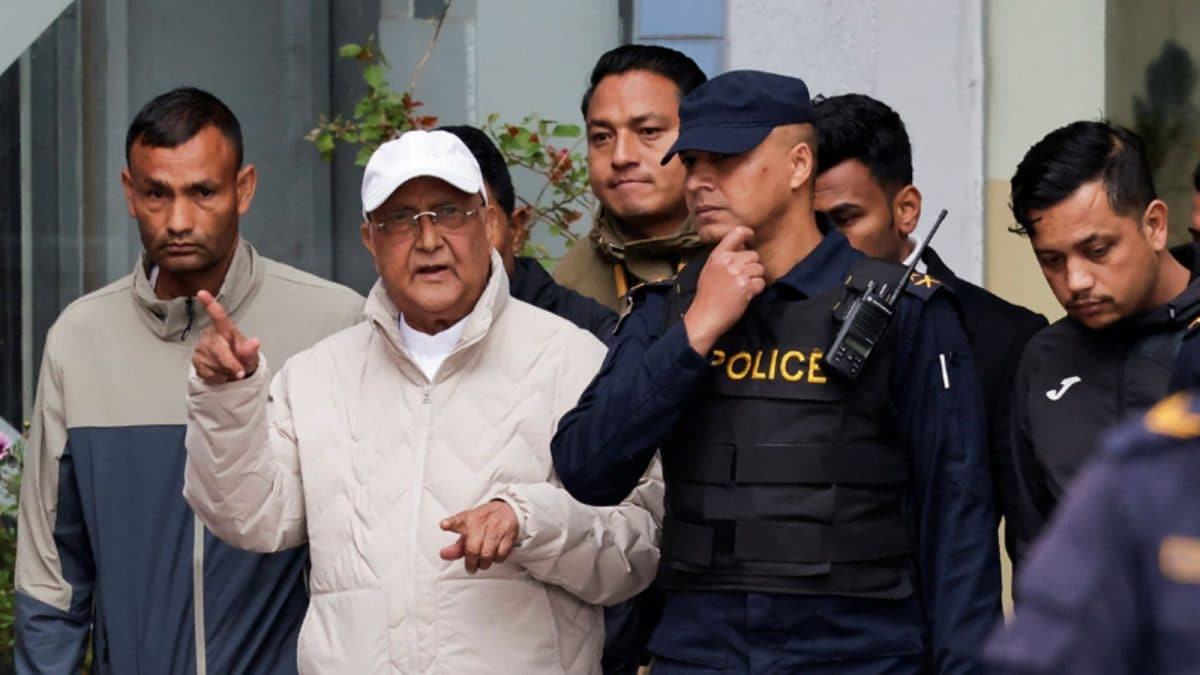
Both leaders were arrested over alleged suppression of Gen Z protests.
The Nepal High Court on Monday delivered a decisive judgment that compelled the release of former Prime Minister KP Sharma Oli and former Home Minister Ramesh Lekhak. The court’s ruling directly responded to the legal challenges mounted by the two senior political figures following their detention by police forces.
Former Prime Minister KP Sharma Oli had been taken into custody from a residence in Bhaktapur after authorities linked the former head of government to a culpable homicide allegation rooted in the violent response to a wave of Gen Z‑led anti‑corruption demonstrations. The police action was justified by officials as part of a broader investigation into the events that unfolded during those protests.
Former Home Minister Ramesh Lekhak experienced a similar fate, as police officers entered the former minister’s home and placed the former official under arrest. The arrest of both individuals stemmed from a formal grievance lodged by the Home Ministry, which prompted an investigative process culminating in the issuance of arrest warrants.
Background of the protests and the resulting casualties
The protests in question were organized by members of Generation Z, a cohort that demanded heightened transparency and stringent anti‑corruption measures from the government. Demonstrators occupied public squares, staged sit‑ins, and engaged in a variety of peaceful actions intended to draw national attention to alleged governmental misconduct.
During the height of the unrest, a tragic loss of life occurred. Official accounts recorded a total of seventy‑seven individuals who perished as a direct consequence of the confrontations between protestors and law‑enforcement agencies. In addition to the human toll, extensive damage was inflicted upon both public infrastructure and privately owned assets, with casualty estimates reaching into the billions of rupees.
The severity of the situation triggered a cascade of inquiries, prompting the creation of a special commission charged with evaluating the conduct of security forces and senior officials during the tumultuous period.
Commission findings and legal recommendations
A report released by a reputable national daily highlighted that police officials justified the arrests as consistent with recommendations articulated by a commission chaired by former Special Court judge Gauri Bahadur Karki. This investigative panel meticulously examined the chronology of events, the decision‑making processes of senior officials, and the operational responses employed during the protests.
The commission’s final recommendations called for criminal charges to be filed against former Prime Minister KP Sharma Oli, former Home Minister Ramesh Lekhak, and the then Inspector General of Police Chandra Kuber Khapung. Specifically, the panel suggested invoking Sections 181 and 182 of the National Penal Code, statutes that address criminal negligence and culpable homicide when committed through reckless disregard for human life.
Under the parameters of Sections 181 and 182, the maximum punitive measure foreseen by the law could extend to a decade of imprisonment for each individual found guilty. The commission emphasized that such a penalty would reflect the gravity of the alleged failures to safeguard civilian lives during a period of civil unrest.
Beyond the three primary figures, the commission identified additional senior officials whose conduct warranted legal scrutiny. The named individuals included home secretary Gokarna Mani Dawadi, Armed Police Force chief Raju Aryal, former National Investigation Department head Hutaraj Thapa, and Kathmandu chief district officer Chhabi Rijal. For each of these officials, the panel advocated the application of Section 182 of the National Penal Code, underscoring the expectation that senior bureaucrats bear responsibility for lapses that lead to loss of life.
The commission further stipulated that any other officials found to have contributed to the chain of events should be subject to disciplinary measures in accordance with the statutes governing their respective agencies. By framing the recommended actions within the existing legal framework, the commission sought to ensure procedural consistency and accountability.
Assessment of negligence and intelligence failures
The investigative body characterized the handling of the protests as a manifestation of criminal negligence coupled with reckless conduct. The report highlighted that intelligence agencies had issued prior warnings indicating a potential escalation of violence, yet the warnings were not acted upon by the responsible authorities.
Failure to heed such intelligence, according to the commission, directly contributed to the uncontrolled spread of violence that culminated in the deaths of seventy‑seven citizens. The analysis placed particular emphasis on the disconnect between intelligence gathering units and operational decision‑makers, suggesting a systemic breakdown that allowed the tragic outcomes to unfold.
In its concluding observations, the commission warned that without substantive reforms to intelligence dissemination protocols and operational oversight, similar incidents could recur. The document called for a comprehensive review of the mechanisms that translate threat assessments into actionable strategies by law‑enforcement leadership.
Supreme Court’s reasoning for ordering release
The Supreme Court, after reviewing petitions filed by former Prime Minister KP Sharma Oli and former Home Minister Ramesh Lekhak, determined that the procedural aspects of their arrests were flawed. The court noted that the warrants issued lacked sufficient specificity regarding the alleged offences, and that the detention did not adhere to established legal standards for due process.
In its written opinion, the court emphasized the principle that any deprivation of liberty must be predicated upon clear, demonstrable evidence that satisfies the threshold of criminal suspicion. The court concluded that the evidence presented at the time of arrest did not meet this standard, rendering the continued detention unlawful.
Consequently, the court ordered the immediate release of both former Prime Minister KP Sharma Oli and former Home Minister Ramesh Lekhak. The ruling also directed law‑enforcement agencies to reassess the validity of the charges under Sections 181 and 182, ensuring that any subsequent legal action complies with the procedural safeguards mandated by the constitution.
Reactions from political circles and civil society
Political leaders across the spectrum welcomed the Supreme Court’s decision, describing it as a reaffirmation of the rule of law and an essential step toward restoring public confidence in the judicial system. Advocates for former Prime Minister KP Sharma Oli highlighted the ruling as evidence that the judiciary remains independent and capable of checking executive overreach.
Former Home Minister Ramesh Lekhak’s supporters echoed similar sentiments, noting that the order underscores the importance of due process, even in cases involving high‑profile individuals. Civil‑rights organizations, while acknowledging the court’s decision, called for a transparent and thorough investigation into the circumstances surrounding the protests, emphasizing that accountability must extend beyond the two released leaders.
Human‑rights monitors reiterated the need for a comprehensive review of the police response to the Gen Z demonstrations. These groups urged the government to implement reforms that would prevent future instances of excessive force and ensure that intelligence warnings are acted upon promptly.
Legal implications and next steps
The Supreme Court’s order does not preclude further legal scrutiny of the actions of former Prime Minister KP Sharma Oli, former Home Minister Ramesh Lekhak, and the other officials named in the commission’s report. Rather, the decision mandates that any subsequent charges be pursued with strict adherence to constitutional safeguards and evidentiary standards.
Law‑enforcement agencies are now tasked with re‑evaluating the evidence that formed the basis for the original arrests. Should new, admissible evidence emerge that satisfies the legal threshold for prosecution under Sections 181 and 182, authorities may proceed with fresh charges, subject to judicial oversight.
In parallel, the commission’s recommendations concerning the alleged negligence of intelligence agencies and senior police officials remain a matter of public interest. The government has signaled an intention to review the commission’s findings, with the possibility of initiating disciplinary proceedings against officials found to have breached their duties.
Ultimately, the unfolding legal process will serve as a barometer for the nation’s commitment to upholding accountability, transparency, and the rule of law in the wake of a highly charged period of civil unrest.