Under the Green Canopy: Nayak and Arjun Tackle Mumbai’s Ghodbunder Road Congestion
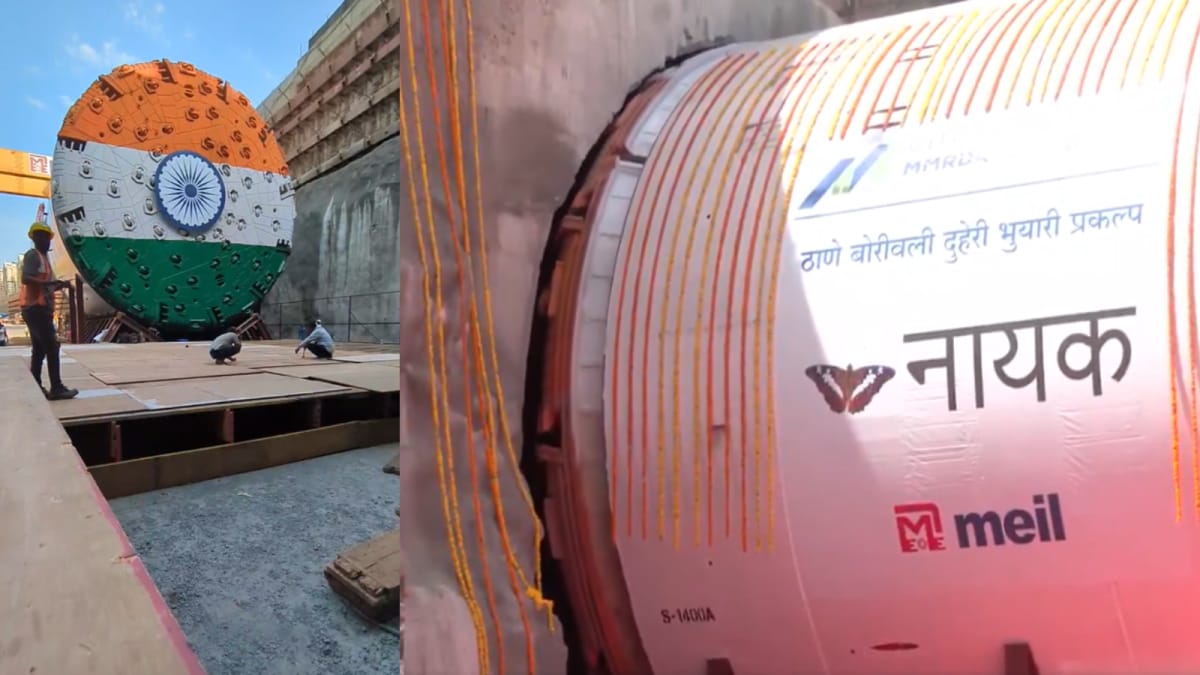
Maharashtra Chief Minister Devendra Fadnavis launches the Tunnel Boring Machines for the Thane‑Borivali Twin Tunnel – India’s longest urban road tunnel, promising to cut a two‑hour commute to just fifteen minutes.
Launch Ceremony Highlights
Maharashtra Chief Minister Devendra Fadnavis, accompanied by Deputy Chief Minister Eknath Shinde and Deputy Chief Minister Sunetra Pawar, officially inaugurated the Tunnel Boring Machine Nayak and Tunnel Boring Machine Arjun. During the ceremony, Maharashtra Chief Minister Devendra Fadnavis described the undertaking as an engineering marvel that will reduce the present 23‑kilometre Thane‑Borivali surface corridor to an underground stretch of 11.84 kilometres.
Maharashtra Chief Minister Devendra Fadnavis emphasized that travel time, which currently stretches up to two hours, will be compressed to a mere fifteen minutes once the Thane‑Borivali Twin Tunnel project reaches completion. Maharashtra Chief Minister Devendra Fadnavis also noted that the Maharashtra Metropolitan Region Development Authority is overseeing the execution of the project, which carries an estimated cost of sixteen thousand six hundred crore rupees.
What Is a Tunnel Boring Machine and How Does It Operate?
The term Tunnel Boring Machine denotes a massive subterranean drilling unit equipped with sophisticated cutting, guidance, and support systems. Tunnel Boring Machine Nayak measures eighty‑six metres in total length and possesses a cutter head diameter of thirteen point three four metres, making Tunnel Boring Machine Nayak the nation’s largest single‑shield hard‑rock tunnelling unit.
Tunnel Boring Machine Nayak rotates at four point five revolutions per minute, delivering precise rock removal while simultaneously installing precast concrete segments that form the permanent tunnel lining. The entire assembly of Tunnel Boring Machine Nayak weighs roughly two thousand five hundred tonnes, and each forward movement of the machine generates a metre‑by‑metre advance through the earth.
Key technical features of Tunnel Boring Machine Nayak include a custom‑engineered hard‑rock cutter head, real‑time navigation and guidance electronics, dust‑suppression mechanisms, and low‑noise operation designed to safeguard the surrounding environment. Automated spoil removal systems and integrated safety modules reduce the necessity for manual labour and elevate overall safety standards.
Symbolic Naming: Nayak and Arjun
The nomenclature of Tunnel Boring Machine Nayak and Tunnel Boring Machine Arjun reflects a deliberate tribute to the biodiversity of Sanjay Gandhi National Park. The underground alignment of the Thane‑Borivali Twin Tunnel project traverses deep beneath Sanjay Gandhi National Park, a critical Green lung for the Mumbai metropolitan region.
Tunnel Boring Machine Nayak derives its name from a rare butterfly species endemic to Sanjay Gandhi National Park. Tunnel Boring Machine Arjun, on the other hand, takes its designation from the Arjun tree, a native hardwood that thrives within the forest’s confines.
Both Tunnel Boring Machine Nayak and Tunnel Boring Machine Arjun have been sourced from the German manufacturer Herrenknecht’s production facility in Chennai. The choice of names underscores a public commitment to minimise ecological disturbance and to honour the natural heritage that lies directly above the tunnelling route.
Deputy Chief Minister Eknath Shinde captured this ethos during the inauguration, stating that the tunnelling operation must be conducted with such care that even a butterfly is not disturbed.
Scale and Technical Layout of the Thane‑Borivali Twin Tunnel Project
The Thane‑Borivali Twin Tunnel project envisions an underground corridor spanning eleven point eight four kilometres. This corridor comprises ten point two five kilometres of twin tunnels and an additional one point five nine kilometres of surface‑level roadways, forging a direct link between Ghodbunder Road in Thane and the Western Express Highway in Borivali.
Four Tunnel Boring Machines will ultimately be deployed for the Thane‑Borivali Twin Tunnel project: two will commence excavation from the Borivali portal and two will begin from the Thane portal. The twin tunnels will each accommodate two traffic lanes and one emergency lane, with cross‑passages positioned every three hundred metres to facilitate safe evacuation and maintenance.
According to Times of India, projected average daily traffic on the Thane‑Borivali Twin Tunnel project is estimated at eighty thousand vehicles by the year twenty‑twenty‑nine. The reduction in travel distance, ranging between eleven and fifteen kilometres, is anticipated to generate substantial economic gains and environmental relief through lowered fuel consumption and emissive output.
Environmental Safeguards for Sanjay Gandhi National Park
The most prominent concern surrounding the Thane‑Borivali Twin Tunnel project is the potential impact on Sanjay Gandhi National Park, a protected sanctuary home to leopards, migratory birds, rare butterflies, and over one thousand plant species. Maharashtra Chief Minister Devendra Fadnavis asserted that cutting‑edge tunnelling technology will safeguard the park’s ecological integrity.
According to Times of India, the construction methodology employs zero‑vibration technology, ensuring that vibrational stress on the forest floor remains negligible. The approach mirrors international best practices, drawing on safety protocols employed in Singapore’s metro systems that navigate water‑bearing strata.
All requisite environmental clearances and wildlife permits have been secured prior to the commencement of excavations. Officials overseeing the Thane‑Borivali Twin Tunnel project have reiterated that continuous monitoring will be instituted to detect any unexpected water seepage or geological anomalies beneath Sanjay Gandhi National Park.
Projected Timeline and Anticipated Benefits
The Thane‑Borivali Twin Tunnel project commenced several years ago under the stewardship of Maharashtra Metropolitan Region Development Authority, and the construction schedule targets completion within the next five years. Upon finalisation, the Thane‑Borivali Twin Tunnel project will claim the title of India’s longest urban road tunnel.
For the countless commuters currently ensnared in chronic congestion along Ghodbunder Road, the operationalisation of the Thane‑Borivali Twin Tunnel project promises a dramatic reduction in travel time, fuel expenditure, and vehicular emissions. The project also offers a strategic decongestion of surface road networks, thereby improving overall traffic fluidity across the broader Mumbai metropolitan region.
In addition to commuter advantages, the Thane‑Borivali Twin Tunnel project is projected to stimulate ancillary economic activity, ranging from logistics efficiencies to increased accessibility for commercial enterprises situated along the newly established underground corridor.