Supreme Court Rules that Use of ‘Bastard’ in Angry Exchanges Does Not Constitute Obscenity under Section 294 IPC
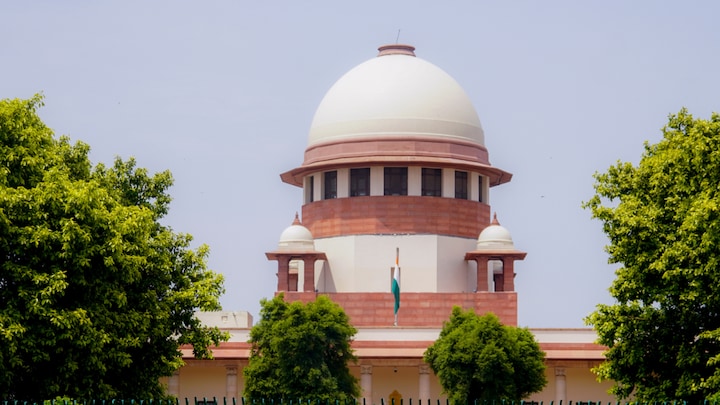
A bench of Justice PS Narasimha and Justice Manoj Misra held that for an offence under Section 294 IPC to be made out, the words used must carry a sexual or prurient element.
In a landmark decision, Supreme Court clarified that the mere utterance of the term “bastard” during a heated disaGreement does not satisfy the statutory requirement for an offence under Section 294 of the Indian Penal Code. The ruling overturns the conviction of two individuals who had previously been found guilty by Madras High Court on the basis that the term had been employed as an insult during a family dispute.
The bench, consisting of Justice PS Narasimha and Justice Manoj Misra, articulated a clear test for the application of Section 294 IPC. According to the bench, the statutory language demands that the expression in question must possess a sexual or prurient quality in order to be deemed obscene. Mere profanity, the bench observed, falls short of this statutory threshold.
Justice PS Narasimha and Justice Manoj Misra emphasized that the word “bastard” by itself does not possess the capacity to arouse a prurient interest in any reasonable person. The judges noted that contemporary usage of the term frequently occurs in the heat of argument, without any implication of sexual content. Consequently, the bench concluded that the conviction of the accused under Section 294(b) IPC could not be sustained and consequently set aside the earlier judgment.
To provide context, the dispute originated from a disaGreement over a family property that shared a common boundary. The conflict escalated when the deceased attempted to erect a fence along the disputed line. During the ensuing confrontation, the accused allegedly referred to the deceased as “bastard.” The State contended before Supreme Court that this utterance invoked Section 294(b) IPC, seeking to sustain the conviction. The bench, however, rejected this contention on the basis of the legal analysis outlined above.
One of the pivotal observations made by Justice PS Narasimha and Justice Manoj Misra concerns the absence of a statutory definition for the term “obscene” within the Indian Penal Code. The bench referenced Section 292 IPC, which defines obscenity in terms of material that is likely to “deprave and corrupt” those whose minds are open to such influences, specifically highlighting sexual or lustful thoughts as the core element.
In line with this statutory language, the bench recalled the precedent set in Apoorva Arora v. State, which clarified that obscenity is confined to material that engenders sexual or lustful thoughts. Language that merely elicits disgust, revulsion, or shock does not meet the legal definition of obscenity. The bench distinguished vulgarity and profanity from obscenity, asserting that the former do not, by themselves, constitute an offence under Section 294 IPC.
By anchoring the decision in both statutory text and prior jurisprudence, Justice PS Narasimha and Justice Manoj Misra constructed a robust legal framework that limits the reach of Section 294 IPC to expressions that genuinely carry a sexual or lewd undertone. This approach ensures that the provision is not misapplied to ordinary verbal disputes that, while offensive, lack the requisite prurient element.
The implications of this judgment extend beyond the immediate parties. By delineating the boundary between profanity and obscenity, Supreme Court has provided crucial guidance for law enforcement agencies, lower courts, and legal practitioners. The decision underscores the necessity of a careful, context‑sensitive analysis before invoking Section 294 IPC against an individual.
The bench warned against a simplistic conflation of vulgar language with obscene material. Such conflation, the judges argued, would dilute the protective purpose of Section 294 IPC, which is intended to shield the public from material that is explicitly sexual or lewd in nature. Upholding convictions solely on the basis of offensive language, without a sexual component, would run counter to the legislative intent underpinning the provision.
Furthermore, the judgment reiterates the importance of respecting the principle of proportionality in criminal law. By refusing to punish speech that, although offensive, does not satisfy the statutory definition of obscenity, Supreme Court affirms the balance between safeguarding public morality and preserving freedom of expression.
In summary, the two‑judge bench of Justice PS Narasimha and Justice Manoj Misra held that the use of the term “bastard” during a confrontational exchange does not meet the threshold for obscenity under Section 294 IPC. The decision set aside the conviction of the accused and clarified that profanity, absent a sexual or prurient component, cannot be prosecuted as an obscene act.
The ruling serves as a precedent for future cases wherein the determination of obscenity hinges on the presence or absence of sexual connotation. By anchoring the analysis in statutory language and established case law, Supreme Court has reinforced a narrow, precise interpretation of Section 294 IPC, thereby preventing its over‑broad application.