Why are so many married Indians turning to discreet dating apps? Experts decode the emotional gaps, silent frustrations, and changing expectations inside modern marriages.
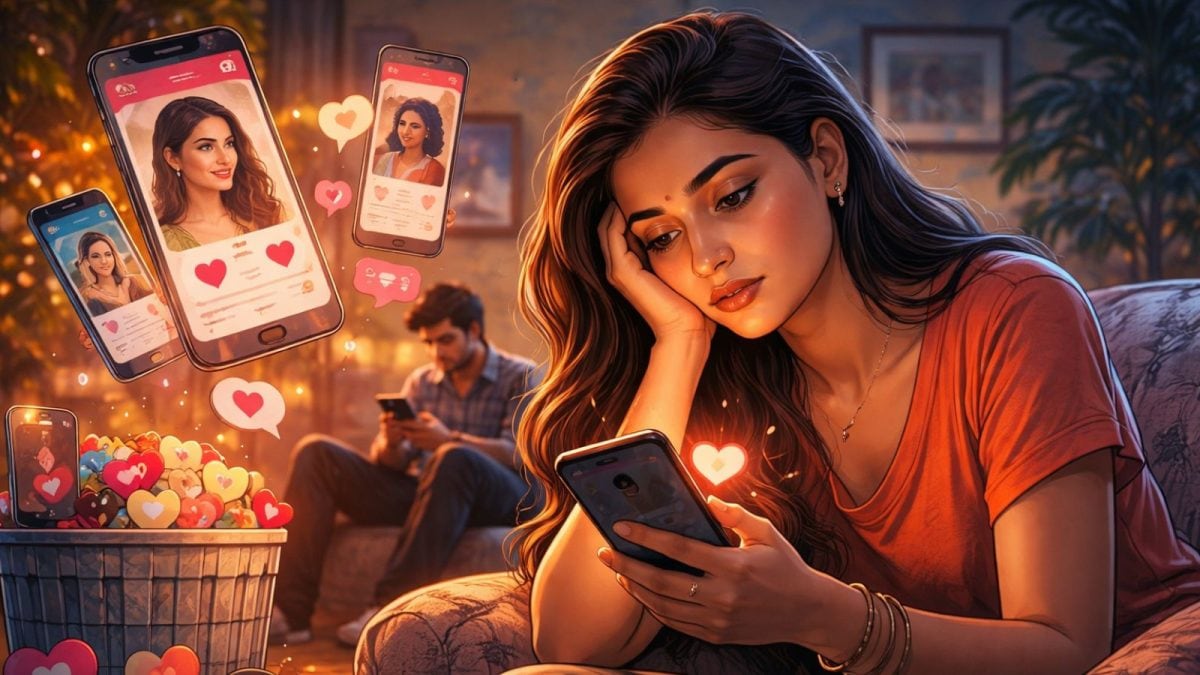
Honestly, when I first heard the word "discreet dating" I imagined some secret club in a basement. But the reality is far more ordinary – it is happening right in the living rooms of many Indian families. I have a friend in Bengaluru whose husband, a software engineer, confessed over chai that he had joined an app called Gleeden just to "talk" with strangers. He said the same thing many of us hear: that the marriage feels like a partnership of chores, and the app gave him a space to feel *seen* again.
Marriage in India has always meant duty, stability and a promise to stay together for life. Yet, underneath that traditional veneer, the expectations that people bring into a relationship are slowly shifting. At the same time, smartphones and the internet have opened up private corners where we can connect beyond the usual circle of relatives and neighbours.
My observations on the popularity of discreet dating in India
Gleeden, which proudly calls itself the world’s first discreet dating platform for private relationships, says it now has over four million Indian users. That number surprised me – it’s almost the same as the population of a small state! The latest Gleeden report tells us that 65% of its users are men and 35% are women. Most of them are already married or in long‑term relationships. So, the platform is not some playground for the single; it’s mainly a refuge for people who have already taken the marriage pledge but feel something is missing.
One striking trend is the rise of women on the app. In the last two years, female participation has jumped by 148%. Gleeden says the app is free for women, which they claim makes the environment safer and more balanced. I know a few women in Pune who joined the app not because they want an affair, but because they missed the simple pleasure of being listened to – something they rarely get while juggling school runs, household bills and the expectations of in‑laws.
Geographically, the bulk of users come from metro cities – Bengaluru, Hyderabad, Delhi, Mumbai and Pune. That makes sense; these places have high internet penetration and a more liberal outlook. But registrations are also climbing fast in tier‑2 cities like Lucknow, Chandigarh, Surat, Bhubaneswar and Guwahati. I have a cousin in Surat who told me his neighbour uses Gleeden to "vent" – a word that in Hindi means to unload emotions. This shows that the need for emotional outlet isn’t confined to the big metros alone.
Sybil Shiddell, the Country Manager of Gleeden India, believes that while marriage still carries strong cultural weight, many individuals now crave spaces that let them express emotions and get personal validation. From what I have seen, Sybil’s assessment rings true – especially when you hear the quiet sighs of a mother‑in‑law who feels overlooked, or the teenage son who says his dad never asks how his day went.
When marriage becomes functional but emotionally distant
Relationship counsellor Ruchi Ruuh often says that a marriage can feel like a joint bank account – everything is accounted for, but there’s no romance left. I once attended a workshop where Ruchi talked about how most Indian couples juggle demanding careers, kids, elderly parents and financial pressures. Over time, these responsibilities turn the relationship into a logistics‑only partnership.
She points out that while the day‑to‑day functioning may look smooth – sharing a home, raising children – the emotional bond can quietly slip away. "We all seek novelty, pleasure and that sense of excitement," Ruchi says. In India, divorce still carries a heavy social stigma, and legally ending a marriage can be a long, messy process. So many stay together even when their emotional needs are unmet, and the emptiness begins to echo inside the house.
According to Ruchi, digital platforms sometimes become the only outlet where people can search for validation. That does not mean they value commitment less. Rather, it shows that monotony and emotional distance are creeping into many relationships. I see this when my neighbour’s wife says, "He works late, I cook late, and we barely talk about anything other than bills. I feel invisible."
Why digital conversations can feel more intimate
Ruchi also explains that online chats often feel more intense because they happen in a space free from everyday pressures. When you are typing on a phone, you can choose your words carefully, pause, and think. I’ve experienced this myself – a simple "how are you feeling today?" on a chat can feel far more caring than a rushed "how are you?" over the kitchen sink while both of us are chopping vegetables.
She says the sense of safety and discretion makes people open up more. In a rural household, for example, a husband might hesitate to voice his insecurities directly because the elder family members are always around. In an online conversation, however, the same person can share his worries without fearing immediate judgment.
Attention is another factor. With kids, work, and endless chores, partners often feel ignored. "Online conversations tend to feel more intentional," Ruchi says. When you receive a message, you know that the other person took a moment out of their busy schedule just to write to you. That small gesture can feel like a hug for the soul.
The psychology behind emotional affairs
Counselling psychologist and couples therapist Monalee Borah adds another layer – modern marriages come with new emotional expectations. She says, "As individuals grow in their personal and professional lives, their emotional needs also evolve." In my own life, I’ve noticed that after a few years of marriage, I started craving deeper conversations about dreams and fears, not just about who will pick up the groceries.
Monalee observes that many couples end up talking only about logistics – work schedules, finances, kids’ school fees. Those conversations, while necessary, leave little room for vulnerability. "When deeper emotional conversations disappear, partners can feel unheard or unseen," she notes. This feeling of being invisible is what often pushes people towards discreet apps, because there they can finally be heard.
She explains that hearing and acknowledgement are fundamental human needs. Even a short, caring reply online – "I understand, that must be tough" – can give a powerful sense of closeness. From a psychological standpoint, that validation can feel deeply intimate, even if the person on the other side is a stranger.
Does discreet dating normalise infidelity?
Now, this is where many people get nervous. Ruchi points out that before the internet, meeting someone outside a marriage required a lot of effort and risk. "You had to trust someone, meet in person, and have the courage to step out of the community," she says. Today, a discreet app offers anonymity and privacy, making it far easier to strike up a conversation.
When someone starts using these platforms frequently, it can slowly make the idea of seeking connection outside the marriage feel normal. Monalee worries that it isn’t just the act of cheating that’s the problem, but the gradual erosion of emotional boundaries. "What begins as a harmless chat can turn into an emotional attachment," she says. In my counselling circles, I have seen couples where the secrecy of an online chat leads to one partner emotionally withdrawing from the real-life spouse.
Both experts aGree that while not every chat leads to a physical affair, the emotional drift can be just as damaging. A small secret can become a big wedge if left unchecked.
The importance of emotional awareness in marriage
Monalee stresses that emotional distance usually builds slowly. "In many marriages, the gap appears over months and years, not in a single moment," she explains. People who turn to discreet apps often aren’t looking to betray their partner; they simply want to feel understood.
Research by relationship psychologist John Gottman shows that strong marriages survive not because they avoid conflict, but because they can repair emotional gaps. Gottman says couples who talk openly, listen carefully and prioritize meaningful connection tend to stay emotionally close. This resonates with what I have observed in my own extended family – couples who take a few minutes each night just to talk about their day, without blaming or fixing, keep the spark alive.
A quiet transformation in modern relationships
The rise of discreet dating platforms tells us that Indian marriages are undergoing a subtle, quiet transformation. The cultural importance of marriage remains strong, yet individuals now also crave emotional fulfilment, validation and personal growth within their partnerships.
Digital spaces have given people a private arena to explore these needs, sometimes beyond the boundaries of traditional relationships. From my own experience, I see that the problem isn’t technology itself, but the growing emotional void that many marriages face. If we can bring back those deeper conversations – the ones about hopes, fears and dreams – the allure of a secret app may fade.
In the end, the message I take away is simple: marriage is not just a contract of duties, it’s also a shared emotional journey. When that journey feels ignored, people will naturally look for a detour, even if it’s through a discreet app. Being aware, talking honestly, and giving each other space to be heard could be the key to keeping that journey together.