Why an Indian‑Origin CEO’s Unusual Request to Argue With a Co‑founder Is Igniting Online Discussion
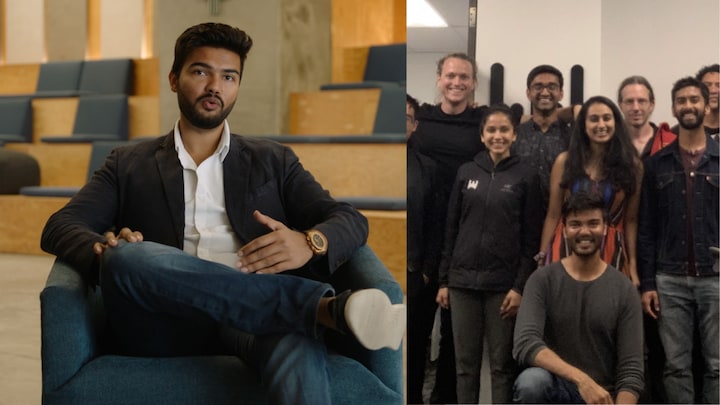
Tanay Kothari’s reasoning is simple: if people are afraid to disaGree with the boss, the company eventually pays the price
Imagine a scenario in which a senior executive openly invites a co‑founder to challenge a point of view in front of the entire staff. Most traditional corporate cultures would view such a request as risky, even reckless, because it threatens the conventional hierarchy that keeps dissent hidden. Yet Tanay Kothari, a Stanford‑educated entrepreneur of Indian heritage and co‑founder of Wispr AI, deliberately created that moment. By posting the experiment on the social networking platform X, Tanay Kothari set off a wave of commentary that has reverberated throughout the startup community and beyond.
Background on the Founder and the Company
Tanay Kothari earned a deGree from Stanford University before launching Wispr AI, a firm that specializes in artificial‑intelligence‑driven communication tools. Wispr AI is positioned as a pioneer in bridging the gap between automated messaging and human nuance, aiming to improve how businesses interact with customers. From its earliest days, Wispr AI cultivated a reputation for rapid development cycles and a commitment to data‑centric decision making. However, like many fast‑growing startups, internal alignment on strategic direction sometimes fell short of the ideal.
In many early meetings at Wispr AI, Tanay Kothari observed a pattern: presentations were delivered, notes were taken, and nods of aGreement were offered, but genuine pushback was scarce. The silence, while seemingly polite, often concealed underlying doubts. Tanay Kothari recognized that an environment where dissent is suppressed can lead to costly missteps, product misfires, and missed market opportunities.
The Public Challenge: Asking a Co‑founder to Argue
To confront the silence head‑on, Tanay Kothari announced a bold plan on X: the co‑founder would be asked to argue a point directly in front of the whole Wispr AI team. The invitation was explicit. Tanay Kothari wrote that the goal was to demonstrate that respectful disaGreement at the highest level signals to every employee that differing opinions are not only permissible but valuable. The post highlighted an essential premise: “If people are afraid to disaGree with the boss, you’re going to lose.” Tanay Kothari emphasized that the most robust decisions emerge from friction, not from a unanimous chorus that may mask hidden concerns.
The public nature of the challenge was essential. By placing the debate in front of the entire staff, Tanay Kothari aimed to model a behavior that could be replicated in everyday team interactions. Tanay Kothari believed that when founders visibly engage in civil argument, the entire organization internalizes the lesson that ideas should be tested, not taken at face value.
Immediate Reactions on X
The post quickly attracted a flood of responses. One commentator praised the approach, suggesting that all startups should institutionalize sessions of structured debate for critical decisions, allowing every voice to be heard. Another observer highlighted the difficulty founders face in creating a safe space where employees can point out flaws without fear of retaliation.
Several users echoed the sentiment that a culture of open argument must be more than a slogan; it must be actively demonstrated by leadership. A recurring theme in the discussion was the idea that the “smartest idea wins” culture only works when leaders practice what they preach. The internet community, in a chorus of aGreement, recognized the authenticity of Tanay Kothari’s experiment as a living example of that principle.
Why Public DisaGreement Can Be Transformative
From a psychological standpoint, public disaGreement performed by senior leaders can dismantle the fear of speaking up. When employees see that the people at the top are willing to have their ideas challenged, the perceived risk associated with offering contrary viewpoints diminishes. This shift can lead to a more thorough vetting of strategies, as each team member becomes empowered to raise concerns, ask probing questions, and propose alternatives.
In the specific case of Wispr AI, the moment captured by Tanay Kothari served as a catalyst. According to the narrative shared by Tanay Kothari, the first instance of a co‑founder argument sparked a noticeable change in meeting dynamics. Team members began to interject with thoughtful counterpoints, and the overall quality of decision making improved. The ripple effect extended beyond the immediate debate, fostering a culture where healthy friction is seen as a driver of innovation rather than a source of conflict.
Potential Pitfalls and the Role of Trust
While the experiment received widespread acclaim, some commentators cautioned that public disaGreement is only effective when a foundation of trust exists between founders. If co‑founders lack alignment or if underlying tensions are unresolved, a visible argument could destabilize the team instead of strengthening it. The dialogue highlighted that the success of such an approach hinges on mutual respect, clear communication, and a shared commitment to the company’s long‑term vision.
At Wispr AI, Tanay Kothari and the co‑founder reportedly have a history of collaboration that allowed the public argument to remain constructive. The conversation was framed as a professional exercise rather than a personal clash, ensuring that the team perceived the exchange as a learning opportunity rather than a sign of internal discord.
Broader Implications for Startup Culture
The conversation sparked by Tanay Kothari’s post feeds into a larger debate about how startups can balance speed with thoughtful deliberation. Many early‑stage companies prioritize rapid execution, sometimes at the cost of thorough debate. The willingness of a founder to model disaGreement publicly challenges the notion that speed must come at the expense of scrutiny.
Industry observers suggest that adopting a culture of open argument could lead to more resilient products, stronger market fits, and reduced risk of costly pivots. By encouraging employees to voice dissent early, companies may uncover hidden assumptions before they become entrenched, thereby saving resources and preserving morale.
Furthermore, the experiment underscores the importance of leadership behavior in shaping organizational norms. When a founder like Tanay Kothari takes a deliberate step to showcase vulnerability and openness, it sends a powerful message that the organization values truth over hierarchy.
Conclusion: A Simple Request with Far‑Reaching Impact
Tanay Kothari’s simple yet bold request to argue publicly with a co‑founder has resonated across the internet, providing a vivid illustration of how leadership actions can transform company culture. The core insight remains unaltered: if employees fear disaGreement, the organization ultimately suffers. By demonstrating that friction can be constructive, Tanay Kothari offers a roadmap for other founders seeking to embed a culture of healthy debate within their teams.
As the discussion continues to evolve, the underlying lesson stands clear. Leaders who are willing to step onto the stage, invite challenge, and model respectful disaGreement equip their organizations with the tools needed to navigate uncertainty, innovate boldly, and avoid the hidden costs of silent conformity.