Yuan-Backed Passage Fees Transform Hormuz Trade Amid United States‑Iran Truce
By embedding the yuan as a prerequisite for secure transit, Tehran and Beijing have found a mechanical way to challenge the petrodollar’s supremacy.
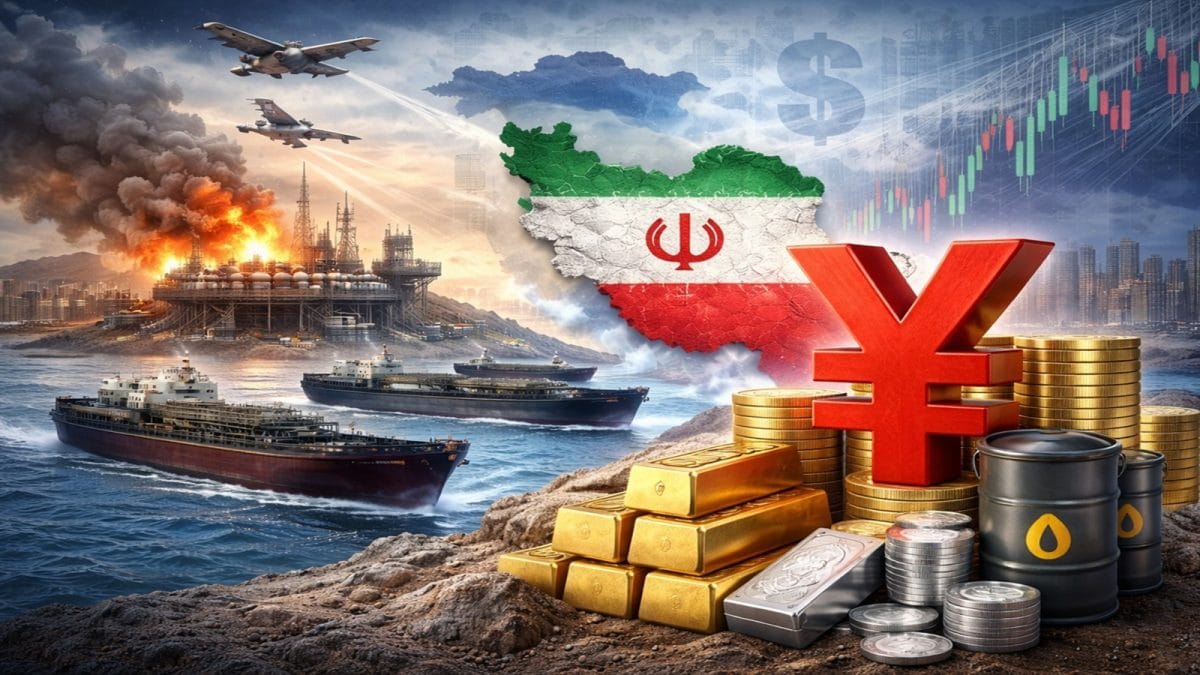
Ceasefire pauses kinetic combat but deepens the shadow currency battle
The recent two‑week ceasefire between the United States and Iran has temporarily quieted the overt exchange of fire that once echoed across the Persian Gulf. Although kinetic operations have halted, the underlying contest over monetary influence in the region has accelerated. As the strategic waterway of the Strait of Hormuz reopens cautiously, the experiment that pairs oil transit with yuan payments is moving from a wartime survival mechanism toward a durable diplomatic lever.
During the six‑week confrontation, Tehran exercised functional control over the world’s most critical oil conduit. This leverage allowed Tehran to act as a catalyst for Beijing’s long‑standing ambition to internationalise the Chinese yuan. Even with the truce in place, the model that ties safe passage to yuan payments appears set to become a permanent element of the emerging regional order.
Institutionalisation of the Tehran toll booth after the ceasefire
One of the most consequential outcomes of the conflict is the formalisation of the so‑called “Tehran toll booth”. Although the ceasefire was mediated by Pakistan, maritime intelligence reports indicate that the Islamic Revolutionary Guard Corps continues to coordinate safe navigation through the strait. Crucially, the transit charges that were introduced during the height of the blockade—beginning at one United States dollar per barrel of crude—remain active. Those fees are collected in Chinese yuan and stablecoins, with the proceeds earmarked for Iran’s reconstruction efforts.
By embedding the yuan as a prerequisite for secure transit, Tehran and Beijing have discovered a mechanical method to contest the dominance of the petrodollar. For decades, global oil contracts have been denominated in United States dollars. The recent crisis forced market participants to pivot away from that convention. The shift is no longer a mere attempt to evade United States sanctions; it represents the creation of a functional, alternative maritime order in which the yuan operates as the primary medium of exchange for the roughly one‑fifth of the world’s oil that passes through this corridor.
Beijing leverages the truce to stress‑test its digital currency framework
Beijing’s endorsement of the ceasefire mirrors its approach to the conflict itself: transactional and strategic. As the leading purchaser of Iranian oil, Beijing is using the diplomatic interlude to evaluate the resilience of its alternative financial architectures under quasi‑peaceful conditions. Central to this effort is Project mBridge, a multi‑central‑bank digital currency platform that facilitates direct peer‑to‑peer settlement, thereby sidestepping the United States‑led SWIFT network.
In recent weeks, daily transaction volumes on China’s Cross‑Border Interbank Payment System have surged dramatically, reaching figures that translate into hundreds of billions of United States dollars. By settling oil trades in Digital Yuan, also known as e‑CNY, through mBridge during the ceasefire, Beijing is guaranteeing that the sanctions‑proof energy loop forged during the conflict remains operational. This strategy ensures that, even if United States‑directed infrastructure attacks resume after the pause, the financial plumbing underpinning Sino‑Iranian trade stays insulated from United States jurisdiction.
Potential long‑term consequences of the yuan‑for‑passage model
The recent crisis has demonstrated that a crisis‑driven restructuring of the global financial system is feasible. Should the ceasefire solidify a permanent “strait tax” denominated in yuan, other regional oil producers may feel compelled to adopt a similar framework in order to satisfy their primary Asian customers or to guarantee the safety of their shipping lanes. Such a development could carve the global energy market into two distinct zones: a “dollar zone” and a “yuan zone”.
Nevertheless, the emerging petroyuan system carries significant risks. Beijing’s capital controls and limited transparency continue to provoke uncertainty among international market participants. While oil prices fell in response to the ceasefire announcement, the United States has maintained that any financial intermediaries facilitating these shadow yuan accounts remain vulnerable to future sanctions. As the contest for the Strait of Hormuz migrates from the physical waters to digital ledgers, the geopolitical landscape of West Asia has already been redrawn, shaded now in a deep hue of Chinese red.
Strategic implications for Tehran, Beijing, and the United States
For Tehran, the yuan‑for‑passage arrangement provides a revenue stream that bypasses United States sanctions and funds reconstruction projects that would otherwise be stymied by United States financial pressure. The arrangement also reinforces Tehran’s bargaining power in future diplomatic negotiations, as the ability to dictate terms of safe passage grants Tehran leverage over any actor that relies on the strait for oil shipments.
For Beijing, the model offers a real‑world laboratory for testing digital yuan settlement mechanisms at scale. By embedding the digital currency in high‑value commodity trades, Beijing gathers data on transaction velocity, network resilience, and cross‑border regulatory challenges. This experiential knowledge strengthens Beijing’s case for broader international acceptance of the digital yuan as a viable alternative to the United States‑dollar‑centric financial architecture.
For the United States, the emergence of a yuan‑denominated toll system represents a direct challenge to the longstanding petrodollar paradigm. United States policymakers must decide whether to intensify pressure on entities that facilitate yuan‑based oil trade, or to seek diplomatic avenues that could preserve United States influence over the strategic waterway without resorting to further militarisation.
Future outlook for the Strait of Hormuz and global oil finance
Looking ahead, the durability of the yuan‑for‑passage framework will hinge on several interrelated factors. First, the willingness of oil‑producing nations to accept yuan payments without compromising their access to United States‑dollar‑based financing will shape the extent of market adoption. Second, the ability of Beijing to maintain the stability and liquidity of the digital yuan in the face of heightened geopolitical scrutiny will determine the credibility of the settlement system.
Third, the United States’ response—whether through targeted sanctions, diplomatic engagement, or alternative incentive structures—will influence the strategic calculations of Tehran and Beijing. Finally, the broader energy market’s reaction to a bifurcated pricing system will affect price volatility and the competitive dynamics between oil exporters.
If the yuan‑denominated toll persists, the Strait of Hormuz could evolve into a model of multi‑currency oil trade, where parallel payment rails coexist alongside the traditional United States‑dollar route. Such a scenario would mark a profound shift in the architecture of global energy finance, redefining the balance of power among Tehran, Beijing, and the United States for years to come.