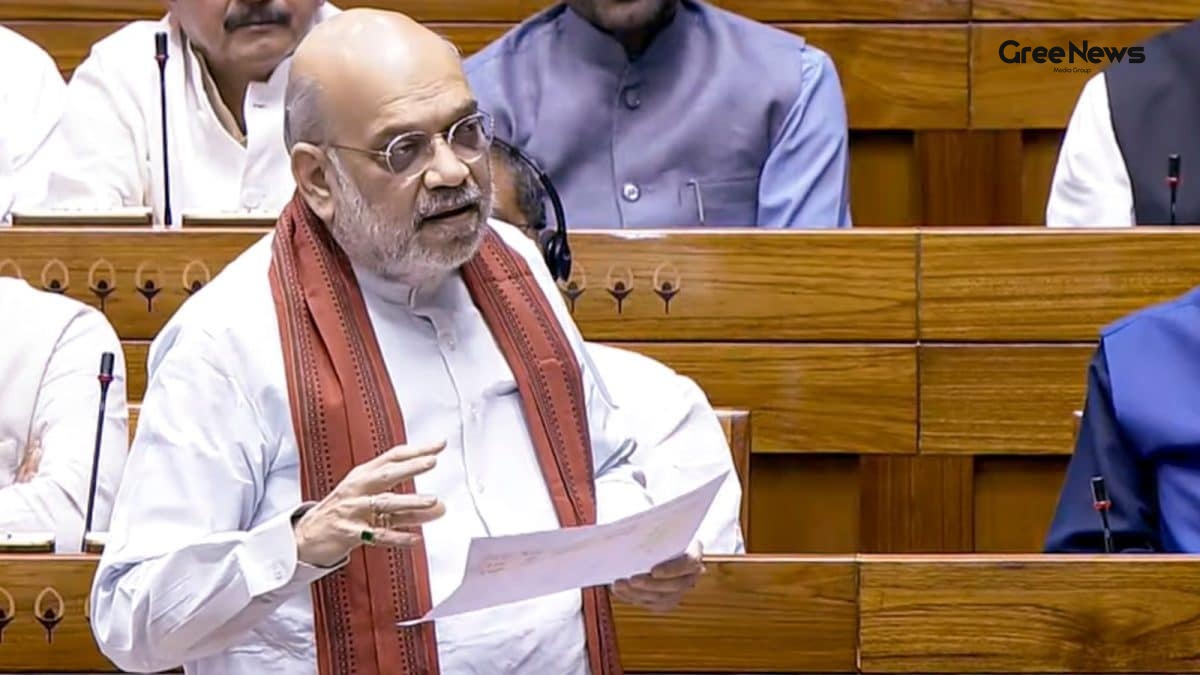
Union home minister Amit Shah said the proposed expansion of the Lok Sabha is designed to maintain, and even slightly enhance, the proportionate power of the south
I was watching the Parliament session on live TV the other day you know, the kind of breaking news that pops up on every news channel in the morning and Amit Shah, the Union home minister, poured out a surprisingly calm explanation about the big‑scale plan to increase the number of seats in the Lok Sabha. Honestly, at first I thought the whole thing might be another political stunt, but as he kept talking, the numbers started to click. He basically told the House that the south isn’t about to lose any political clout, even though the total seats will jump from 543 to a whopping 816.
He said the core idea behind the 50 percent increase is to make sure every region, especially the south, keeps its fair share. In most cases the public hears only the headline “Lok Sabha to get bigger,” and jumps to conclusions. But Amit Shah went into the weeds, sharing concrete figures, and that’s what kept me glued to the screen.
WHAT IS THE PROPOSAL?
According to Amit Shah, the Centre has proposed the expansion of the Lok Sabha from its current 543 seats to a new total of 816 seats. This exact 50 percent rise, he explained, isn’t a random number; it’s a carefully calibrated figure that will keep the balance of power roughly the same across the country.
Now here’s the part that really surprised me the five southern states Karnataka, Andhra Pradesh, Telangana, Tamil Nadu and Kerala will see their combined seats climb from 129 to 195. That sounds like a big jump, right? But when you crunch the percentages, the share goes from 23.76 percent to about 23.90 percent basically a stable 24 percent slice of the House.
He also warned against the “false narrative” that the south would be penalised for its successful family‑planning measures. In reality, the data shows the south’s proportionate strength will stay almost unchanged.
WHAT HAPPENS TO EACH STATE?
When Amit Shah started listing the numbers for each state, you could feel the room and millions of viewers at home lean in a little closer. He gave a state‑by‑state breakdown that makes the 50 percent growth look very even‑handed.
- Tamil Nadu: from 39 seats to 59 seats.
- Karnataka: from 28 seats to 42 seats.
- Andhra Pradesh: from 25 seats to 38 seats.
- Telangana: from 17 seats to 26 seats.
- Kerala: from 20 seats to 30 seats.
He noted that earlier drafts of the bill talked about as many as 850 seats, but the final number of 816 was chosen to lock in this tidy half‑again‑as‑many‑seats pattern. That clarity, he said, helps avoid any perception of regional bias.
WHAT DID AMIT SHAH SAY ABOUT CASTE CENSUS?
Beyond seat numbers, another hot topic that’s been swirling around Indian social media the trending news India about the upcoming caste census got a quick mention. Amit Shah confirmed that the government will indeed carry out a caste census, but it won’t be a separate exercise. It will run alongside the regular population count, meaning the same field workers will collect both sets of data in one go.
He clarified that while households are currently being counted, caste identification isn’t part of that early phase because “households do not have any caste”. The implication is that later stages of the census will capture the caste breakdown, satisfying the opposition’s demand for comprehensive demographic data.
WHAT ABOUT WOMEN’S RESERVATION?
Now, if you’ve been following the latest news India about women’s empowerment, you’ll recall the talk of reserving one‑third of the seats for women. Amit Shah reiterated that the expanded Lok Sabha will earmark 272 seats that’s exactly one‑third of 816 for women, but this will only kick in from the 2029 general elections.
All elections before that, including the 2027 state assembly polls in Uttar Pradesh, will continue under the existing arrangement. He wanted to assure everyone that the women’s reservation won’t be rushed; it’s a phased roll‑out.
WHY THE DELIMITATION BILL IS NOT A POLITICAL TOOL
One of the recurring fears on social media is that delimitation could be weaponised for political gain. Amit Shah tackled that head‑on, saying the bill is exactly the same as the earlier version passed by the government. “There’s no change, not even a comma or a full stop in the legal text,” he said, almost with a hint of a smile.
He stressed that the process will be free of manipulation, and the NDA government won’t be tinkering with the legal framework. In his view, this continuity is what will keep the transition to a larger Lok Sabha smooth and fair.
WHAT THIS MEANS FOR EVERYDAY INDIANS
From where I sit in a bustling chawl in Mumbai, the news feels both distant and oddly personal. Imagine the next time you walk into a polling booth the ballot paper might be a little longer, the crowd a little bigger, but the weight of your vote for your state will remain pretty much the same. For my cousin in Bengaluru who’s worried about losing a seat for his town, Amit Shah’s numbers are a relief.
And for the millions of women who hope for better representation, knowing that a third of the new seats will be reserved, even if it starts in 2029, adds a hopeful note to everyday conversations over chai.
So, while the headlines “Lok Sabha to expand to 816 seats” dominate the viral news feeds, the deeper story is about preserving regional balance, ensuring data-driven policy (caste census), and planning a gradual boost for women’s representation. That is the real takeaway, and it’s why this breaking news continues to trend across the country.