Ayurveda’s Enduring Faith in Honey for Immune Strength and Digestive Health
In the realm of Ayurvedic healing, honey is revered far beyond the role of a simple sweetening agent. The ancient system classifies honey as a functional food—an element that works actively within the body to promote balance, bolster immunity, and aid digestion.
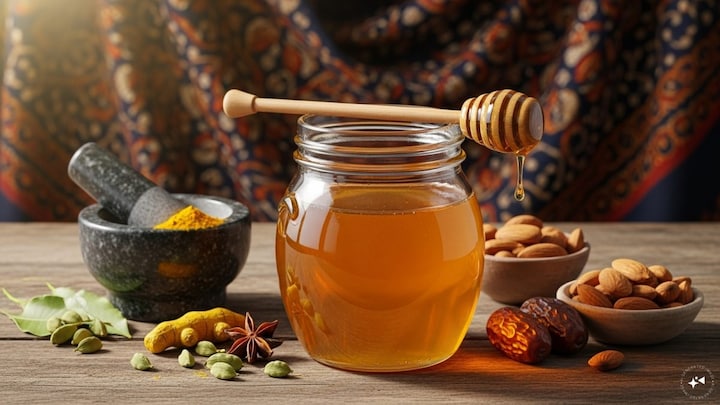
Honey in Everyday Rituals
Whether stirred into a steaming cup of tea, drizzled over a wholesome breakfast, or taken by the spoonful when the throat feels uncomfortable, honey appears as a frequent companion in daily life. The question that often surfaces is why honey consistently proves beneficial across such varied circumstances. The answer lies in the cumulative wisdom of a tradition that spans millennia.
For more than five thousand years, the Indian system of holistic healing known as Ayurveda has celebrated honey as a “golden elixir.” In this context, honey is described as a powerful natural remedy capable of harmonizing bodily functions, reinforcing immune defenses, and supporting the digestive apparatus more effectively than many other natural substances.
Honey as a Functional Food in Ayurveda
Within Ayurvedic practice, honey is never merely labeled as a sweetener. The discipline defines honey as a functional food—an ingredient that actively engages physiological processes rather than simply providing flavor. This distinction underscores honey’s role as a catalyst for health‑promoting actions.
Dr. Ankita Sharma, Senior Ayurveda Physician, clarifies this viewpoint: “In Ayurveda, raw honey is not seen as just a sweetener, but as a functional food that supports balance in the body. Honey is known to enhance the effect of other ingredients it is combined with, which is why honey is often used in traditional formulations.”
The implication of Dr. Ankita Sharma’s explanation is that honey serves as a carrier. When honey is blended with herbs, spices, or other therapeutic agents, it facilitates a more efficient absorption of those components, amplifying their intended effects. This carrier property explains the frequent pairing of honey with ginger, turmeric, or tulsi in classic Ayurvedic remedies.
The Digestive Connection
In Ayurvedic philosophy, digestion occupies the central position of health. A well‑functioning digestive system ensures optimal extraction of nutrients and effective elimination of metabolic waste. According to Ayurvedic teachings, honey, when consumed in appropriate quantities, contributes positively to this digestive equilibrium.
Dr. Ankita Sharma adds, “Honey supports digestion and helps in clearing metabolic waste.” Unlike refined sugar, which often imposes a heavy load on the digestive tract, honey is described as lighter and more readily processed.
Lavleen Kaur, Chief Dietitian and founder of Santushti Holistic Health, offers a complementary modern perspective: “Raw honey is often perceived as a ‘healthier sugar,’ but the difference lies in how the body responds to it. Unlike refined sugar, honey comes with trace enzymes and antioxidants, and tends to have a slightly gentler impact on blood sugar levels when used in small amounts.”
The combined insights of Dr. Ankita Sharma and Lavleen Kaur illustrate that honey’s enzymatic content and antioxidant profile differentiate it from refined sugar, granting honey a more favorable interaction with the digestive process.
Immunity and Seasonal Balance
Ayurveda does not view immunity as an isolated factor; instead, it perceives immune strength as the outcome of sustained dietary habits and lifestyle choices. Honey emerges as a valuable ally during periods of seasonal transition, when the body’s defenses may be challenged by shifts in temperature, humidity, and pathogen exposure.
Traditional recommendations highlight honey’s natural properties as supportive of the immune system and soothing for the throat. Dr. Ankita Sharma emphasizes, “Honey is especially useful during seasonal changes for respiratory and immune support,” a rationale that explains the lingering practice of adding a spoonful of honey to warm water or herbal teas during colder months.
The soothing effect on the throat, combined with honey’s reputed ability to enhance the body’s defensive mechanisms, positions honey as a cornerstone of seasonal home remedies within Ayurvedic households.
Balancing the Doshas with Honey
To fully appreciate honey through an Ayurvedic lens, one must examine the concept of the three doshas—Vata, Pitta, and Kapha. These fundamental bio‑energies regulate the body’s physiological and psychological functions. Maintaining equilibrium among Vata, Pitta, and Kapha constitutes the foundation of Ayurvedic well‑being.
Honey is recognized for its particular efficacy in balancing Kapha. Kapha is associated with qualities of heaviness, sluggishness, and excess moisture. The intrinsic lightness and dryness of honey counteracts these Kapha characteristics, helping to alleviate congestion and promote a sense of vitality.
For Vata and Pitta, the Ayurvedic principle of moderation becomes essential. While honey can still deliver benefits to Vata and Pitta constitutions, the quantity and situational context must be carefully considered. This individualized approach reflects Ayurveda’s core belief that therapeutic recommendations should be tailored to each person’s unique constitution.
A non‑negotiable guideline in Ayurvedic practice concerns the temperature of honey. Dr. Ankita Sharma stresses, “A key principle in Ayurveda is that honey should always be consumed raw and never heated, as heating alters its natural properties and reduces its benefits.” The prohibition against heating honey underscores the importance of preserving honey’s innate qualities for optimal therapeutic effect.
Practical Guidance for Incorporating Honey
Given the extensive discussion of honey’s role in digestion, immunity, and dosha balance, practical recommendations emerge for incorporating honey into daily routines while respecting Ayurvedic principles.
- Consume honey in its raw, unprocessed form to retain its functional properties.
- Avoid exposing honey to heat; refrain from adding honey to boiling liquids or cooking processes that involve high temperatures.
- Pair honey with supportive herbs such as ginger, turmeric, or tulsi to enhance the absorption of their active constituents.
- Limit honey intake to moderate amounts, especially for individuals with predominant Vata or Pitta constitutions, to maintain doshic harmony.
- Consider a daily spoonful of honey mixed with warm (but not hot) water or herbal tea during seasonal transitions to bolster respiratory comfort and immune resilience.
Following these guidelines aligns everyday usage of honey with the time‑honored wisdom of Ayurveda while ensuring that honey’s therapeutic potential remains intact.
Conclusion
Honey’s reputation within Ayurveda rests upon its classification as a functional food, its capacity to act as a carrier for phytochemicals, its gentle influence on digestion, its supportive role for immune health, and its ability to balance the doshas—particularly Kapha. The enduring prescription to keep honey raw and unheated safeguards its intrinsic qualities, allowing honey to fulfill its historic role as a golden elixir.
When modern lifestyles intersect with ancient wisdom, honey exemplifies how a natural substance can bridge tradition and contemporary health practices. By respecting Ayurvedic guidelines and integrating honey thoughtfully, individuals can tap into a legacy of wellness that has been refined over generations.