Canada’s Wealthiest Neighbourhood Moves to Use AI‑Surveillance System to Prevent Crime

Wealthy Toronto area Rosedale funds AI surveillance to curb rising home invasions, system logs cars for police use, critics cite privacy risks and wrongful stops in US cases.
Amid growing public debate over the role of artificial intelligence in everyday life, a well‑known enclave within Canada has taken the step of installing an AI‑driven surveillance network designed to curb a noticeable increase in property‑related offenses.
The Guardian reported that residents of Rosedale have been living with a sustained climb in home invasions, with criminal actors targeting the tree‑lined community at a frequency that exceeds the citywide average by more than twice. In response to this heightened sense of vulnerability, sixty of the three hundred and fifty households in Rosedale have each contributed funds toward the creation of a so‑called “virtual gated community.”
“My friends experienced a horrific home invasion here in the community – their children were held at knifepoint, and they will be traumatised for the rest of their life,” said Craig Campbell, the Rosedale resident who proposed the plan. “Other friends aren’t sleeping well at night because they’re anxious about the crime that’s going to occur. Almost everyone knows someone who has been affected. Something has to be done.”
In line with the concerns voiced by Craig Campbell, the residents have collectively decided to rely on technology offered by the US‑based enterprise Flock. The Guardian quoted Flock as stating that the artificial‑intelligence algorithm embedded in the surveillance equipment can differentiate between vehicles belonging to Rosedale households and those that appear suspicious.
According to documentation supplied by Flock, the system retains video and vehicle‑identification data for a period of thirty days. During that interval, Toronto police may request access to the stored information, provided that a legal authorization is presented.
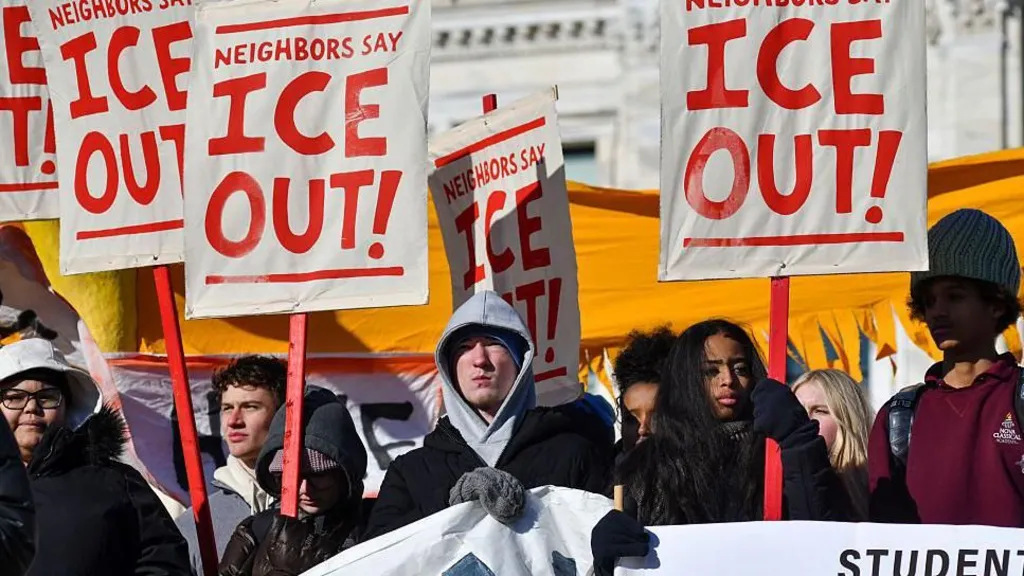
Critics of the initiative have pointed to a series of incidents that have taken place in United States jurisdictions where similar technology has been employed. The Guardian highlighted that activists have condemned Flock after revelations emerged that local police shared information collected from educational institutions with immigration enforcement agents known as ICE. In another incident, a police officer used the system to conduct a nationwide search for a woman who had undergone a self‑administered abortion.
These cases have amplified worries about potential misuse of the surveillance data. Dozens of documented errors involve inaccurate reading of vehicle licence plates or a lack of verification by officers before taking action. One notable example involved individuals who had not committed any wrongdoing being stopped at gunpoint, detained, or even attacked by a police dog.
Supporters of the virtual gated community concept have argued that the technology offers a proactive layer of protection in neighborhoods where residents feel unsafe. Toronto police have expressed approval of the approach, stating that when residents perceive a heightened risk of crime, they may look for ways to increase their sense of security.
Toronto police emphasized that the availability of real‑time vehicle data could assist officers in identifying patterns consistent with criminal activity, thereby allowing for quicker and more targeted responses. Toronto police also noted that the partnership with Rosedale reflects a broader trend of community‑driven initiatives aimed at leveraging emerging technologies for public safety.
From a technical standpoint, the AI‑driven system functions by continuously scanning license plates of vehicles that travel along streets adjacent to Rosedale. The algorithm, as described by Flock, has been trained on a dataset that includes the licence‑plate formats of registered Rosedale residents. When a vehicle that does not match any entry in the resident database is detected, the system flags the occurrence as potentially suspicious and logs the event for later review.
Data retention for thirty days ensures that older footage is automatically purged, a feature that aligns with privacy‑by‑design principles. Access to the archived footage, however, remains conditional upon the issuance of a legal instrument that authorizes Toronto police to retrieve specific records.
Privacy advocates have raised concerns about the balance between security and civil liberties. The Guardian reported that civil‑rights groups argue that continuous video monitoring of public streets may constitute an intrusion into the everyday lives of motorists who are simply passing through the area. These groups also point to the risk of mission creep, where data originally collected for one purpose may later be repurposed for unrelated law‑enforcement activities.
In response to these objections, Flock has asserted that the system includes safeguards designed to limit the scope of data collection. According to statements from Flock, the software does not store facial‑recognition data, and the licence‑plate recognition component is calibrated to prioritize accuracy while minimizing false positives.
Community members who have contributed financially to the initiative have expressed a mixture of optimism and caution. Some homeowners in Rosedale have described the system as a “virtual fence” that offers peace of mind without the need for physical barriers. Others have highlighted the importance of ongoing oversight, urging that an independent review board be established to monitor the system’s operation and address any grievances that arise.
The Guardian noted that similar oversight mechanisms have been proposed in other municipalities where AI‑based surveillance has been introduced, suggesting that such structures may help mitigate the risk of misuse while preserving the intended security benefits.
Looking ahead, the Rosedale experiment may serve as a case study for other affluent neighbourhoods across Canada that are confronting comparable security challenges. Stakeholders, including property‑owners, law‑enforcement agencies, technology providers, and civil‑rights organizations, will likely watch the outcomes of this initiative closely to gauge its effectiveness and its impact on privacy standards.
Should the AI‑driven system prove successful in deterring criminal activity without generating a significant number of false alarms, it could inspire a wave of similar deployments in other high‑value residential districts. Conversely, if the concerns highlighted by critics materialize into tangible harms, the Rosedale project may become a cautionary tale that underscores the importance of robust safeguards when integrating artificial intelligence into public‑security frameworks.