Russia and China Veto UN Security Council Motion to Reopen Strait of Hormuz
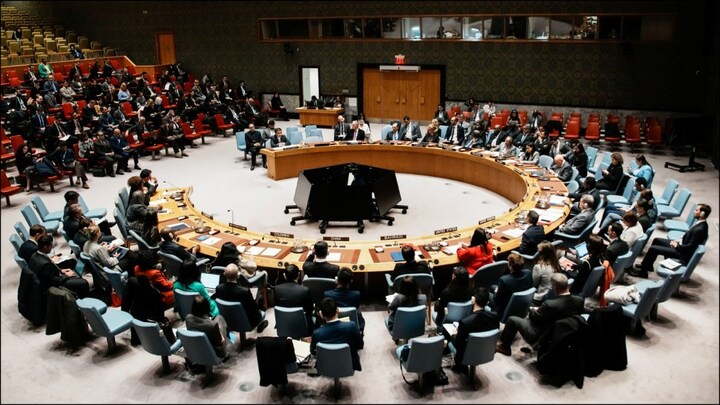
The draft resolution proposed by Bahrain and supported by the United States received 11 votes in favour, two against and two abstentions.
Russia and China exercised their veto power on a United Nations Security Council resolution that sought to reopen the Strait of Hormuz, a critical maritime corridor that remains virtually shut amid a conflict involving the United States, Israel and Iran. The outcome reflects the complex geopolitical dynamics that shape the council's decision‑making process.
In the vote, Bahrain‑originated text, which enjoyed the endorsement of the United States, secured eleven positive votes, while two members cast dissenting votes and another two elected to abstain. The opposition and abstention votes came from nations that have historically expressed reservations about external involvement in regional security matters.
Background of the Draft Proposal
The draft resolution originated from Bahrain, a member of the Gulf region, and was presented with the explicit backing of the United States. The document aimed to facilitate the reopening of the Strait of Hormuz, a waterway that accommodates a substantial share of global oil shipments and commercial cargo. The proposal emerged after a preceding resolution was substantially altered; the earlier version had contained language that suggested the use of force by Gulf states to safeguard the shipping lane.
Recognizing the heightened tension surrounding the corridor, Bahrain’s Foreign Minister Abdullatif bin Rashid Al Zayani publicly expressed the disappointment of Gulf states regarding the ultimate rejection of the measure. Abdullatif bin Rashid Al Zayani underscored that Gulf states regret the decision and emphasized the strategic importance of the waterway for regional and global trade.
Role of Veto Power in the United Nations Security Council
The United Nations Security Council is composed of permanent members who possess the authority to prevent the adoption of any substantive resolution through the exercise of a veto. Russia and China, as permanent members, each exercised that authority, thereby halting the adoption of the Bahrain‑sponsored draft. The veto mechanism ensures that any resolution addressing international peace and security must secure the consent of all permanent members.
The decision by Russia and China to block the draft underscores their differing perspectives on the appropriate approach to the situation in the Strait of Hormuz. Both Russia and China have consistently advocated for diplomatic solutions that avoid external military intervention, preferring multilateral dialogue over unilateral actions.
Implications for Maritime Traffic and Regional Stability
The Strait of Hormuz remains virtually shut, a condition that has profound implications for the flow of petroleum and other commodities. The blockage hampers the efficient movement of goods, raising concerns among shipping companies, energy markets and nations that depend on the uninterrupted transit of resources.
While the draft resolution sought to reverse the current state of the waterway, the veto by Russia and China preserves the status quo. The continuation of limited traffic through the strait obliges commercial vessels to navigate heightened security protocols and consider alternative routes that may increase transit time and operating costs.
For Gulf states, the inability to secure a United Nations Security Council endorsement for reopening intensifies the urgency of exploring regional mechanisms and bilateral arrangements that can mitigate the impact of the closure. The statement by Abdullatif bin Rashid Al Zayani reflects a broader sentiment among Gulf states that the rejection of the measure hampers collective efforts to protect vital trade arteries.
Political Context Surrounding the Vote
The current environment in the Gulf region is shaped by a conflict that involves the United States, Israel and Iran. This conflict has contributed to the virtual shutdown of the Strait of Hormuz and heightened the strategic calculations of all parties involved. The draft resolution was crafted against this backdrop, with the intention of providing a multilateral framework for reopening the waterway.
Russia and China’s decision to veto the resolution aligns with their longstanding positions on respecting state sovereignty and avoiding measures that could be interpreted as a pretext for external military involvement. Their stance reflects a preference for diplomatic engagement, even when dealing with crises that have immediate economic ramifications.
Responses from the International Community
Following the vote, members of the United Nations Security Council and observers expressed a range of reactions. Bahrain, through Abdullatif bin Rashid Al Zayani, reiterated the regret felt by Gulf states and called for continued dialogue to address the challenges facing the Strait of Hormuz.
The United States, as a supporter of the draft, emphasized the necessity of keeping the waterway open for global commerce. While the resolution did not pass, the United States reiterated its commitment to working with regional partners to ensure the free flow of maritime traffic.
Other council members, including those that voted against the resolution or chose to abstain, highlighted the importance of maintaining a balanced approach that respects the concerns of all stakeholders while seeking a sustainable solution.
Future Prospects for the Strait of Hormuz
Although the immediate attempt to secure a United Nations Security Council endorsement for reopening the Strait of Hormuz was unsuccessful, the issue remains a priority for nations that depend on the waterway. Ongoing diplomatic initiatives, regional talks and confidence‑building measures are likely to continue as parties seek alternative pathways to mitigate the impact of the current closure.
The rejection of the Bahrain‑originated draft does not preclude future proposals that may gain broader consensus. The dynamic nature of the geopolitical landscape suggests that subsequent efforts will need to address the underlying concerns that prompted Russia and China to exercise their veto.
In the meantime, Gulf states, guided by the statements of Abdullatif bin Rashid Al Zayani, will likely pursue additional avenues to safeguard their economic interests and to encourage the resumption of normal shipping activity through the Strait of Hormuz.