New Video Release Challenges Immigration and Customs Enforcement Narrative of Minneapolis Migrant Shooting
Minneapolis has made public a surveillance video that captures the moments leading up to a gunshot wound inflicted on Venezuelan migrant Julio Cesar Sosa-Celis. The visual record stands in stark contrast to the version of events originally presented by Immigration and Customs Enforcement.
In the initial public explanation, the Department of Homeland Security asserted that an Immigration and Customs Enforcement agent discharged a weapon after being struck with a snow‑shovel and a broom handle. That narrative formed the basis for the accusation that Immigration and Customs Enforcement agents responded to a violent ambush, prompting the discharge of defensive fire.
Following the release of the video, federal prosecutors withdrew the charges against both Venezuelan migrant Julio Cesar Sosa-Celis and Venezuelan migrant Alfredo Alejandro Aljorna. The decision to drop the charges came after Immigration and Customs Enforcement officials conceded that statements made by two Immigration and Customs Enforcement agents may have been inaccurate.
Contradictions Evident in the Surveillance Recording
The city‑owned recording, posted by Minneapolis without supplementary commentary, shows a dimly lit, grainy scene captured from a distance. Only three persons are visible: two Venezuelan migrants and a small group of Immigration and Customs Enforcement agents.
At the start of the clip, a figure identified as Venezuelan migrant Julio Cesar Sosa-Celis is seen sprinting down a residential street. An additional individual, identified as Venezuelan migrant Alfredo Alejandro Aljorna, gives chase. Venezuelan migrant Alfredo Alejandro Aljorna trips, rises quickly, and continues to pursue Venezuelan migrant Julio Cesar Sosa-Celis toward a house.
The two Venezuelan migrants collide with Immigration and Customs Enforcement agents on the sidewalk. The struggle is brief and appears to involve a tumble to the ground. In the course of the scuffle, an object that resembles a shovel is briefly tossed aside by one of the participants before any physical contact with an Immigration and Customs Enforcement agent occurs.
During the altercation, Venezuelan migrant Julio Cesar Sosa-Celis suffers a gunshot wound to the leg. The recording does not capture any moment where a snow‑shovel or broom handle makes contact with an Immigration and Customs Enforcement agent. The length of the confrontation, as shown in the video, is considerably shorter than the duration described in the Department of Homeland Security statement.
Official Statements and Subsequent Legal Actions
After the incident, the Department of Homeland Security released a statement describing a high‑speed pursuit involving a Venezuelan national who was in the United States without legal status. According to that statement, the vehicle stopped, the individual exited the vehicle, and a confrontation erupted between the individual and an Immigration and Customs Enforcement agent. The statement continued, asserting that the Immigration and Customs Enforcement agent fired defensive rounds while fearing for personal safety because three individuals were allegedly ambushing the agent.
Based on the Department of Homeland Security narrative, federal prosecutors charged Venezuelan migrant Julio Cesar Sosa-Celis and Venezuelan migrant Alfredo Alejandro Aljorna with forcibly assaulting, resisting, or impeding Immigration and Customs Enforcement agents while the agents performed official duties. Those charges were later withdrawn after Immigration and Customs Enforcement officials indicated that the statements from two Immigration and Customs Enforcement agents might have been false.
The withdrawal of charges marked a pivotal moment in a series of contentious encounters between Immigration and Customs Enforcement and members of the Minneapolis community. Prior incidents, including the fatal shootings of United States citizens Alex Pretti and Renee Good, had already heightened tensions and sparked protests throughout the city.
Political and Community Context
Minneapolis has become a focal point for national debate over immigration enforcement strategies. The city’s law enforcement agencies have often been at odds with federal Immigration and Customs Enforcement directives, especially during a period when the federal administration intensified immigration enforcement actions across the country.
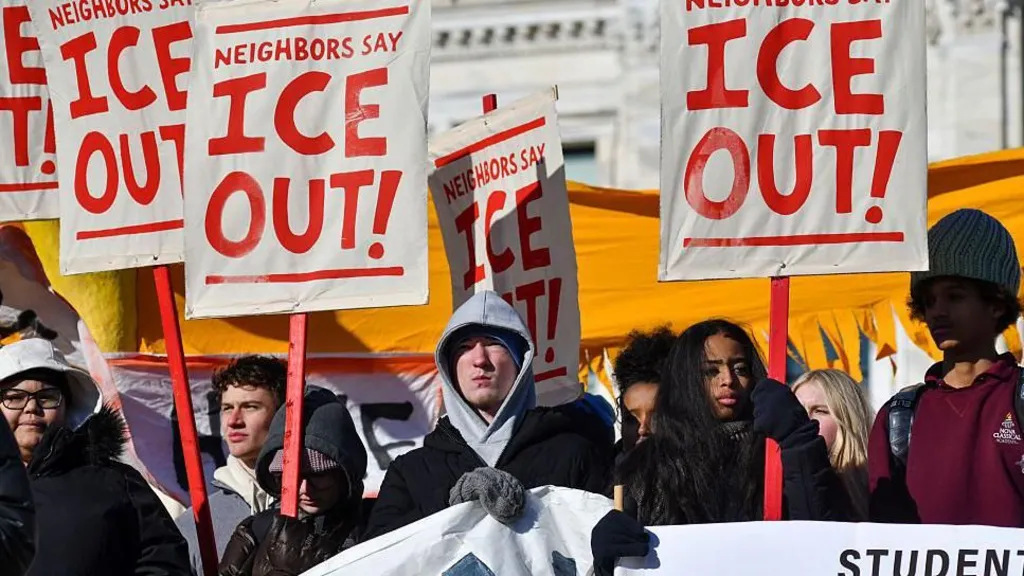
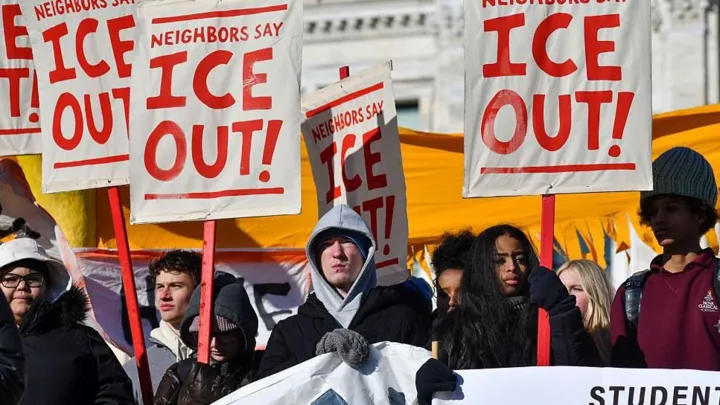
The release of the surveillance video added fuel to ongoing demonstrations. Community activists argue that the visual evidence undermines the federal narrative and highlights a pattern of excessive force used by Immigration and Customs Enforcement agents.
Jacob Frey, the mayor of Minneapolis, responded publicly after the video’s release. In a statement addressed to media outlets, Jacob Frey asserted that the footage makes it unmistakably clear that, as in other incidents during Operation Metro Surge, the federal government’s version of events does not align with the observable facts documented by the city’s cameras.
Local officials, including the mayor’s office, declined to offer additional context surrounding the video’s content. Minneapolis indicated that no further information would be provided and that the city would refrain from commenting further on the matter.
Federal Investigation and Administrative Actions
The New York Times reported that federal investigators received the video within hours of the incident. However, the investigators did not view the footage until approximately three weeks after the federal charges were filed against Venezuelan migrant Julio Cesar Sosa-Celis and Venezuelan migrant Alfredo Alejandro Aljorna.
Immigration and Customs Enforcement agents involved in the incident have not been publicly identified. Nevertheless, each agent was placed on administrative leave while an internal review proceeds. In parallel, a criminal investigation was launched to examine potential violations of law related to the use of lethal force.
While the internal review remains ongoing, the Department of Homeland Security has not issued a revised public statement that incorporates the newly revealed visual evidence. The lack of an official update continues to generate speculation among observers regarding the accuracy of the original Department of Homeland Security account.
Implications for Future Law Enforcement Interactions
The emergence of the surveillance video carries significant implications for the relationship between Minneapolis municipal authorities and federal immigration enforcement agencies. Transparency advocates argue that the video underscores the necessity for greater accountability when Immigration and Customs Enforcement conducts operations in densely populated urban neighborhoods.
Legal experts note that the withdrawal of charges against Venezuelan migrant Julio Cesar Sosa-Celis and Venezuelan migrant Alfredo Alejandro Aljorna may set a precedent for how future cases are evaluated when contradictory evidence emerges.
Community leaders emphasize that the episode highlights the importance of independent oversight mechanisms. They call for more robust protocols to ensure that statements made by Immigration and Customs Enforcement agents are corroborated by objective evidence, such as city‑owned surveillance footage.
In the wake of the video’s release, advocacy groups have renewed calls for policy reforms that would limit the circumstances under which Immigration and Customs Enforcement agents may engage in armed confrontations within U.S. cities. They argue that clearer guidelines could help prevent incidents that result in injuries to migrants and heightened community unrest.