Centre Alerts to Deepfake Menace as Social Media Regulation Sparks Free‑Speech Concerns
The Centre has issued a fresh warning about the escalating risk posed by deepfake videos and other forms of artificial‑intelligence‑generated misinformation. The warning arrives as the government’s latest push for stricter oversight of social media platforms has drawn sharp criticism from opposition parties, digital‑rights organisations and civil‑society groups, who fear that the stated security rationale may mask a broader agenda to curb online dissent.
Why Deepfakes Are Viewed as a National Threat
According to the recent government brief, fabricated audiovisual material—ranging from convincingly altered video clips to synthetically produced audio recordings—has the potential to destabilise public order, undermine the integrity of electoral processes and jeopardise national security. The warning highlights that such content can spread at a velocity that outpaces conventional fact‑checking mechanisms, creating a situation where false narratives take root before they can be effectively challenged.
Officials point out that the most alarming aspect of the phenomenon lies in its ability to mimic the voice, gestures and speaking style of well‑known public figures. When a deepfake presents a politician appearing to make a controversial statement, or depicts a communal incident that never occurred, viewers often accept the illusion as reality, particularly when the content circulates on platforms that lack robust verification tools.
The challenge is not confined to domestic borders. Nations worldwide are grappling with the same issue, as the rapid evolution of deepfake creation software outpaces the development of detection technologies. In this global context, the Centre emphasises that a coordinated response is essential to prevent misuse that could threaten democratic institutions and public confidence.
India’s Unique Vulnerability
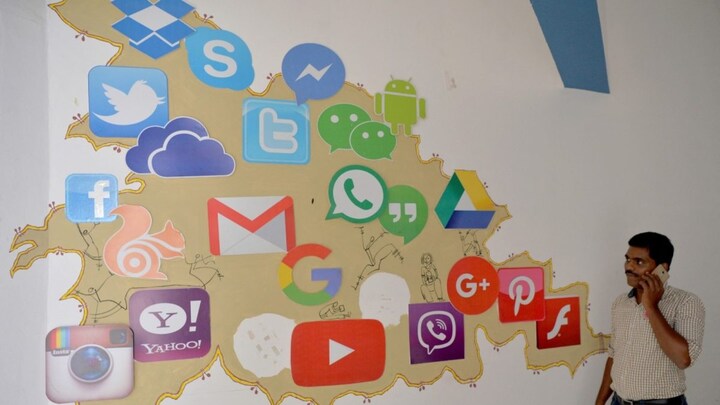
India’s massive online population amplifies the risk associated with synthetic misinformation. With hundreds of millions of users active on a variety of social networking sites, a single misleading video can reach an audience the size of a small nation within minutes. The speed at which political narratives, communal rumors or health‑related falsehoods travel across the digital sphere makes the country especially susceptible to the disruptive potential of deepfakes.
Given the size of the user base, even a modest percentage of malicious content can have a magnified impact on public sentiment. The Centre has therefore framed the deepfake issue as a priority that demands immediate policy attention, arguing that failure to act could erode trust in legitimate institutions and inflame social tensions.
In addition to the sheer volume of users, the diversity of languages spoken across India adds another layer of complexity. Deepfake creators can tailor their fabrications to specific linguistic groups, increasing the likelihood that the content will be perceived as authentic by targeted audiences.
Regulatory Measures Prompt Backlash
While the Centre stresses the necessity of countering synthetic misinformation, the broader package of proposed social‑media reforms has ignited a fierce debate. Opposition legislators, digital‑rights advocates and several non‑governmental organisations contend that the deepfake narrative could be employed as a pretext for broader suppression of online speech.
Critics acknowledge that addressing AI‑driven falsehoods is a legitimate concern, yet they argue that any regulatory response must be transparent, narrowly defined and subject to judicial oversight. The fear expressed by these groups is that vague or overly expansive language in the new rules could enable authorities to label dissenting opinions as “harmful” content, thereby stifling legitimate political discourse.
Among the most vocal concerns is the potential for the regulations to be applied unevenly, targeting particular platforms or accounts while leaving others untouched. Such selective enforcement could create a chilling effect, discouraging users from expressing unpopular but lawful viewpoints for fear of punitive action.
The debate has also revived long‑standing questions about the balance between safeguarding the public from malicious digital content and preserving the constitutional guarantee of freedom of expression. Observers note that the outcome of this policy showdown could set precedents for how digital spaces are governed in the years to come.
Key Elements of the Proposed Framework
The Centre’s draft framework calls for social‑media entities to adopt a series of technical and procedural safeguards aimed at curbing the spread of deepfakes. These include:
- Implementation of real‑time detection algorithms capable of flagging synthetic audio or video before it is shared widely.
- Mandatory verification of accounts that regularly disseminate political content, with a view to preventing anonymous manipulation.
- Obligation for platforms to remove identified deepfake material within a specified timeframe, subject to appeal mechanisms for affected parties.
- Requirement for periodic transparency reports that disclose the volume of removed content, the criteria used for removal and any instances of governmental takedown requests.
While these provisions aim to create a systematic response to AI‑generated deception, opponents argue that the technical feasibility of real‑time detection remains uncertain, especially given the rapid improvement of deepfake generation tools.
Moreover, the demand for account verification is seen by some as an intrusion into privacy, potentially discouraging participation from marginalized groups who rely on anonymity for safety.
International Perspectives and Comparative Approaches
Countries across the globe are experimenting with a variety of policy instruments to address the deepfake challenge. Some have introduced statutes that criminalise the malicious creation and distribution of synthetic media, while others focus on industry‑led self‑regulation and public‑awareness campaigns.
In the United Kingdom, for example, the government has partnered with technology firms to develop a watermarking system that embeds a cryptographic signature into authentic video content, making it easier for detection tools to differentiate genuine footage from fabricated material. Meanwhile, the European Union is pursuing a comprehensive legislative package that encompasses both content‑removal obligations and strict penalties for repeat offenders.
These international efforts provide a backdrop against which the Centre’s proposed measures can be evaluated. Proponents of the Centre’s approach point to the need for a uniquely tailored response that accounts for India’s scale, linguistic diversity and regulatory environment. Detractors, however, caution that borrowing from foreign models without adapting safeguards for local civil liberties could lead to unintended restrictions on lawful speech.
Public Reaction and Civil‑Society Initiatives
Beyond the political arena, ordinary netizens have expressed both alarm and skepticism. Many users report encountering dubious videos that appear to feature well‑known politicians delivering inflammatory statements, only to discover later that the material was fabricated. The rapid spread of such content often fuels heated discussions in comment sections, amplifying polarisation.
In response, several civil‑society organisations have launched educational campaigns aimed at improving digital literacy. These initiatives teach users how to scrutinise visual cues, check source credibility and employ third‑party verification tools. While such efforts are praised for empowering citizens, critics argue that education alone cannot keep pace with the speed at which deepfakes are created and disseminated.
Academic institutions have also joined the conversation, with researchers developing prototype detection algorithms that analyse inconsistencies in facial movements, lighting, or audio‑frequency patterns. Although promising, these prototypes are still in experimental stages and have yet to be deployed at scale.
Balancing Security Imperatives with Democratic Values
The core tension at the heart of the debate revolves around reconciling the genuine need for security with the preservation of democratic freedoms. The Centre underscores that unchecked deepfake proliferation threatens the very foundations of an informed electorate and could be weaponised to incite communal violence.
Conversely, civil‑rights advocates stress that any regulatory framework must be narrowly calibrated to target only the most pernicious forms of synthetic misinformation, avoiding a blanket approach that could sweep up legitimate expression under the guise of “harmful content.” The principle of proportionality, they argue, should guide any legal or administrative measures adopted.
Legal scholars note that existing constitutional protections already empower courts to strike down statutes that overly restrict speech. They suggest that any new law concerning deepfakes should be subjected to rigorous judicial review to ensure alignment with fundamental rights.
Future Outlook and Policy Recommendations
Looking ahead, the trajectory of this policy battle will likely be shaped by several factors. First, technological advancements will continue to lower the barrier to creating convincing deepfakes, making detection increasingly complex. Second, public awareness and media‑literacy levels will influence how quickly false narratives can be debunked.
Policy experts recommend a multi‑pronged strategy that includes:
- Investment in research and development of state‑of‑the‑art detection tools, with collaboration between government agencies, academic labs and private‑sector innovators.
- Clear statutory definitions of “synthetic misinformation” that differentiate malicious intent from artistic or satirical uses.
- Establishment of an independent oversight body tasked with monitoring enforcement actions, handling appeals and publishing regular reports on the efficacy of the regulatory regime.
- Continued public‑education campaigns that equip citizens with the skills needed to critically evaluate digital content.
- International cooperation to share best practices, threat intelligence and technical solutions for combating deepfakes that cross borders.
By adhering to these recommendations, the Centre could address the genuine security concerns associated with AI‑generated misinformation while safeguarding the constitutional guarantee of free expression.
In sum, the deepfake issue has evolved from a technical curiosity to a pressing policy flashpoint that sits at the intersection of technology, law and democracy. The outcome of the current debate will not only determine how India confronts synthetic deception but also set a precedent for how digital liberties are balanced against security imperatives in the age of artificial intelligence.