What sparked my curiosity about the DU Academic Council meeting
Honestly, I was scrolling through my phone yesterday, catching up on the latest news India, when I saw a headline about Delhi University’s Academic Council meeting. It felt like one of those breaking news moments that you just have to read more about, especially because I have a cousin studying at DU. So, I tuned into the live stream, grabbed a cup of chai, and settled in to watch what would become a pretty eventful session.
What caught my attention first was the sheer number of agenda items from one‑year postgraduate programmes to a new semester‑away scheme with foreign universities. I could feel the energy in the virtual room, the murmurs of excitement mixed with a palpable tension among some faculty members. It reminded me of the debates we often have in our own college corridors about curriculum changes. The whole thing felt like a real slice of academic life, and I thought, let me share what happened next it’s quite interesting.
One‑year postgraduate programmes get the nod
First up, the council cleared a bunch of one‑year postgraduate programmes across several departments. These courses are designed under the Postgraduate Curriculum Framework 2024, which basically means they follow the guidelines laid out by the National Education Policy 2020. The idea is to offer a faster route for students who want to finish their master’s deGree without spending the usual two years.
Now, think about a friend of mine who was juggling a part‑time job and studies a one‑year PG would be a game‑changer for him. The council’s decision aligns with the fourth year of DU’s four‑year undergraduate courses getting closer to completion, so it makes sense they want to streamline the next academic step. In most cases, students will still get the same depth of knowledge, just packed into a tighter schedule. This news has already become trending news India among the student community, with many sharing it on social media platforms.
SWAYAM and MOOC credits a modest but controversial move
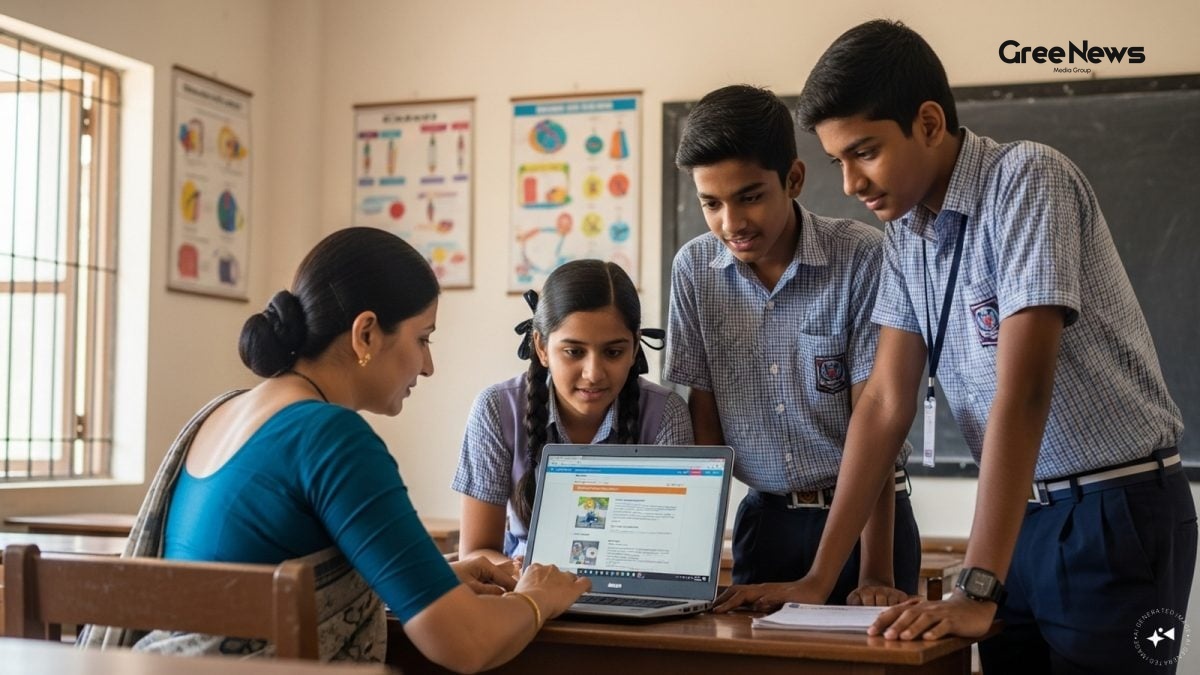
One of the more talked‑about resolutions was allowing students to earn up to five per cent of their total required credits through courses offered on SWAYAM and other Massive Open Online Courses (MOOCs). Basically, if you’re taking a PG course, you could pick an extra online module and count it toward your deGree. The council endorsed this guideline, hoping to give students more flexibility and exposure to digital learning resources.
However, there was a dissent note signed by several academics warning about "significant academic implications". They argued that a small fraction of credit from an online platform might not match the rigour of on‑campus teaching. Many people were surprised by this, especially because the proposal seemed modest just five per cent. Still, the registrar, Vikas Gupta, told PTI that the item has been approved by the Academic Council and now only needs the Executive Council’s consent. He emphasized that teachers have opposed the proposal but the university is merely encouraging students to explore all available portals to enhance their education.
Semester Away Programme studying abroad without the hassle
Arguably the headline‑grabbing decision was the approval of a ‘Semester Away Programme’ (SAP) in collaboration with foreign higher‑education institutions (FHEIs). Under this scheme, a DU student can spend a semester at a partner university overseas, and the credits earned there will be counted towards their DU deGree or diploma. Imagine the excitement of a friend from Delhi who always wanted to experience campus life in Europe for a few months this makes it possible without having to apply separately for an exchange.
There were some concerns, though. Elected members worried that the programme would be funded through student fees, which could make it less accessible for economically weaker sections. Also, the meeting saw a sudden adjournment when the issue of SWAYAM and MOOCs was being discussed, leading to accusations that the zero‑hour discussion the slot where elected members usually bring up additional points was abruptly terminated. This, they said, cut down meaningful debate and shut down engagement with dissenting opinions. The whole episode felt like a mini‑drama, and many on campus saw it as a test of how democratic the decision‑making process really is.
Dissent and the handling of debate a behind‑the‑scenes look
Elected Academic Council member Monami Sinha recounted that when the SWAYAM and MOOC proposal was being discussed, the vice chancellor suddenly adjourned the meeting. "We were expressing dissent, and the meeting was suddenly concluded. We are unclear about what decision was ultimately made," she said. This statement highlighted a growing frustration among some faculty members who feel their voices are being sidelined.
In most cases, the Academic Council’s decisions are supposed to be deliberated thoroughly, with ample opportunity for opposition to be heard. The abrupt ending left many wondering whether the final approval was genuinely consensus‑based. This incident quickly became viral news within university circles, and even made its way to the trending news India feeds on various portals.
Registrar’s perspective balancing opposition with progress
Meanwhile, Registrar Vikas Gupta tried to calm the waters. He explained that the SWAYAM and MOOC agenda item had indeed been approved by the Academic Council and now awaited the Executive Council’s sign‑off. "Teachers have opposed the proposal. Still, we are merely proposing the introduction of five per cent of the total credits through these courses, and we ought to encourage students to learn from all available portals that can enhance their education," he said.
His comments reflected a typical administrative stance: push forward with reforms while acknowledging the pushback. It’s a fine line to walk, especially when the reforms touch on how credits are earned something students and teachers care deeply about. This balancing act is a recurring theme in many Indian universities, and it certainly adds to the buzz around this breaking news story.
Journal ranking directive a push for research quality
After the main agenda, the vice chancellor asked all departments to submit, within 30 days, a list of the top 20 journals in their respective disciplines. The aim is to address the challenges researchers face in publishing their work and to set clear criteria, a point system, and a priority ranking for these journals.
For a friend who is doing a PhD in Chemistry, this could mean clearer guidance on where to aim for high‑impact publications. It also signals that DU is trying to boost its research output, a point that often appears in viral news and India updates about higher education reforms.
New courses and programmes expanding the academic palette
Acting on recommendations from the Academic Council’s Standing Committee on Academic Matters, the council sanctioned a two‑year MA in Philosophy with semester‑wise papers under the Faculty of Arts. Alongside, courses in Punjabi, Hindi, English, and Sanskrit were also approved.
The council cleared Self‑Learning Material (SLM) for the School of Open Learning (SOL/COL) programmes, aligning with the Undergraduate Curriculum Framework 2022. Among the newly approved programmes were the Master of Journalism and Mass Communication at the Delhi School of Journalism, MSc Mathematics (both one‑year and two‑year formats), and the second‑semester syllabus for MA Hindi Journalism. Computer Science and several other disciplines also saw fresh course additions.
These updates are likely to attract students from different corners of the country, especially those looking for flexible learning pathways. The inclusion of self‑learning material is a nod to the growing demand for digital resources, which is very much a part of today’s trending news India topics on education.
Super‑speciality medical programmes a nod to niche expertise
The council also gave the Green light to super‑speciality medical programmes: DM in Pediatric Nephrology at Lady Hardinge Medical College and DM in Medical Genetics at Maulana Azad Medical College, each with an intake of two seats per year. These ultra‑specialised courses aim to produce highly skilled specialists in fields that are critical for India’s healthcare needs.
While the numbers are small, the impact could be huge. A colleague of mine who is a junior doctor mentioned that such programs could help retain talent within the country, instead of sending aspirants abroad for similar training. This development has been flagged as part of India updates on health education, adding another dimension to the news cycle.
Renaming the Research Council a broader vision
In a subtle yet symbolic move, the council approved a proposal to rename the ‘Research Council’ as the ‘Research, Innovation, and Entrepreneurship Council’. The change aims to reflect a broader focus that goes beyond pure research to include innovation and start‑up culture.
For many students dreaming of turning a campus project into a start‑up, this renaming could signal more support and resources. It’s a small tweak that could have big implications for how research is perceived and funded, and it fits neatly into the narrative of modernising Indian higher education, which often trends in breaking news and viral discussions.
MEd programme and distance‑learning expansion
According to the DU statement, a two‑year MEd programme with 50 seats was approved for Maharishi Valmiki College of Education. Additionally, the council granted in‑principle approval to several undergraduate and postgraduate programmes to be offered through DU’s distance and online education platforms from the 2027‑28 academic year.
This step is especially relevant for students from tier‑2 and tier‑3 towns who rely on distance learning to pursue higher education. The move aligns with the national push for online education, a topic that frequently appears in the latest news India and trends on social platforms.
Why this matters personal reflections and the bigger picture
Watching all this unfold, I couldn’t help but think about how quickly the academic landscape is changing. The mix of one‑year PG programmes, online credit options, and overseas semester opportunities feels like a blend of tradition and modernity. For students like my cousin, who are constantly juggling studies, part‑time jobs, and family responsibilities, these reforms could open up pathways that were previously out of reach.
At the same time, the dissent and the way it was handled reminded me that change often brings friction. The fact that faculty members raised concerns about the abrupt termination of the zero‑hour discussion shows there’s still a need for more inclusive decision‑making. It’s a reminder that while reforms aim to improve, they must also respect the voices of those on the ground.
Overall, this episode has become a hot topic in viral news discussions and trending news India feeds. Whether you’re a student, a teacher, or just someone interested in how education evolves in our country, these developments are worth keeping an eye on. I’ll definitely be following up on how the Executive Council reacts and what the final implementation looks like after all, the real impact will be felt in the classrooms and labs across Delhi University.