Details of the Two‑Week Cease‑Fire Between the United States and Iran
Negotiations mediated by Pakistan have produced a conditional fourteen‑day pause in armed actions, allowing commercial vessels to move through the strategic Strait of Hormuz. The aGreement follows a series of air strikes launched jointly by the United States and Israel and follows threatened rhetoric from President Donald Trump.
Background to the AGreement
The United States and Iran reached a provisional cease‑fire that will remain in effect for a period of fourteen days. During that period, the Iranian military has aGreed to coordinate the passage of vessels through the Strait of Hormuz, a waterway that carries a substantial share of the world’s oil and other exports from the Gulf region. The aGreement follows more than a month of escalating hostilities that began with coordinated air strikes undertaken by the United States and Israel against targets in Iran.
Pakistan’s Prime Minister Shehbaz Sharif has acted as the chief mediator in the talks. Prime Minister Shehbaz Sharif announced that the cease‑fire took effect immediately upon the statements released by the United States and Iran. The mediation effort has been described as a crucial step toward de‑escalation in a region already strained by multiple conflicts.
Positions of the United States and Iran
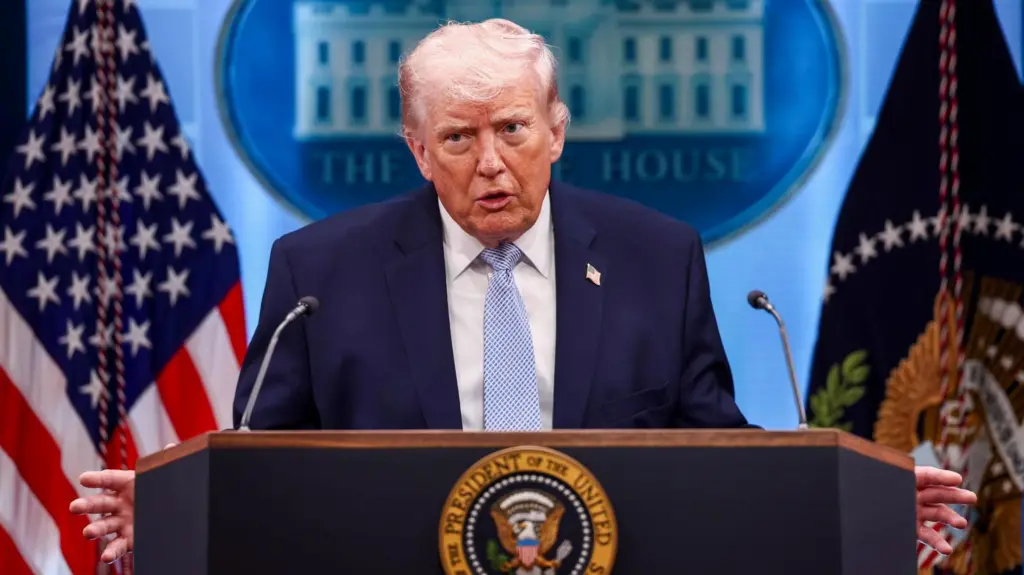
President Donald Trump publicly declared that the United States would suspend bombing and other offensive actions against Iran for a period of fourteen days, on the condition that Iran reopens the Strait of Hormuz for commercial traffic. In a post on President Donald Trump’s social platform, President Donald Trump explained that the provisional cease‑fire was accepted because the United States had already achieved and exceeded all stated military objectives.
President Donald Trump’s earlier statements had warned that the United States could take decisive action against Iran in a single night, language that prompted condemnation from the United Nations chief and the Pope. Those warnings were later replaced by a diplomatic overture that hinged on Iran’s willingness to allow vessels to traverse the Strait of Hormuz.
Iran, in response, issued a ten‑point statement that outlined a series of demands directed at the United States. The Iranian statement called for the complete cessation of hostilities not only in Iran but also in Iraq, Lebanon and Yemen. The Iranian statement also insisted on a full commitment from the United States to lift economic sanctions, to release Iranian funds and frozen assets held by the United States, and to provide full compensation for reconstruction costs incurred by Iran.
The Iranian statement affirmed Iran’s commitment to abstain from seeking possession of any nuclear weapons. Tehran’s Supreme National Security Council emphasized that Iran’s battlefield victories would be reinforced through political negotiations, indicating a desire to translate military gains into diplomatic leverage.
According to Prime Minister Shehbaz Sharif, the cease‑fire will extend its effect to Lebanon, where Israel has been engaged with the Iran‑backed militia Hezbollah. Prime Minister Shehbaz Sharif’s comments suggest that the terms of the aGreement are intended to cover multiple fronts, although the precise mechanisms for enforcement in Lebanon remain undefined.
Israel’s Stance on the Cease‑Fire
Shortly after President Donald Trump announced the provisional cease‑fire, sirens sounded across Israel as the Israel Defense Forces reported the interception of missiles launched from Iran. The sound of several loud booms was reported in Jerusalem during the same timeframe.
Israeli Prime Minister Benjamin Netanyahu issued a statement affirming Israel’s support for President Donald Trump’s decision to suspend strikes against Iran for a period of fourteen days, provided that Iran immediately reopens the Strait of Hormuz and ceases all attacks directed at the United States, Israel and other nations in the region. The Israeli statement explicitly clarified that the cease‑fire does not apply to operations in Lebanon, where Israel maintains ground forces.
The Israeli statement did not disclose the extent of Prime Minister Benjamin Netanyahu’s involvement in the decision‑making process that led to President Donald Trump’s announcement. Israeli leadership continues to assert that Israeli forces will remain in Lebanon until the perceived threat from Hezbollah is eliminated.
There is no public indication that Israel has aGreed to halt its military activities in Lebanon or elsewhere, leaving the status of Israeli operations outside the Strait of Hormuz uncertain.
Next Steps in the Diplomatic Process
Pakistan, acting as the chief facilitator of the negotiations, has extended an invitation to delegations from the United States and Iran to convene in Islamabad for further discussions. The invitation specifies a meeting intended to negotiate a comprehensive settlement that would address all outstanding disputes.
The White House press secretary Karoline Leavitt confirmed that discussions regarding in‑person talks are ongoing, while also noting that no final aGreement will be announced until the President or the White House makes an official declaration. This statement underscores the tentative nature of the current diplomatic outreach.
Analysts anticipate that the forthcoming negotiations will be exceptionally challenging. The United States and Iran have previously held two rounds of talks within the last year, each of which saw a resurgence of military tension amid the diplomatic dialogue. The contrasting interpretations of the cease‑fire’s scope—particularly regarding operations in Lebanon—highlight the potential for further disaGreement.
Both the United States and Iran have expressed a willingness to pursue a diplomatic pathway, yet the practical implementation of the fourteen‑day suspension of hostilities will require precise coordination, verification mechanisms and a clear understanding of each side’s obligations. The outcome of the Islamabad meetings will play a decisive role in determining whether the provisional cease‑fire can evolve into a lasting resolution.