Election Commission Installs M Sai Kumar as Tamil Nadu Chief Secretary Ahead of Assembly Elections
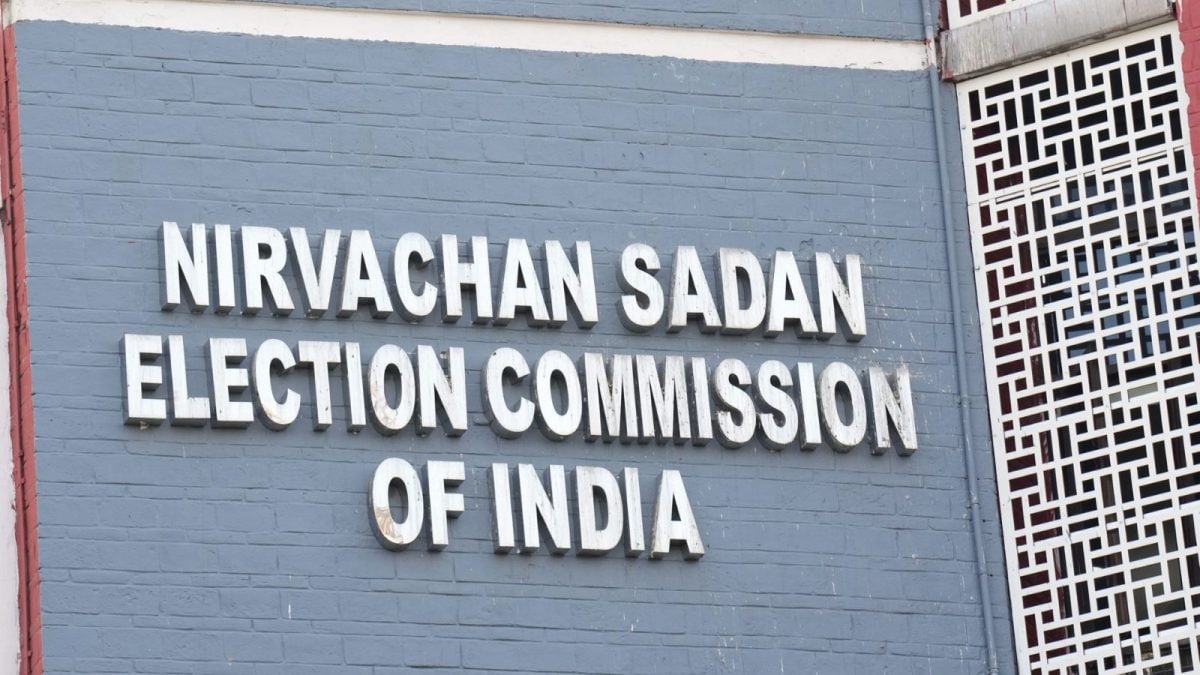
Election Commission of India removes N Muruganandam from Tamil Nadu chief secretary post, appoints M Sai Kumar with immediate effect.
Background to the Administrative Shift
The administration of the Indian state of Tamil Nadu is on the cusp of a pivotal democratic exercise. With the state assembly election cycle drawing to a close, the narrative surrounding the preparation of a neutral and impartial administrative machinery has intensified. The Election Commission of India, vested with the constitutional responsibility to ensure free and fair elections, has historically exercised its authority to re‑assign senior officials in circumstances where the proximity of elections could raise concerns over impartiality.
In the present instance, the senior bureaucrat occupying the highest civil service position in the state, N Muruganandam, was removed from the chief secretary post. N Muruganandam had served in the role for a period that included the planning and execution of several development programmes. The Election Commission of India exercised a statutory power to re‑evaluate the posting of officials in the final phase of an electoral cycle, thereby seeking to avert any perception of administrative bias.
Details of the Election Commission of India's Decision
The official notice issued by the Election Commission of India outlined a clear directive: N Muruganandam would be relieved of the responsibilities associated with the chief secretary position in Tamil Nadu, and senior Indian Administrative Service officer M Sai Kumar would assume the role immediately. The notice further stipulated that officers already holding key posts should not be tasked with election‑related duties, a measure designed to reinforce the neutrality of the civil service during the critical weeks preceding the ballot.
The decision to install M Sai Kumar as the new chief secretary reflects the Election Commission of India’s confidence in the senior officer’s extensive experience within the Indian Administrative Service. M Sai Kumar has held a succession of senior postings across various departments, gaining reputation for meticulous adherence to procedural norms and a track record of managing complex administrative challenges.
By naming M Sai Kumar explicitly, the Election Commission of India removed any ambiguity regarding the successor, ensuring that all stakeholders—political parties, civil society observers, and the general public—receive an unambiguous message about the change in leadership.
Immediate Implementation and Compliance Requirements
The notice emphasized that the orders are to be executed with immediate effect. The term “immediate effect” conveys that the transition from N Muruganandam to M Sai Kumar does not involve a transitional period or interim arrangement; rather, the new chief secretary assumes full charge as soon as the notice is circulated among the relevant administrative channels.
In addition to the swift handover, the Election Commission of India mandated that a compliance report documenting the completion of the joining formalities be submitted. The compliance report must be furnished to the Election Commission of India in accordance with the procedural guidelines stipulated within the notice. This requirement places a responsibility on the administrative machinery to confirm that M Sai Kumar has formally assumed office and that all requisite administrative handover processes have been concluded.
The focus on a compliance report underscores the Election Commission of India’s intent to maintain rigorous oversight over the implementation of its directives, especially in the context of an election that is only weeks away.
Administrative Implications of the Change
Replacing N Muruganandam with M Sai Kumar at the chief secretary level carries a cascade of administrative consequences. The chief secretary functions as the principal advisor to the state’s chief minister, coordinates inter‑departmental policy implementation, and oversees the seamless operation of the state bureaucracy. With M Sai Kumar now occupying this strategic position, all pending dossiers, strategic initiatives, and day‑to‑day administrative mandates previously managed by N Muruganandam are transferred to M Sai Kumar.
The transition requires meticulous hand‑over notes, briefings on critical projects, and an exhaustive review of ongoing initiatives to ensure continuity. The administrative staff supporting the chief secretary’s office must quickly familiarize themselves with M Sai Kumar’s working style, decision‑making protocols, and communication preferences. The swift nature of the transition, as mandated by the Election Commission of India, presses the supporting staff to accelerate these familiarization processes.
Furthermore, the decree that officers holding other key posts should refrain from election‑related duties imposes a temporary restriction on their portfolios. This restriction is intended to mitigate any potential perception that administrative actions could be leveraged for electoral advantage. The reallocation of duties may involve temporary delegations to senior officers deemed neutral with respect to the impending election results.
Potential Impact on the Election Process
The Election Commission of India’s decision arrives at a juncture when the electoral environment is particularly sensitive. By removing N Muruganandam from the chief secretary’s office, the Election Commission of India aims to eliminate any allegations that the senior civil servant could influence the election apparatus in favor of any political faction. The replacement with M Sai Kumar, an officer whose career has been marked by a reputation for impartiality, is expected to reinforce public confidence in the fairness of the electoral process.
Beyond the symbolic effect, the practical impact includes ensuring that the state’s election machinery—such as the preparation of voter lists, deployment of polling personnel, and logistics for the actual conduct of the vote—remains under the supervision of officials who are not concurrently engaged in routine administrative governance. This separation is consistent with the principle of creating a “level playing field” for all contesting parties.
Moreover, the directive that officers in existing posts refrain from election‑related duties reduces the risk of inadvertent policy decisions being interpreted as favoring any candidate. By insulating the election administration from day‑to‑day bureaucratic pressures, the Election Commission of India strengthens the institutional integrity of the upcoming vote.
Reactions from Political Stakeholders and Civil Society
While the Election Commission of India’s notice is a legal instrument, it inevitably provokes a range of reactions among political leaders, party officials, and civil‑society observers. Some political stakeholders have welcomed the move, viewing it as a decisive step toward ensuring that the election environment remains free from administrative interference. They argue that the swift replacement of N Muruganandam with M Sai Kumar helps safeguard the principle that the state’s administrative machinery operates independently of partisan considerations.
Conversely, a segment of commentators has expressed concern about the abrupt nature of the change, cautioning that such rapid transitions could disrupt ongoing governance activities and affect the delivery of essential public services. These concerns underscore the delicate balance that the Election Commission of India must maintain between electoral neutrality and uninterrupted administrative continuity.
Public interest groups and election watchdogs have largely endorsed the Election Commission of India’s emphasis on a compliance report. They assert that transparent documentation of the handover process is essential for accountability and for building public trust. These groups have also called for continued vigilance over the implementation of the restriction that prohibits officers from taking on election‑related responsibilities during the final phase of the campaign.
Conclusion
The Election Commission of India's decision to replace N Muruganandam with M Sai Kumar as Tamil Nadu’s chief secretary marks a significant administrative adjustment in the lead‑up to the state’s assembly elections. By mandating an immediate transition and requiring a compliance report, the Election Commission of India underscores its commitment to a transparent and impartial election process. The directive that existing officers avoid election‑related duties further solidifies the commission’s resolve to prevent any potential misuse of administrative influence.
As the state prepares to conduct one of its most consequential democratic exercises, the focus now shifts to how effectively M Sai Kumar can assume the chief secretary’s responsibilities without disrupting the continuity of governance, and how faithfully the administrative apparatus adheres to the guidelines set forth by the Election Commission of India. The unfolding of these developments will be pivotal in shaping public perception of the election’s fairness and the robustness of democratic institutions in Tamil Nadu.