Google Pixel 10a Feels Familiar Yet Packs Improved Components
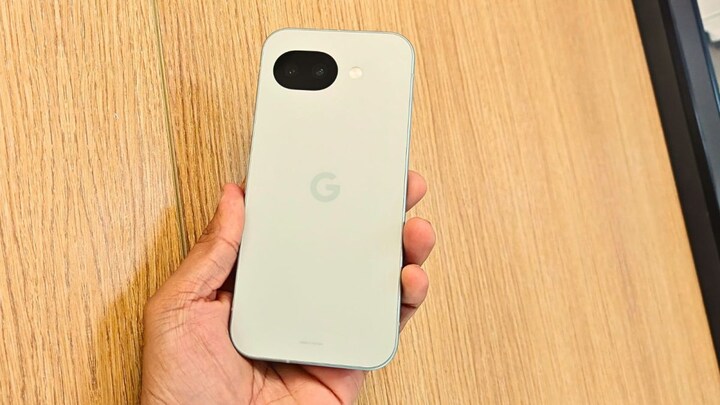
Google Pixel 10a borrows heavily from the previous year’s a‑series model while delivering a handful of useful updates.
Market Context and Positioning
Google Pixel 10a entered the market alongside a wave of new premium smartphones, positioning itself as the Android counterpart to the iPhone e‑series. The mid‑range a‑series has evolved over several generations, gradually aligning its aesthetic language with the flagship Pixel lineup. In the case of Google Pixel 10a, the design language mirrors that of Google Pixel 9a, offering a sense of continuity for users who appreciate the familiar silhouette.
The a‑series intent is to present a cost‑effective alternative without sacrificing essential features. While the broader market offers a kaleidoscope of options, Google Pixel 10a aims to strike a balance between affordability and the premium feel associated with higher‑end Pixel devices.
Design: The Same Pixel Touch
Google Pixel 10a exhibits a form factor that is virtually indistinguishable from Google Pixel 9a. The device retains the flush rear camera module, a flat back panel, and the same overall silhouette, making it challenging for an onlooker to differentiate between the two models at a glance.
Despite the visual similarity, Google Pixel 10a measures 9 mm in thickness, a slight increase over Google Pixel 9a, while the weight drops to 183 grams. The chassis continues to employ an aluminium frame, and the rear surface remains finished in high‑quality plastic that does not convey a cheap impression. The combination of a marginally thicker profile and reduced mass contributes to a hand‑feel that feels both sturdy and comfortable.
Google Pixel 10a also carries an IP68 rating, offering protection against water splashes and dust intrusion. This durability rating enhances the device’s suitability for everyday use, especially for users who value resilience in a compact form factor.
Display: The Brighter OLED
The visual experience on Google Pixel 10a is driven by a 6.3‑inch P‑OLED panel that shares its dimensions and technology with Google Pixel 9a. The panel supports a custom 120 Hz refresh rate, delivering smooth motion rendering for scrolling, gaming, and video playback. A key improvement lies in the protective layer: Google Pixel 10a adopts Corning Gorilla Glass 7i, replacing the older three‑layer configuration found on Google Pixel 9a.
Brightness is another area where Google Pixel 10a outshines its predecessor. The maximum peak brightness rises from 2,700 nits to 3,000 nits, a level that matches the regular Pixel 10 model. This increase translates into more legible content under direct sunlight and richer colour reproduction across a broad range of lighting conditions.
Although the display size remains modest, the combination of high brightness, vivid colour reproduction, and a fluid 120 Hz rhythm makes the 6.3‑inch screen well‑suited for media consumption, casual gaming, and everyday tasks, without the bulk associated with larger flagship displays.
Processing: The Tensor Halt
The Pixel 10 series introduced the Tensor G5 chipset, raising expectations that Google Pixel 10a would also benefit from the newer silicon. Contrary to those expectations, Google Pixel 10a continues to rely on the Tensor G4 processor, the same system‑on‑chip that powered Google Pixel 9a.
While Tensor G4 delivers competent performance for routine tasks and provides a smooth user experience, it lacks the efficiency gains and performance headroom associated with Tensor G5. Consequently, long‑term performance sustainability could become a consideration, especially as software updates accumulate over the device’s lifespan.
Google pledges seven major Android OS upgrades for the a‑series, an attractive proposition for longevity. However, the ability of Tensor G4 to handle future software demands without compromising speed or battery life remains an open question that will be clarified only as the device ages.
Camera System: Same Pixel Magic?
Google Pixel 10a retains the dual‑camera arrangement introduced on Google Pixel 9a, consisting of a 48 MP primary sensor paired with a 13 MP ultra‑wide lens. The sensor lineup remains unchanged, delivering daylight photography that is crisp, detailed, and colour‑accurate.
Low‑light performance continues to be acceptable, though not exceptional, reflecting the same capabilities present on Google Pixel 9a. Notably, the absence of a dedicated telephoto lens persists, an omission that may disappoint users who prefer optical zoom over digital cropping.
The decision to keep the camera hardware identical likely contributes to price stability, allowing Google Pixel 10a to maintain a cost point comparable to Google Pixel 9a while still offering solid photographic results.
Battery and Charging: Does It Last Any Longer?
Both Google Pixel 10a and Google Pixel 9a are equipped with a 5,100 mAh battery. Google Pixel 10a, however, introduces faster charging capabilities: 30 W wired fast charging and 10 W wireless charging.
Improvements in power management stem from software optimisation and refined utilization of Tensor G4 cores, enabling Google Pixel 10a to achieve a marginally longer endurance in benchmark testing compared with Google Pixel 9a, which previously recorded just over 19 hours on the PCMark Battery test.
The upgraded charging rate allows Google Pixel 10a to reach roughly 50 percent charge within a half‑hour window, providing a practical level of convenience for users on the go. Additionally, Google Pixel 10a supports MagSafe‑compatible charging, a feature that aligns the a‑series with emerging wireless charging standards and reinforces the device’s relevance in the evolving accessory ecosystem.
Overall Assessment
Google Pixel 10a can be characterised as an incremental refinement of Google Pixel 9a. The core design, dimensions, and camera hardware remain largely untouched, delivering a familiar experience for users who valued the previous generation.
Key enhancements include a brighter P‑OLED display protected by Gorilla Glass 7i, a modest increase in thickness offset by a lighter overall weight, and faster charging options that combine wired, wireless, and MagSafe support. Battery capacity stays the same, yet optimisation in power consumption provides a slight edge in endurance.
Since the price point remains unchanged, prospective buyers must weigh whether the incremental upgrades justify selecting Google Pixel 10a over the now‑discounted Google Pixel 9a. For those already owning Google Pixel 9a, the improvements may not be compelling enough to motivate an immediate upgrade. Conversely, new entrants to the a‑series may find Google Pixel 10a a well‑balanced choice that blends familiar design with modest yet meaningful improvements.