Why I Started Paying Attention to the ‘Blue Book’
Last week I found myself stuck in a traffic jam on Faisal Avenue. Red lights, armed men with rifles, and a thick cordon of police cars that seemed to stretch forever. The reason? Islamabad had just announced a two‑day holiday to smooth the way for the US‑Iran cease‑fire talks. As I looked around, the whole city felt like a giant chessboard, with security personnel moving like pieces. That’s when I realised the whole operation was being run under something called the ‘Blue Book’. I had heard the term tossed around in news reports, but never really understood what it meant. So I started asking around, reading what I could find, and even chatting with a retired officer who’d worked on VVIP security. What I discovered was a whole secretive manual that both India and Pakistan use to guard their most important people.
What Exactly Is the ‘Blue Book’?
In both India and Pakistan the ‘Blue Book’ is a highly classified guide. Think of it as an instruction manual that tells the police, the paramilitary forces and the specialised protection agencies exactly how to protect a VVIP – that could be the President, the Prime Minister, the Vice‑President, or a visiting foreign head of state. The manual is not public, but the broad outlines are known: it covers everything from the route the dignitary will travel, to the type of vehicles used, to the exact way a crowd is to be managed.
What’s interesting is how similar the two countries’ versions are. Both stress “foolproof” security, both have strict control over who can enter a designated “Red Zone”, and both require thorough vetting of every person and item that could come close to the VVIP. The biggest difference is in the administrative set‑up – India’s Blue Book is issued by the Ministry of Home Affairs (MHA) and ties in with the Special Protection Group (SPG) for the Prime Minister, while Pakistan’s version is coordinated by the Ministry of Interior and relies heavily on Pakistan Rangers and Police forces.
My First Encounter with Pakistan’s Blue Book in Action
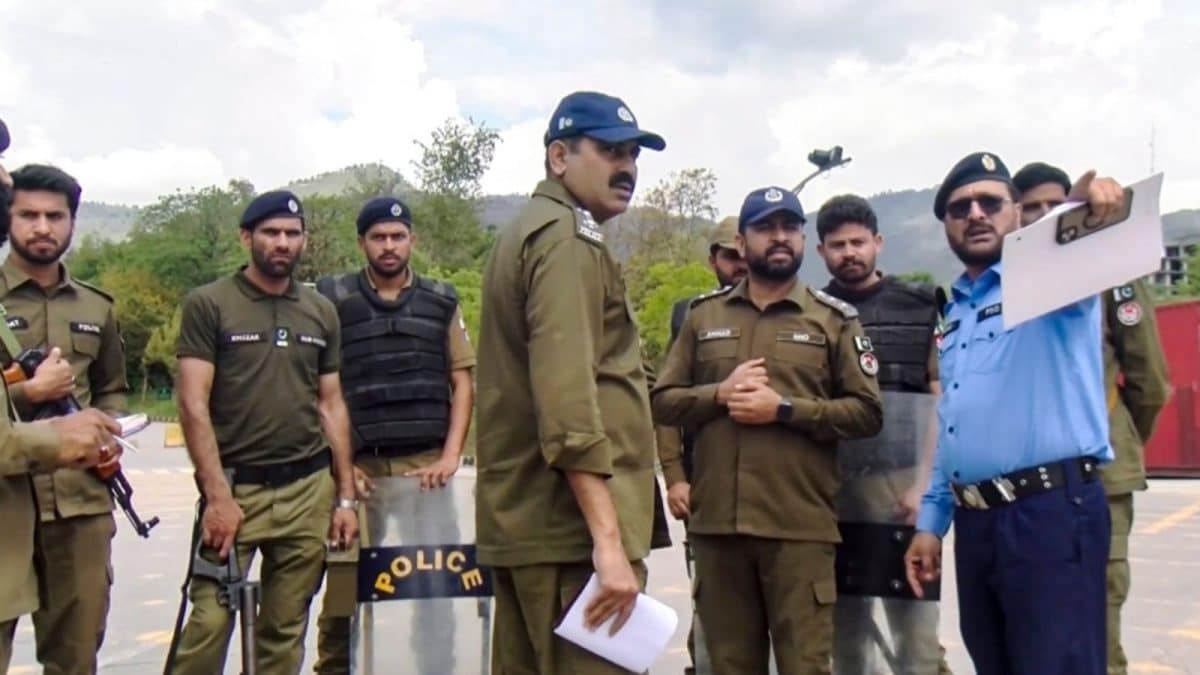
When the US delegation, including Vice President JD Vance, landed in Islamabad, the city transformed overnight. Police and paramilitary troops were deployed according to the Blue Book’s strict guidelines. Major arteries like Faisal Avenue and the Expressway were completely closed. The authorities even declared a local holiday in the twin cities of Islamabad and Rawalpindi – a move that made sense once you realised the sheer logistical pressure of moving a convoy of bullet‑proof cars and a handful of security teams.
One rule that struck me was the prohibition on digital gadgets for close protection teams. The officers weren’t allowed to have phones or tablets while on duty, because any electronic leak could compromise the VVIP’s route. It sounded extreme, but in a city where every mobile can be a potential spy, it was a precaution that made perfect sense.
Another thing that stood out were the “Red Zone” entry points – only people with a specially issued duty pass could cross those lines. The security corridor was so tight that even a stray sedan that tried to cut in was stopped, turned around and asked to take a detour. It reminded me of the traffic police in Delhi during Republic Day, but the level of discipline was a notch higher.
India’s ‘Blue Book’: How It Looks From Inside
Back home, the Indian version of the Blue Book feels like a bureaucratic maze, but it’s actually very systematic. The Ministry of Home Affairs updates it regularly, and the manual is the backbone for protecting the President, Vice‑President and Prime Minister. Here’s a quick rundown of what I’ve gathered from a senior officer I talked to (he asked to stay anonymous):
- Security coordination is multi‑layered. The SPG, which looks after the Prime Minister, works hand‑in‑hand with the state police, district administration and even local municipal bodies. The same goes for the President and Vice‑President, who have their own dedicated agencies.
- The visiting dignitary must always be received and seen off by the Governor and the Chief Minister of the state they are visiting. If either of them is absent, the manual calls it a protocol breach – something that can lead to a formal reprimand.
- Road journeys have quirky rules: the main car and the spare car must be of the same make, colour and generally bullet‑proof. I’ve seen a black Tata Safari and a spare drawn up right next to it – both looking identical, which makes it harder for any malicious actor to target a specific vehicle.
- All guest lists, officials and even media personnel need prior approval from the VVIP’s secretariat. The list is cross‑checked against intelligence inputs. If a journalist’s name is missing, they’re turned away at the gate.
While these may sound like small details, they add up to a huge security net. The process is so rigorous that even a simple tea break is planned in advance – the tea is tested by a medical officer, and a separate team checks every plate that might reach the VVIP.
Introducing the ‘Yellow Book’: The Lesser‑Known Cousin
Now, the Blue Book only covers the topmost constitutional offices. For everyone else – Union Ministers, state chief ministers, Supreme Court judges, high‑profile personalities like film stars or activists – there’s the Yellow Book. This manual is also issued by the Ministry of Home Affairs, but its focus is a bit broader.
The Yellow Book lays out security based on threat assessment. The categories are Z+, Z, Y, and X. Each category defines the number of personnel, the type of vehicles, and the level of patrol required. For instance, a Z+ protection detail could include around 55 men, often comprising NSG commandos or CRPF personnel, while an X category might just be a single Personal Security Officer (PSO).
What I found fascinating was the “positional security” concept. Some officials, simply by virtue of the office they hold, automatically get a certain level of security. This ensures they can perform their duties without fear of intimidation. It’s a bit like a built‑in insurance policy, but for personal safety.

The manual also mentions periodic reviews. Security covers are not static; a high‑level committee at the MHA reviews threat inputs every few months. If the situation improves, a Z+ cover can be downgraded to Z or Y, saving resources while still keeping the person safe.
How the Two Nations Differ in Practice
Even though the Blue Book’s skeleton looks alike, the way it’s executed differs. In Pakistan, the focus is heavily on the police and paramilitary forces – you’ll see Rangers, Frontier Corps and sometimes even the army’s quick reaction teams on the streets during a VVIP visit.
In India, the SPG and Central Reserve Police Force (CRPF) play the starring roles. The SPG is an elite unit that’s almost exclusively dedicated to the Prime Minister’s safety, and it runs its own training academies. Moreover, the involvement of state police varies – a state that has a strong law and order record may get less central assistance, while a more volatile state might see a bigger central presence.
Another practical difference is the handling of food. Pakistan’s Blue Book explicitly says that any food served to the VVIP must be checked by a qualified doctor. In India, the Yellow Book also mentions food checks, but the clause is more about “competent medical officer” rather than a doctor. It may sound subtle, but these nuances affect how the kitchen staff are trained and how the logistics are arranged.
Real‑World Example: A Holiday Declared for Security
When the US‑Iran talks were announced, Islamabad declared a two‑day holiday. I remember it vividly because the usual hustle‑bustle of the city stopped. Shops closed, schools were empty, and the only traffic you saw were security convoys moving in slow, disciplined rows. The same thing has happened in Delhi during high‑profile visits – the city declares a “pharak” (special holiday) to ensure that there are no civilian crowds that could become a target.
These holidays are more than just a courtesy; they free up manpower, reduce the chance of accidents on the route, and allow the security machinery to operate without the usual civic noise. In most cases, the public understands why it’s needed, especially after seeing the massive cordons and hearing announcements on the radio.
Frequently Asked Questions – My Take
What is the ‘Blue Book’ protocol?
The Blue Book is basically a secret guidebook that tells the security forces how to protect the President, Prime Minister, Vice‑President, and visiting foreign heads of state. It covers everything from the route and vehicle details to the exact procedures for crowd control and the handling of any food or drink meant for the VVIP.
Is there a difference between India and Pakistan’s Blue Book?
Not a big one. Both are built on the same principle – strict, multi‑layered security with an emphasis on preventing any harm or embarrassment to the dignitary. The main differences lie in which agencies take the lead and some procedural specifics, like who does the food checks.
What is the ‘Yellow Book’?
The Yellow Book is the companion manual for everyone else – ministers, judges, high‑profile personalities. It assigns security based on a threat assessment, using categories like Z+, Z, Y, and X. The level of manpower and equipment changes with each category.
Final Thoughts – Why All This Matters
Living in a subcontinent where political turbulence can flare up at any moment, the Blue and Yellow Books are not just bureaucratic paperwork – they are the lifelines that keep our leaders, and sometimes even ordinary citizens, out of danger. Watching the security choreography during the US‑Iran talks in Islamabad made me realise how much planning goes on behind the scenes. Whether you’re a resident of Delhi, a commuter in Karachi or a student in Bengaluru, the next time you see a police barricade or hear an announcement about a holiday, remember that there’s a massive, meticulously drafted manual that’s guiding those actions. It’s a mix of tradition, modern technology and a dash of old‑school discipline. And, as I’ve learned, a little bit of personal curiosity can go a long way in understanding the invisible safeguards that protect our nation’s most important figures.