Iran's Ceasefire Blueprint Diverges from Donald Trump’s Stated Terms, US Official Says
A senior United States official has asserted that the ten‑point ceasefire document publicized by Iran fails to align with the framework that Donald Trump presented as the basis for a pause in the conflict.
The clarification has raised fresh doubts over the stability of the fragile truce announced earlier this week.
A United States official speaking on condition of anonymity told AFP that the ten‑point ceasefire plan currently being reported by media outlets does not constitute the working framework that was negotiated behind the scenes. The official declined to provide further details, emphasizing that public negotiation would compromise the integrity of the process.
“The document being reported by media outlets is not the working framework,” the senior official said. “We are not going to negotiate in public out of respect for the process.”
The statement from the United States source has introduced renewed uncertainty regarding the durability of the fragile truce that was announced earlier in the week, just hours after Donald Trump set a deadline for Iran to comply with United States demands or confront what Donald Trump described as an end to Iran’s “whole civilization.”
Donald Trump’s Public Position on the Ceasefire Proposal
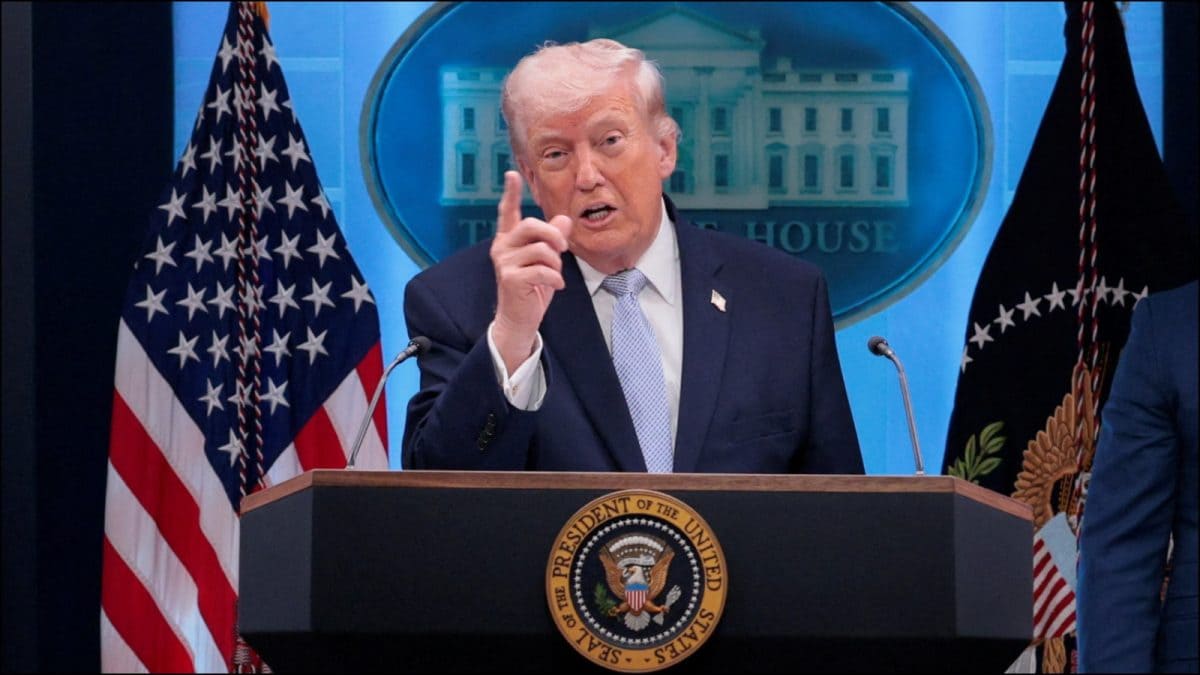
When Donald Trump announced the ceasefire, he asserted that Washington had received a ten‑point proposal from Tehran and described the proposal as a “workable basis” for further discussions. Donald Trump highlighted the receipt of a document from Tehran and characterized it as a potential springboard for negotiations aimed at pausing the fighting.
According to Donald Trump, the proposal arrived from Tehran and was positioned by his administration as a constructive starting point for dialogue. Donald Trump emphasized that the United States was prepared to explore the ten‑point outline, provided that it aligned with the strategic objectives articulated by the United States government.
Key Elements of Iran’s Published Ten‑Point Plan
The version of the ceasefire plan released by Iran contains several provisions that stand at odds with the public position of the United States. Among the highlighted points are:
- Continued Iranian control over the strategically vital Strait of Hormuz.
- The removal of all international sanctions currently imposed on Iran.
- The acceptance of Iran's uranium enrichment programme without limitation.
These three conditions collectively contrast sharply with the expectations set forth by the United States, which has consistently expressed concern over any arrangement that would preserve Iranian oversight of the Strait of Hormuz, maintain sanctions designed to curb illicit activities, or legitimize Iran's uranium enrichment capability.
By insisting on these particular terms, Iran’s document reflects a stance that diverges from the narrative presented by Donald Trump, who framed the ten‑point proposal as a potential avenue for de‑escalation.
Implications for the Reported Truce
The discrepancy identified by the United States official has immediate ramifications for the perceived stability of the truce. If the publicly circulating ten‑point outline does not match the confidential framework referenced by Donald Trump, parties to the conflict may question the sincerity of the commitment and the feasibility of maintaining a pause in hostilities.
Observers have noted that a ceasefire reliant on mutually accepted terms is vulnerable when one side publicly circulates a document that does not reflect the negotiated understanding. The gap between Iran’s published conditions and the United States’ expectations could lead to divergent interpretations of what constitutes compliance, potentially triggering renewed confrontations.
Furthermore, the United States’ insistence on confidentiality surrounding the negotiation process underscores a strategic choice to shield sensitive diplomatic exchanges from public scrutiny. This approach aims to preserve flexibility, yet it also fuels speculation when conflicting versions of the ceasefire framework emerge.
Reactions Within the International Community
While the United States official refrained from naming specific details, the acknowledgment that Iran’s ten‑point document is not the operative framework has been noted by analysts and regional experts. The clarification suggests that the public narrative presented by Donald Trump may differ from the private diplomatic calculus.
Stakeholders monitoring the situation have expressed concern that the publication of a document misaligned with the confidential aGreement could undermine confidence among the parties involved. The potential for miscommunication raises the risk that each side may act on divergent expectations, thereby jeopardizing the fragile pause that was announced.
In addition, the emphasis placed by Donald Trump on a deadline for Iran to meet United States demands adds pressure to the diplomatic environment. The deadline, set by Donald Trump, was intended to compel Iran to adhere to a set of conditions that the United States deems essential for a sustainable ceasefire. The revelation that Iran’s publicly released plan does not match the terms outlined by Donald Trump intensifies the diplomatic tension surrounding that deadline.
Analysis of Strategic Priorities
The central points of contention revolve around strategic control, sanctions, and nuclear capability. Iran’s insistence on retaining influence over the Strait of Hormuz reflects a longstanding strategic priority for Tehran, given the waterway’s significance for global oil shipments.
Conversely, the United States has traditionally advocated for an open, multinational framework governing the strait to ensure the free flow of commerce. The inclusion of a demand for the lifting of all sanctions represents a direct challenge to the United States’ policy of maintaining economic pressure to deter activities deemed destabilizing.
The acceptance of Iran’s uranium enrichment programme is perhaps the most sensitive element, as the United States has consistently opposed any unrestrained enrichment activity that could facilitate nuclear weapon development. The public inclusion of this point within Iran’s ten‑point plan therefore stands in stark opposition to the United States’ public stance.
These divergences highlight why the United States official emphasized that the publicly circulating document does not serve as the operative framework. The discrepancy underscores a fundamental mismatch between Iran’s publicly stated priorities and the private expectations conveyed by Donald Trump during his announcement of a “workable basis” for talks.
Future Outlook
Given the clarified mismatch, the continuation of the ceasefire hinges on the ability of both sides to reconcile the publicly expressed demands with the confidential terms that underpin the negotiation. The United States’ position that public negotiation would compromise the process suggests that any further progress will likely remain behind closed doors.
The durability of the truce will therefore depend on discreet diplomatic channels that can bridge the gap between Iran’s ten‑point publication and the framework referenced by Donald Trump. Analysts caution that any perceived breach of the aGreed terms could reignite hostilities, especially if either side interprets the other’s actions through the lens of the conflicting documents.
In the interim, the United States has signaled its intent to uphold the private framework while discouraging public speculation that could destabilize the precarious pause. The outcome of these private talks will be critical in determining whether the ceasefire can evolve from a provisional arrangement into a more enduring cessation of hostilities.