Parents Decry Rs 9,000 Price Tag for Class‑2 Textbooks: Viral Video Sparks Demand for Action
A viral video and a series of social‑media posts expose parents in Chandigarh paying up to Rs 12,000 for elementary school supplies, prompting calls for government intervention.
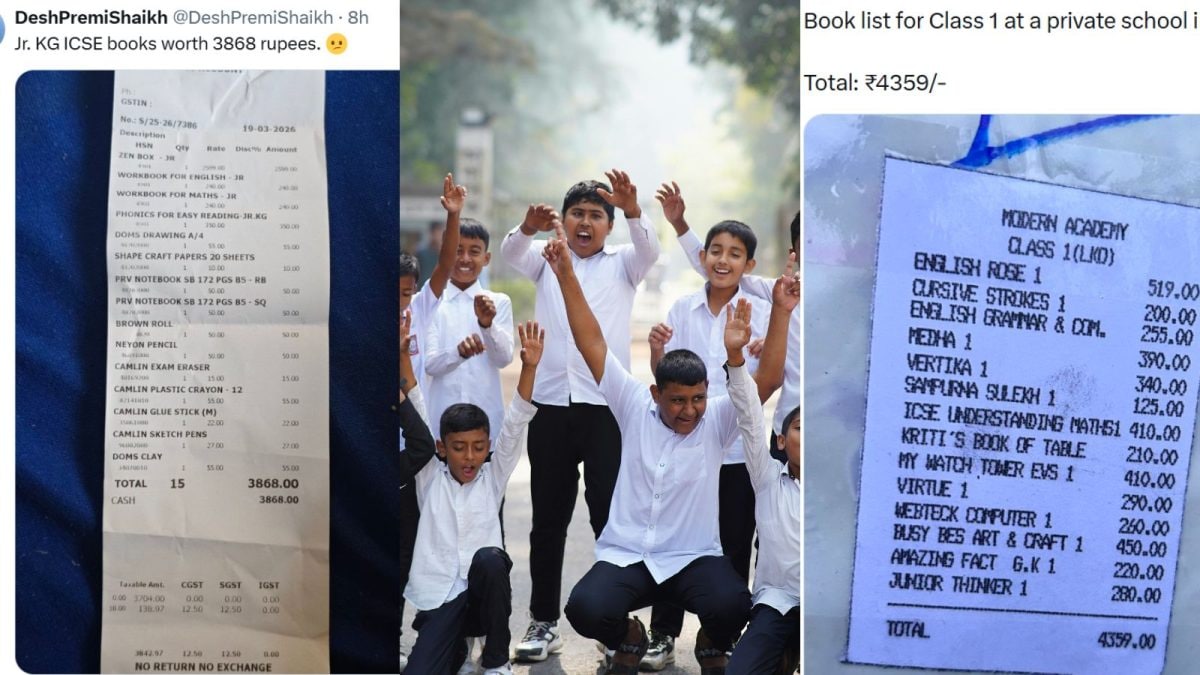
Parents are raising concerns over the rising cost of school books, with many saying they are forced to pay high amounts
Across urban centres, families are voicing alarm about the amount of money they must allocate for basic school supplies. A short video that has circulated widely, accompanied by a collection of photographs, illustrates just how steep the price of course material has become for children in early grades. The visuals show a man shouldering a hefty sack of books, while the narration describes the lack of affordable alternatives.
In the clip, the man stands in front of a vendor’s stall, a massive bundle of textbooks and stationary strapped to his shoulders. He describes his recent trip to acquire the required items for his children, emphasizing that the official guidelines issued by the Chandigarh Education Department allow parents to purchase textbooks from any vendor that supplies private‑school material.
He continues, "I have come to collect the course materials for my children. The Chandigarh Education Department had stated that parents could purchase their children’s course materials from anywhere across Chandigarh, specifically, from any vendor stocking supplies for private schools."
Despite the blanket permission, the man explains that a different reality unfolds on the ground. Private schools in the region appear to enforce a de‑facto monopoly, compelling parents to obtain the exact edition stipulated by each institution from a single authorized seller. "However, rampant malpractice is currently prevailing among private schools throughout Chandigarh; the reality is that you can only obtain the specific course materials required for a particular school from a designated vendor, nowhere else," he says.
He lifts the bundle, estimating its weight at roughly thirty kilograms, and then reveals the printed invoice in his hand. "And here is the bill for the materials for class 2: Rs 9,000," he declares, underscoring the financial strain that families face even before the academic year begins.
The man points out that the amount varies considerably from one household to another. "For some parents, the total comes to Rs 10,000; for others, it is Rs 12,000. Parents are distressed. The shopkeepers have pre‑fixed and pre‑printed the bills; their routine simply involves handing over the course materials, collecting the cash, and depositing it into their accounts," he observes.
He stresses that the system offers no room for negotiation, regardless of whether the quoted price seems justified or inflated. "Regardless of whether the rates are inflated or reasonable, you cannot object, nor can you raise your voice in protest. You are compelled to pay exactly the amount printed on the bill they hand you, whatever figure they have written down. Neither the schools nor the Chandigarh Education Department are speaking up regarding this issue. I earnestly appeal to the entire Chandigarh Administration to take cognizance of this matter," the man concludes.
In tandem with the video, parents have uploaded photographs of price lists and receipts from various private institutions. One such post, shared by Piyush Rai, displays a detailed inventory of textbooks required for a Class 1 student at a private school in Lucknow, along with a cumulative cost of Rs 4,359. The caption reads, "Hey! Quick question – could you share the total cost of books for your kids this new academic year? If it’s not too much trouble, I’d really appreciate a copy of the receipt too. Also, if you have any extra thoughts, a short video, or even a tweet about it, I’d love to amplify…" The link to the original post has been retained for reference.
As the visual evidence spreads, a chorus of comments emerges from other parents and concerned citizens. One user writes, "This needs strict action. Public money and trust can’t be taken lightly. Accountability matters." Another suggests a practical workaround, stating, "Why not just digitise the copy and print it yourself?" A third contributor adds, "We paid 7k for first standard books and 10k for uniforms," while a fourth notes, "Mine is in lower KG and the books cost more than 4K." These reactions highlight both the financial pressures families face and the urgency many feel for regulatory oversight.
The growing online dialogue reflects a broader pattern of dissatisfaction with how textbook procurement is being managed. Parents repeatedly reference the statement issued by the Chandigarh Education Department, noting that the promise of open‑market access has not translated into tangible choice on the ground. Instead, the prevailing practice appears to funnel all purchases through a narrow network of approved vendors, effectively eliminating competition and inflating costs.
Critics argue that the current arrangement creates a power imbalance that favours private schools and vendors at the expense of families. By mandating specific editions and restricting supply channels, schools indirectly set the price floor, while vendors capitalize on the lack of alternatives to consolidate profit margins. The situation has sparked calls for greater transparency, such as the publication of standardized price lists, third‑party audits of vendor contracts, and the establishment of a grievance redressal mechanism overseen by the Chandigarh Administration.
Consumer‑rights advocates point out that the printed invoices often lack itemised breakdowns, making it difficult for parents to verify whether they are being charged fairly. In several screenshots shared online, the bills appear pre‑printed with total amounts, leaving little room for item‑by‑item scrutiny. This opacity, combined with the heavy physical burden of transporting large bundles of books, has compounded the sense of helplessness among many families.
Educational experts caution that escalating costs for basic learning materials could have long‑term repercussions on enrollment rates and learning outcomes, especially for children from lower‑income households. When families are forced to allocate a sizable portion of their monthly budget to obtain mandatory textbooks, other essential expenses such as nutrition, healthcare, and extracurricular activities may suffer. The ripple effect could widen existing equity gaps in the education system.
In response to the mounting public pressure, several parent‑teacher associations have drafted formal petitions addressed to the Chandigarh Administration, urging the body to intervene and enforce stricter price controls. The petitions request that the Chandigarh Administration mandate transparent pricing, approve multiple vendors per school, and consider digital distribution of textbooks where feasible. While these appeals remain under review, the swift spread of the video and accompanying posts signals that the issue is unlikely to fade without concrete policy action.
Social‑media platforms have amplified the conversation, providing a space where parents can share receipts, compare costs, and coordinate collective bargaining efforts. The use of hashtags and tagging of relevant authorities has further increased visibility, compelling officials to acknowledge the grievance in public statements. However, critics note that acknowledgement without actionable measures does little to alleviate the immediate financial strain felt by families.
Looking ahead, stakeholders suggest a multi‑pronged approach to address the problem. First, the Chandigarh Education Department could revise its procurement guidelines to explicitly allow parents to source textbooks from any authorised retailer, provided the edition matches the school's prescribed list. Second, an independent pricing committee could be established to audit vendor quotes and ensure they remain within reasonable market ranges. Third, the development of an online portal where parents can view approved textbook lists and compare prices could empower consumers and drive competition.
In addition to regulatory reforms, technological solutions such as e‑books and open‑access digital repositories are being discussed as longer‑term alternatives. By digitising curricula and making them freely available, the reliance on physical books—often subject to monopolistic pricing—could be reduced. Yet, the transition to digital formats would require investment in devices, internet connectivity, and teacher training, factors that must be weighed against the immediate cost pressures highlighted by the video.
Regardless of the pathway chosen, the core demand remains consistent: parents seek fairness, transparency, and the ability to make informed purchasing decisions without fear of punitive repercussions from schools or vendors. The video and accompanying photographs have crystallised a shared experience that cuts across neighborhoods, income levels, and school types, underscoring the universal nature of the concern.
Until policy changes are enacted, families continue to shoulder both the literal and figurative weight of educational materials. The image of a man hauling a thirty‑kilogram stack of textbooks stands as a powerful visual metaphor for the burden placed on parents across Chandigarh and beyond. As public awareness grows, the hope is that the combined pressure from citizens, advocacy groups, and the media will compel the Chandigarh Administration to take decisive action, safeguard public trust, and restore balance to the school‑book market.