US Vice President JD Vance Urges Iran to Honor Good‑Faith Negotiations, Warns President Donald Trump Will Not Tolerate Defiance
Background of the Current Standoff
US‑Iran Conflict: US Vice President JD Vance has publicly warned Iran that President Donald Trump is “not one to mess around” if Tehran does not engage constructively in negotiations aimed at securing a durable cease‑fire across the region.
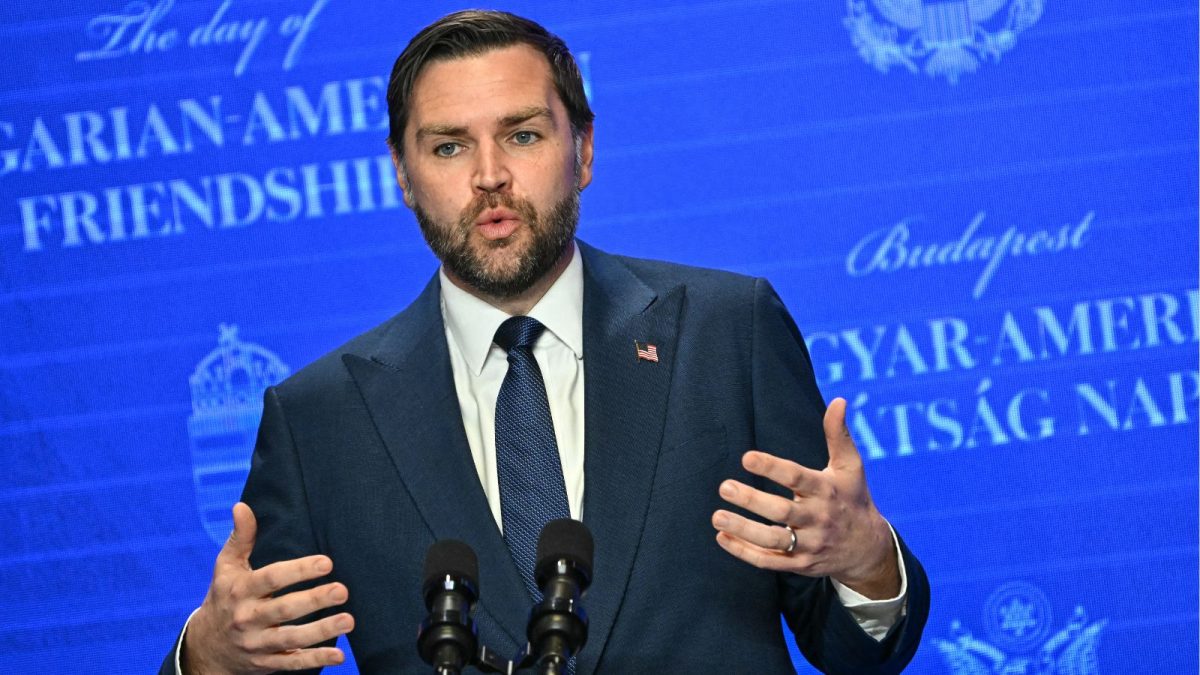
During a diplomatic engagement in Hungary, US Vice President JD Vance highlighted that the provisional truce offers a narrow but critical window for diplomatic activity. US Vice President JD Vance emphasized that the prospect of a lasting reduction in hostilities hinges on Iran’s willingness to negotiate in good faith.
US Vice President JD Vance reiterated that President Donald Trump has explicitly instructed his negotiating team to pursue an aGreement earnestly. US Vice President JD Vance quoted President Donald Trump’s directive: “Go and work in good faith to come to an aGreement.” The instruction, according to US Vice President JD Vance, reflects the seriousness with which the United States approaches the negotiations.
In addition to the invitation for sincere dialogue, US Vice President JD Vance issued a stark warning. US Vice President JD Vance stated, “If Iran refuses to negotiate, Iran will discover that President Donald Trump is not one to mess around.” The warning was framed as a clear indication of the United States’ resolve to enforce its strategic interests.
Assessment of the Fragile Truce
US Vice President JD Vance described the cease‑fire as “fragile,” noting that while the cessation of hostilities has held so far, it remains vulnerable to back‑sliding. US Vice President JD Vance pointed to mixed signals from Iranian officials, suggesting that some elements within Iran may not be acting in good faith, even as other factions appear more cooperative.
US Vice President JD Vance also underscored the United States’ economic leverage over Iran. US Vice President JD Vance asserted that the United States retains “extraordinary economic pressure” capable of influencing Tehran’s calculations. According to US Vice President JD Vance, President Donald Trump’s principal military objective—weakening Iran’s conventional capabilities—has already been achieved, further enhancing the United States’ bargaining position.
The remarks from US Vice President JD Vance arrived shortly after President Donald Trump announced a two‑week cease‑fire with Iran, contingent upon Iran’s acceptance of a “complete, immediate, and safe opening” of the Strait of Hormuz. The announcement, made on President Donald Trump’s social platform, outlined the terms under which President Donald Trump would suspend bombing and attacks for a period of two weeks, provided that Iran complies with the stipulated conditions.
President Donald Trump also indicated that Iran had presented a 10‑point proposal, describing it as “a workable basis on which to negotiate.” The proposal, according to President Donald Trump, reflects a constructive step toward an enduring settlement.
Strategic Importance of the Strait of Hormuz
The Strait of Hormuz occupies a pivotal role in global energy markets, serving as a narrow conduit through which a substantial portion of worldwide oil shipments pass. The temporary reopening of the Strait of Hormuz by Iran has contributed to a reduction in oil price volatility and spurred a rally in financial markets.
Despite the immediate benefits derived from the partial reopening, several core issues remain unresolved. Among the most contentious points are the re‑imposition of sanctions, the status of Iran’s nuclear program, and the long‑term governance of navigation rights through the Strait of Hormuz.
US Vice President JD Vance asserted that the United States will continue to apply economic pressure until Iran demonstrates a genuine commitment to a comprehensive settlement. The statement emphasized that economic leverage will be employed in tandem with diplomatic efforts to bring Iran to the negotiating table.
Implications for Regional Stability
The current diplomatic overture, as outlined by President Donald Trump and echoed by US Vice President JD Vance, carries significant implications for stability across West Asia. A durable cease‑fire, coupled with an uninterrupted flow of commerce through the Strait of Hormuz, could act as a catalyst for broader confidence‑building measures among regional actors.
US Vice President JD Vance warned that any relapse into hostilities would erode the fragile gains achieved to date. According to US Vice President JD Vance, the United States is prepared to recalibrate its approach, including the potential reinstatement of military operations, should Iran abandon the path of good‑faith negotiations.
Conversely, US Vice President JD Vance highlighted that sustained engagement from Iran, especially in alignment with the 10‑point proposal presented to President Donald Trump, could pave the way for a more comprehensive framework addressing not only the immediate cease‑fire but also longer‑term concerns such as nuclear proliferation and regional security arrangements.
Economic Leverage and Its Role in Negotiations
US Vice President JD Vance repeatedly stressed that the United States possesses “extraordinary economic pressure” that can be calibrated to influence Tehran’s decision‑making process. The United States’ toolkit includes a spectrum of sanctions targeting key sectors of the Iranian economy, from oil exports to financial institutions.
By maintaining a robust economic posture, US Vice President JD Vance argued that the United States can compel Iran to consider the broader costs of non‑compliance. The leverage, according to US Vice President JD Vance, is not intended as a punitive measure alone but as a strategic instrument designed to facilitate a mutually beneficial settlement.
US Vice President JD Vance also indicated that the United States remains open to incremental easing of economic restrictions should Iran demonstrate measurable progress on the aGreed‑upon terms, including the complete reopening of the Strait of Hormuz and adherence to the 10‑point proposal.
Conclusion: Paths Forward for Tehran and Washington
The diplomatic dialogue articulated by President Donald Trump and reinforced by US Vice President JD Vance presents a clear set of expectations for Iran. The central tenets of the United States’ approach revolve around sincere negotiations, the maintenance of a secure maritime corridor, and the application of calibrated economic pressure to ensure compliance.
For Iran, the pathway to a lasting cessation of hostilities involves embracing the good‑faith framework outlined by President Donald Trump, honoring the conditions attached to the temporary cease‑fire, and engaging constructively on the substantive issues that underpin the broader conflict.
US Vice President JD Vance concluded by reminding Iran that the window for diplomatic progress is limited and that failure to act in good faith will trigger a decisive response from President Donald Trump’s administration. The emphasis on “not one to mess around” serves as a final admonition that the United States will not tolerate actions that undermine the fragile peace and jeopardize regional stability.
In sum, the coming days will test Iran’s willingness to align with the United States’ expectations. The outcomes of these negotiations will shape the geopolitical landscape of West Asia, influence global energy markets, and determine the durability of the cease‑fire that currently holds the region in a precarious balance.