Musician Defies Ruins: Hamidreza Afarideh Plays Kamancheh Amid Bombed School Debris
In the shattered shell of a bombed music school, composer Hamidreza Afarideh lifts his kamancheh, letting melody rise over the wreckage, while viewers worldwide respond with powerful messages of hope.
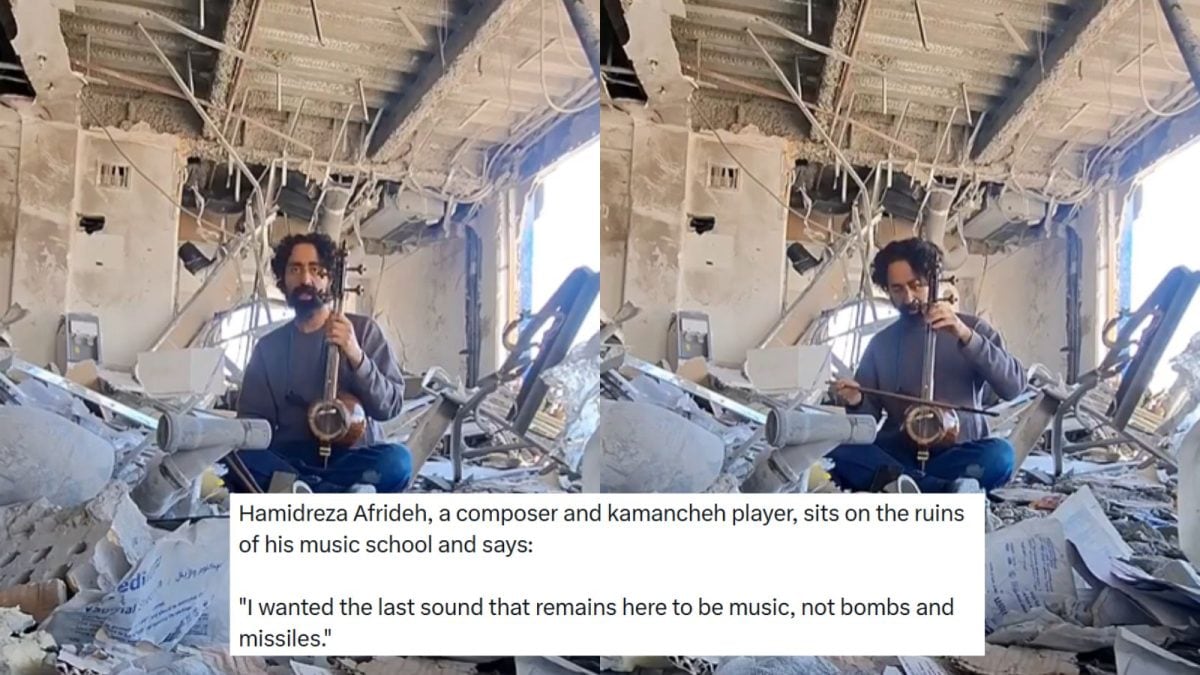
Music Echoes Through the Rubble of a Devastated School
Amid a series of relentless attacks on Iran, a single act of artistic resistance has captured the imagination of audiences around the globe. Composer Hamidreza Afarideh, a renowned kamancheh player, entered the remains of his own music school and declared, "I wanted the last sound that remains here to be music, not bombs and missiles." This statement, spoken against a backdrop of shattered concrete and twisted steel, frames a powerful narrative of cultural perseverance.
The visual record shows Composer Hamidreza Afarideh seated on the floor of the gutted school, surrounded by a landscape of destruction. The roof is partially collapsed, exposing tangled wires that dangle like broken veins. Jagged pieces of concrete litter the floor, and broken walls gape open, allowing shafts of sunlight to highlight the devastation. The harsh light renders the scene stark, yet it also illuminates the resolute figure of Composer Hamidreza Afarideh.
Within this harsh tableau, Composer Hamidreza Afarideh holds a kamancheh—a traditional, bowed string instrument associated with Persian classical music. Instead of turning away from the wreckage, Composer Hamidreza Afarideh draws the instrument close, cradling it with deliberate care. The posture of Composer Hamidreza Afarideh conveys calm concentration; the hands of Composer Hamidreza Afarideh move fluidly across the strings, coaxing a melody that seems to challenge the silence imposed by destruction.
The contrast inherent in the footage is stark. On one side, the physical environment speaks of war, of broken bricks, of lost educational promise. On the other, Composer Hamidreza Afarideh produces a sound that speaks of continuity, of cultural memory, and of a refusal to let violence dictate the narrative of the space.
Public Reaction: A Wave of Support and Shared Humanity
Since the video entered the public domain, it has amassed more than three hundred thousand views, drawing an outpouring of comments that reflect the emotional resonance of the scene. Among the most striking observations is a comment that reads, "So powerful. Even in ruins, Composer Hamidreza Afarideh chose creation over destruction. Music outlives war, and beauty refuses to be silenced. May Allah bless Composer Hamidreza Afarideh and all who keep humanity alive through art." This sentiment underscores a widespread belief that artistic expression can serve as a bulwark against the eroding effects of conflict.
Another contribution to the conversation highlights the broader cultural legacy of Iran, stating, "This is the beautiful Iranian soul. Iran has contributed so much to our world in music, science and mathematics, art, poetry, and much more." The comment situates Composer Hamidreza Afarideh’s individual act within a grander tradition of Iranian intellectual and artistic achievement.
A further remark offers personal blessings, saying, "Blessings on you, Akbari, for being truly human, for holding on to beauty, in spite of the ugliness all around. Blessings and love." Although the name Akbari appears, the core message aligns with the respect and admiration directed toward Composer Hamidreza Afarideh’s steadfast commitment to beauty.
Several observers also expressed sorrow for the loss of educational infrastructure, noting, "I can’t believe all the schools and institutions that have been destroyed. Heartbreaking." This reflection emphasizes the broader societal cost of attacks that extend beyond immediate casualties, reaching into the realm of cultural and educational preservation.
Parallel Acts of Musical Defiance
Composer Hamidreza Afarideh’s performance is not an isolated occurrence. A similar act of resolve was documented just days earlier when Iranian composer Ali Ghamsari positioned himself near a power generation facility that lies to the east of the capital. Composer Ali Ghamsari placed a traditional Persian mat on the ground and began to play the tar, another emblematic instrument of Persian music. The piece performed by Composer Ali Ghamsari was titled “Vatan,” a word that translates to “Homeland.” This selection reinforces a thematic link between the two musicians: both chose repertoire that speaks to national identity and collective memory.
The setting for Composer Ali Ghamsari’s performance—a power plant surrounded by industrial infrastructure—added a visual contrast akin to the scene captured with Composer Hamidreza Afarideh. While the power plant’s towers and pipelines denote technological progress, the surrounding environment bears the imprint of recent hostilities. Composer Ali Ghamsari, by introducing melodic strains into that space, creates a dialogue between humanity’s creative impulse and the stark realities of conflict.
Both Composer Hamidreza Afarideh and Composer Ali Ghamsari have been lauded for turning personal artistic expression into a quiet yet resonant form of protest. Their choices demonstrate that, even in circumstances where conventional avenues of dissent may be curtailed, music can serve as a subtle but potent statement of resilience.
Why Music Holds a Special Place in Times of Turmoil
Historically, music has functioned as a conduit for collective emotion, especially during periods of upheaval. In the context of the Iranian cultural landscape, the kamancheh and the tar occupy distinguished positions as carriers of lyrical poetry and spiritual reflection. When Composer Hamidreza Afarideh lifts a kamancheh amid crumbling walls, the act taps into a lineage of performers who have used melody to articulate sorrow, hope, and resistance.
The choice of the piece that Composer Hamidreza Afarideh performs—though not explicitly named in the visual record—carries symbolic weight simply by being music in a space otherwise defined by silence and ruin. The audible vibrations of the strings travel through dust and debris, reminding onlookers that the essence of culture cannot be erased by physical destruction.
In addition, the decision of Composer Hamidreza Afarideh to remain on location, rather than relocate to a safe venue, deepens the authentic connection between the artist and the environment. This commitment signals that artistic expression is inextricably tied to the lived reality of the community surrounding the school.
Composer Ali Ghamsari’s selection of “Vatan” amplifies the narrative of national belonging. By assigning a title that invoked “Homeland,” Composer Ali Ghamsari reinforced the message that cultural heritage endures regardless of external threats.
Impact on International Audiences and Future Implications
The global outreach of Composer Hamidreza Afarideh’s video demonstrates the power of digital platforms to amplify localized acts of bravery. Viewers far beyond the immediate geographic context have expressed solidarity, creating a virtual chorus of support that mirrors the actual chords produced by Composer Hamidreza Afarideh’s instrument.
These digital interactions have sparked conversations about the preservation of cultural sites in conflict zones. While no new factual data is presented, the discourse underscores a growing awareness that the protection of artistic spaces is essential for the maintenance of societal cohesion.
Future artistic initiatives may draw inspiration from Composer Hamidreza Afarideh’s example, encouraging musicians, painters, and writers to locate their creative practice within spaces impacted by conflict. Such endeavors could serve as a template for cultural resilience, illustrating how art can transform sites of devastation into venues of hope.