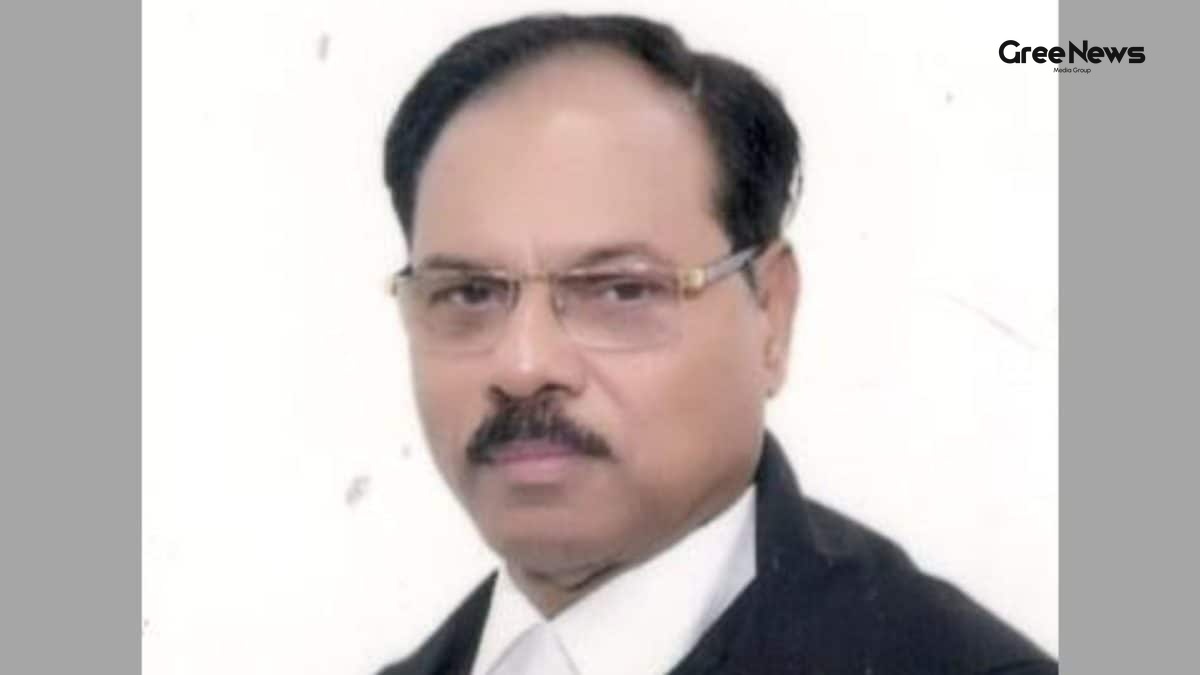
Justice Shekhar Kumar Yadav sparked a political uproar with his controversial remarks on religion, governance, and minority communities at a VHP event
So, let me tell you how I first heard about this whole drama. It was during my morning chai break when I was scrolling through the latest news India feeds, and a headline about a high‑court judge caused a sudden pause. I couldn’t believe that a sitting Justice from the Allahabad High Court would be at the centre of a political storm. The story was everywhere in newspapers, on TV, and of course, all over WhatsApp groups. It felt like a piece of the country’s conscience was being debated right in front of us.
Justice Shekhar Kumar Yadav, who had been appointed as an additional judge of the Allahabad High Court in December 2019 and became a permanent judge in March 2021, decided to give a lecture at a Vishwa Hindu Parishad (VHP) event in Prayagraj. The topic was the “Constitutional Necessity of Uniform Civil Code.” He didn’t just talk about legal technicalities; he ventured into the sensitive territory of religion, majority rule, and personal laws.
During that lecture, Justice Shekhar Kumar Yadav said, “I have no hesitation in saying that this is Hindustan, this country would function as per the wishes of the bahusankhyak (majority) living in Hindustan (India). This is the Law. You can’t say that you are saying this being a High Court Judge.” He also brought up practices like multiple wives, Halala, and Triple Talaq, labeling them as “unacceptable” without naming any specific community. He argued that because India has one constitution and one set of penal laws, it should also have one civil law for everyone.
Now, imagine hearing this from a judge. Many people were surprised by this, especially because the Uniform Civil Code itself has been a hot‑topic in Indian politics for decades. The moment his words hit the public domain, the alarm bells started ringing. Opposition parties quickly drafted an impeachment notice, and the whole saga turned into breaking news that dominated the news cycle for weeks.
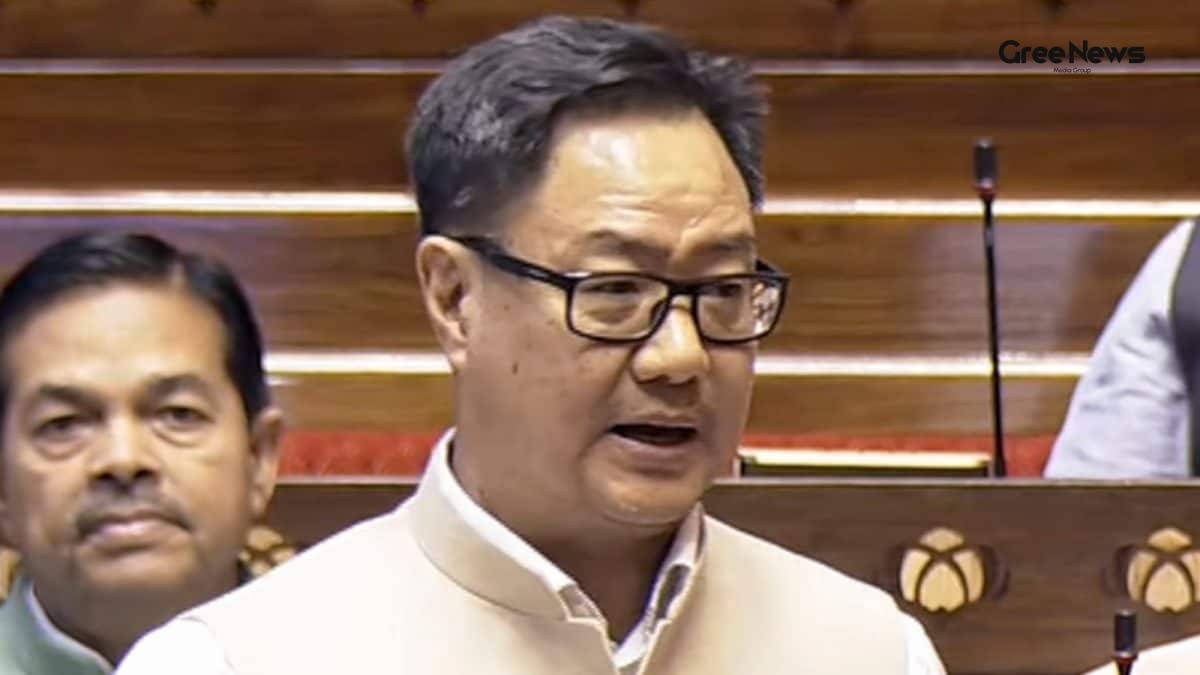
What happened next is interesting. The Rajya Sabha took up the impeachment motion, and the issue is still pending there. Meanwhile, the Supreme Court collegium, headed by then‑Chief Justice Sanjiv Khanna, summoned Justice Shekhar Kumar Yadav for clarification. He reportedly promised a public apology but, according to reports, did not follow through in the weeks that followed.
On the day of his retirement, Justice Shekhar Kumar Yadav addressed a Full Court reference held in his honour. He said his words were twisted and that he had never discriminated on the basis of caste or religion. “Those who twisted my speech were at fault, not me,” he said. He thanked the Bar Association for standing by him, claiming, “Another phase came, in which I had no fault, and during that, I got your support. Had I not received it, I would have been shattered.” He also stressed that lawyers of every caste were present in the court and that no one could claim he discriminated while delivering justice.
Reading his speech, I was struck by how much the language resembled a personal defence rather than an official statement. It felt like a friend trying to set the record straight after being misquoted which, you know, often happens in media. In most cases, the judge’s insistence that he was targeted without fault added another layer to the trending news India discourse, with many internet users picking sides, creating memes, and debating the fine line between free speech and judicial propriety.
What Exactly Did Justice Shekhar Kumar Yadav Say?
Let’s dive a little deeper into the actual words that set the whole ball rolling. During the VHP event, Justice Shekhar Kumar Yadav said, “I have no hesitation in saying that this is Hindustan, this country would function as per the wishes of the bahusankhyak (majority) living in Hindustan (India). This is the Law. You can’t say that you are saying this being a High Court Judge.” He then questioned the legitimacy of practices such as multiple wives, Halala, and Triple Talaq, calling them “unacceptable.” He went on to claim that the Uniform Civil Code would be implemented soon, arguing that a single constitution should naturally lead to a single civil law for all citizens.
These remarks, although not directed at any particular community, were read by many as a direct attack on minority personal laws. The language he used especially the phrase “this is Hindustan” and “the wishes of the bahusankhyak” resonated with a certain political narrative that many consider controversial. That is why the incident turned into viral news, spreading like wildfire on social media platforms, and spawning countless discussion threads online.
Justice Shekhar Kumar Yadav later claimed that his speech was misrepresented by vested interests. In a letter dated January 2025, he wrote to the chief justice of the Allahabad High Court, reiterating that his remarks reflected broader societal concerns and were not meant to single out any specific group. He insisted that the media had taken his words out of context, a claim that many legal analysts continue to debate.
From my perspective, it’s fascinating how a single lecture can ignite such a massive debate. It reminded me of the time when a school teacher’s off‑hand comment about the school uniform led to a whole parents’ meeting except on a national scale. The judge’s words became a mirror reflecting deeper anxieties about secularism, majority rule, and the future of personal laws in our diverse nation.
The Political and Legal Fallout
After the speech, opposition parties jumped on the opportunity to file an impeachment motion against Justice Shekhar Kumar Yadav. The motion is currently awaiting a decision in the Rajya Sabha, and the whole process has been covered extensively by various news portals, keeping the story alive in the latest news India feed for months. While the impeachment procedure is a rare step, it highlights how deeply politics and the judiciary can intersect in India.
At the same time, the Supreme Court collegium asked Justice Shekhar Kumar Yadav to explain his statements. He appeared before the collegium, where he reportedly assured the judges that he would issue a public apology. However, as per various reports, no formal apology was delivered in the weeks that followed, which only added fuel to the fire.
The legal community was split. Some senior advocates stood by Justice Shekhar Kumar Yadav, emphasizing that judges, being human, can sometimes be misquoted, while others argued that any hint of communal bias from the bench could undermine public confidence. The Bar Association’s support for Justice Shekhar Kumar Yadav was evident when he thanked them during his retirement ceremony, saying that without their backing, he would have been “shattered.”
What’s more, the whole episode became a case study on how the media frames judicial remarks. News channels ran special bulletins, and newspapers ran op‑eds dissecting every line of the speech. This was a textbook example of how trending news India can shift public opinion in a matter of hours, especially when the content touches on sensitive subjects like religion and personal law.
Personal Reflections on the Wider Implications
Honestly, when I first heard about Justice Shekhar Kumar Yadav’s retirement, I thought it was just another routine exit. But as the story unfolded, it turned into a lesson about the power of words. Imagine being a judge and your speech, meant for a specific audience, getting broadcast across the nation and turned into a political lightning rod. That’s something many of us never contemplate.
In most cases, the Uniform Civil Code is discussed in academic circles, but now it’s everywhere on street corners, in tea stalls, and during family dinners. People are quoting Justice Shekhar Kumar Yadav, debating his stance, and using his comments to argue for or against a unified civil law. The fact that his remarks have become such viral news shows how intertwined law, politics, and society are in India.
From a broader perspective, this whole saga raises questions about judicial independence. If a judge can be targeted for a speech, does that chill free expression among the judiciary? Or does it reinforce the idea that judges must tread carefully around communal sensitivities? Those are the kind of debates that keep me up at night, especially when I see the younger generation grappling with these concepts through memes and short videos.
One thing is clear: the story of Justice Shekhar Kumar Yadav will stay in the public memory for a long time. It has become part of the breaking news archive that educators, journalists, and policymakers will refer to when discussing the path to a Uniform Civil Code or the role of the judiciary in a pluralistic society.
Conclusion: What Does This Mean for the Future?
Looking back, Justice Shekhar Kumar Yadav’s retirement marks the end of a controversial chapter, but the discussions it sparked are far from over. The impeachment motion still hangs in the balance, and the debate over the Uniform Civil Code continues to be a hot‑button issue in Indian politics. As we move forward, the episode serves as a reminder that every word spoken by a public figure can become a catalyst for nationwide conversation.
For anyone following the latest news India or keeping an eye on the legal landscape, this case offers a clear illustration of how personal beliefs, constitutional principles, and public perception intersect. Whether you view Justice Shekhar Kumar Yadav as a defender of a unified legal system or see his remarks as a misstep, the impact of his speech will likely influence future judicial conduct and political discourse.
So, the next time you hear a judge or any public official speaking on a sensitive topic, remember this story. It might just be the spark that ignites the next big debate, and you’ll be ready to weigh in, just as I did, with a cup of chai and a curious mind.