Why Madhya Pradesh Earns the ‘Vegetable Basket’ Tag
Honestly, when I first heard people call Madhya Pradesh the “Vegetable Basket of India”, I imagined a place draped in Green fields as far as the eye could see, with tractors humming like a low‑level concert. And that’s not far from the truth. The state’s central location gives it a unique climate hot summers, moderate monsoons and cool winters perfect for growing a kaleidoscope of vegetables year‑round.
What really seals the deal, though, is the sheer volume. According to recent India updates, Madhya Pradesh contributes over 15 % of the country’s total vegetable output. That’s a massive slice when you consider the nation’s appetite for fresh Greens. From the leafy spinach farms near Bhopal to the sprawling carrot belts of Gwalior, the produce travels across highways and railways, feeding markets as far as Delhi, Mumbai and even the coastal towns of Kerala.
What happened next is interesting the state’s farmers didn’t just rely on traditional methods. Over the past few years, they’ve increasingly embraced drip irrigation, hybrid seeds, and even mobile apps that give real‑time weather alerts. This blend of old and new is what keeps the supply steady, even when the weather throws a tantrum.
My First Day on a Madhya Pradesh Farm
Let me take you back to a crisp morning when I visited a family farm near Indore. The air smelled of damp earth and fresh coriander. The farmer, Rajesh, Greeted me with a warm “Namaste” and a steaming cup of chai. As we sat on a charpoy, he started telling me about his day‑to‑day routine a story that many of us urban folks rarely get to hear.
He said, “We start early, before the sun even peeks over the horizon. First, we check the irrigation channels, then we walk through the rows, making sure each plant is healthy.” He showed me his carrot field, rows perfectly aligned like Green‑white stripes. The carrots were still small, but you could see how they’d soon swell into the juicy, crunchy snacks we love.
What surprised me the most was his use of a simple mobile app that predicts pest attacks. He opened it, tapped a few icons, and the screen lit up with a warning “Aphids likely in next three days”. Within minutes, he called his son, who arrived with a natural pesticide spray. The whole process felt like a scene from a modern‑farm documentary, but it was happening right there, on a modest plot of land.
Many people were surprised by this mix of tradition and technology. It made me realize how much effort goes into the vegetables that end up on our kitchen tables. No wonder Madhya Pradesh is considered a backbone for the nation’s food basket.
From Farm to Fork: The Journey of a Typical Vegetable
Picture this: a plump, red tomato whisked away from a farm in Ujjain, loaded onto a small truck, cruising through the national highway, and finally landing at a bustling market in Delhi. Along the way, it passes through several hands the driver, a middle‑man who decides the price, and the market vendor who arranges it attractively for buyers.
In most cases, this journey takes less than 48 hours, thanks to the well‑connected road network that Madhya Pradesh enjoys. The state’s strategic position in central India means it can ship produce to the north, east, west and south with relative ease. That’s why you’ll often hear breaking news reports about vegetable price hikes in Maharashtra being traced back to a shortfall in Madhya Pradesh’s supply.
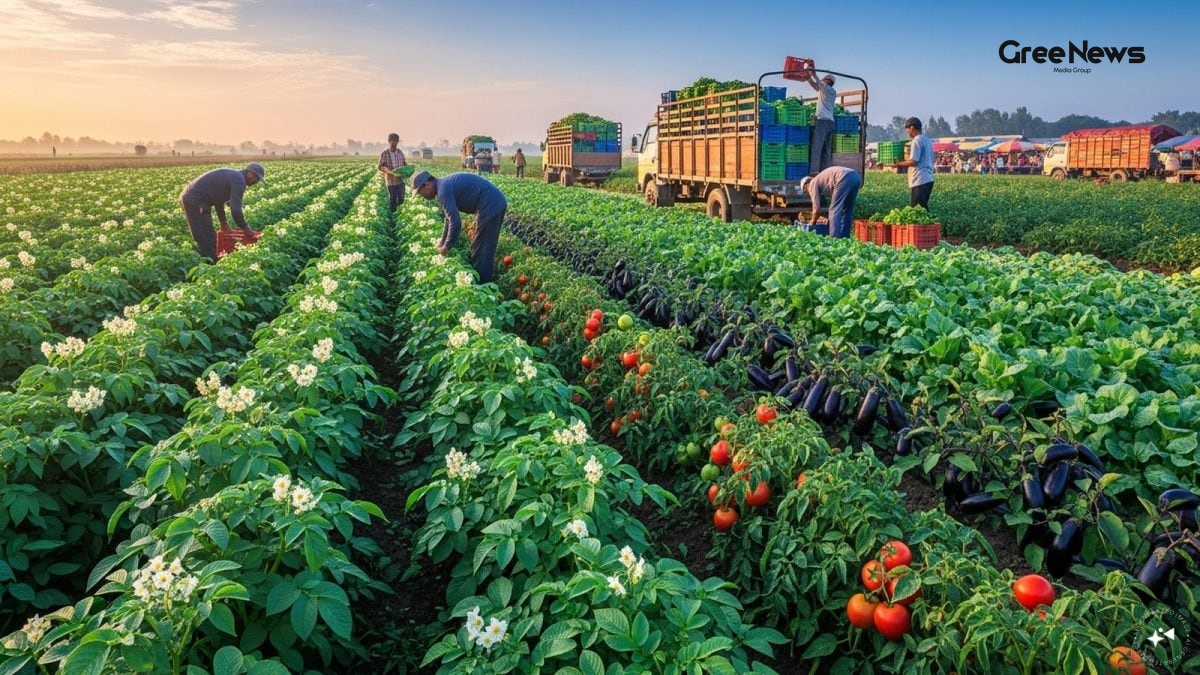
When I visited the Bhopal wholesale market, I saw dozens of trucks parked side by side, each loaded with crates of potatoes, onions, beans and chillies. The market was a hive of activity sellers shouting out prices, buyers comparing weights, and the occasional truck driver taking a quick nap between loads. The atmosphere reminded me of a lively Indian festival, only the ‘stalls’ were stacked with fresh produce instead of sweets.
What’s more, the state’s farmers have started experimenting with “direct‑sale” models. Some organize weekly “farm‑to‑table” events where they invite city dwellers to pick their own vegetables straight from the fields. This model has been a hit on social media, turning into viral news that spreads across platforms, highlighting Madhya Pradesh’s innovative approach to agriculture.
Challenges Faced by the Vegetable Farmers
Despite the success stories, life on the farm isn’t all sunshine and fresh air. One of the biggest hurdles is unpredictable monsoon rain. A delayed monsoon can dry out the soil, while an early downpour can flood the fields, harming the seedlings. In most cases, the farmers rely on government‑sponsored water schemes, yet the supply isn’t always reliable.
Another issue is market volatility. Prices for vegetables can swing wildly within a week. One day you might get a good price for beans, and the next you see a dip because of a sudden influx from another state. This uncertainty makes it hard for farmers to plan for the next season.
There’s also the matter of post‑harvest losses. Without adequate cold storage, many vegetables spoil before they even reach the consumer. In my conversation with Meena, a farmer from Raisen, she confessed that about 20 % of her harvest gets wasted due to lack of proper storage facilities. This not only impacts her income but also contributes to higher prices for the end‑customer.
These challenges have sparked a lot of discussion in the latest news India circles, where policymakers are being urged to invest more in rural infrastructure, especially cold chains and better road connectivity. The hope is that by addressing these bottlenecks, Madhya Pradesh will solidify its role as a reliable vegetable hub.
Innovations Lighting the Way Forward
Fortunately, several grassroots innovations are turning the tide. One standout is the “Sustainable Seed Bank” project started by a cooperative in Jabalpur. They store heirloom vegetable seeds that are both drought‑resistant and high‑yielding. Farmers can borrow these seeds at a nominal fee, ensuring they have access to quality planting material even in tough seasons.
Another promising development is the rise of agri‑tech startups targeting Madhya Pradesh’s growers. An example is “KisanConnect”, an app that links farmers directly with buyers, cutting out the middleman. Users can upload pictures of their produce, set price expectations, and negotiate deals on the spot. This kind of digital marketplace has been featured in several trending news India pieces, as it promises to boost farmer earnings and reduce price manipulation.
On the irrigation front, the state has adopted “micro‑irrigation” systems extensively. By using drip lines, water wastage drops dramatically, and crops receive precise moisture levels. I saw a demonstration where a farmer explained how his water bill shrank by nearly half after switching to drippers. Such success stories are often shared as viral news on social platforms, inspiring other farmers to adopt similar practices.
Impact on Everyday Indian Households
From an urban perspective, the influence of Madhya Pradesh’s vegetable output is felt daily. Imagine stepping into a local grocery store in Chennai and picking up a sack of fresh potatoes many of those tubers probably traveled a few hundred kilometres from a farm in Rewa. The affordability and availability of such vegetables keep the cost of meals low for countless families.
During festive seasons, when demand spikes, the state steps up its production. A couple of weeks before major festivals, you’ll notice a flurry of activity at the state’s agricultural fairs, where farmers showcase their best produce. These fairs are often covered by the press as part of the India updates on seasonal food supplies.
My own family’s weekly menu is a testimony to this. We enjoy a simple dal‑roti with a side of fresh, home‑grown bhindi (okra) that we bought from a Delhi market. Little do we realize that those okra pods traveled across state borders, brought in by a truck that left Madhya Pradesh early in the morning. This hidden chain of effort keeps our plates colorful and nutritious.
When you think about it, the vegetable basket isn’t just a title it’s a lifeline that connects farms, markets, and families across the country. That’s why stories about Madhya Pradesh’s produce often become viral news, because they touch a core part of Indian life: food.
Future Outlook: Keeping the Basket Full
Looking ahead, the state’s government has laid out ambitious plans to double vegetable production in the next decade. The roadmap includes expanding drip‑irrigation networks, setting up more cold storage units, and encouraging farmer‑producer companies (FPCs) to take a bigger role in marketing.
There’s also a push towards sustainable farming practices. Organic vegetable cultivation is gaining momentum, especially as health‑conscious consumers across India seek chemical‑free produce. Farms near Bhopal are experimenting with compost made from agricultural waste, reducing dependence on synthetic fertilizers.
What’s exciting is how these developments are being reported in the media. Recent trending news India articles have highlighted the state’s upcoming “Green Harvest” initiative, which aims to make Madhya Pradesh a leader not just in quantity, but also in quality of vegetables.
In my next visit, I hope to see more of these changes in action perhaps a solar‑powered cold chain facility, or a community of farmers using drones to monitor crop health. If those stories become part of breaking news, they’ll certainly capture the imagination of many Indians who rely on these vegetables for their daily meals.
Until then, the humble vegetables from Madhya Pradesh will continue to travel far and wide, keeping kitchens across the nation stocked with fresh, affordable produce. And that, my friends, is the real magic behind the state’s title as the Vegetable Basket of India.