Nemom Constituency Set for a Tri‑Front Battle in Kerala's 2026 Assembly Race
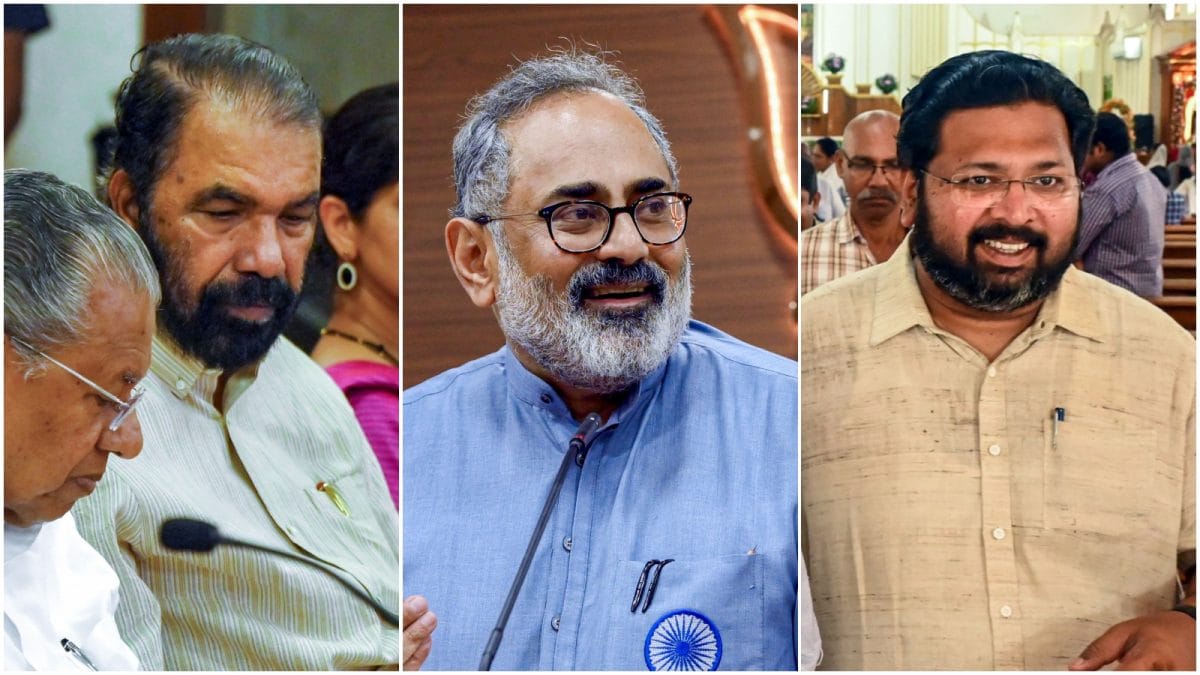
The contest pits the Left Democratic Front (LDF), United Democratic Front (UDF) and the National Democratic Alliance (NDA) against each other.
Overview of the 2026 Contest in Nemom
Kerala election 2026: As the 2026 Kerala Assembly elections draw nearer, the Nemom constituency in Thiruvananthapuram emerges as a focal point of intense political competition. Three major coalitions—Left Democratic Front (LDF), United Democratic Front (UDF) and National Democratic Alliance (NDA)—are positioning themselves for a decisive victory in a seat that has repeatedly demonstrated a volatile electorate.
Each coalition has nominated a high‑profile candidate, creating a three‑way contest that is expected to attract extensive media coverage and vigorous ground‑level campaigning. The stakes are amplified by the constituency’s recent history of narrow margins, shifting allegiances and strategic importance for all three fronts.
Candidate Line‑up for the Triangular Battle
Left Democratic Front (LDF) Nominee: V Sivankutty
Left Democratic Front (LDF) has selected Education Minister V Sivankutty, a member of the Communist Party of India (Marxist), to contest the Nemom constituency. V Sivankutty reclaimed the seat in the previous election after a defeat in the earlier cycle, defeating the Bharatiya Janata Party (BJP) candidate Kummanam Rajasekharan by a margin of 3,949 votes. This victory underscored the competitive nature of Nemom and positioned V Sivankutty as a seasoned contender for the upcoming poll.
During the previous term, V Sivankutty emphasized development initiatives such as the expansion of the Chala Industrial Training Institute (ITI) and the improvement of traffic flow at Karamana junction. These projects have been highlighted in V Sivankutty’s current campaign narrative as evidence of tangible progress under Left Democratic Front (LDF) governance.
National Democratic Alliance (NDA) Nominee: Rajeev Chandrasekhar
National Democratic Alliance (NDA), led by the Bharatiya Janata Party, has nominated Rajeev Chandrasekhar, the Union minister and state party president, to contest the Nemom constituency. Rajeev Chandrasekhar’s professional background as a technocrat‑turned politician is presented as a credential for delivering efficient administration and modern governance.
Rajeev Chandrasekhar’s campaign strategy focuses on criticizing Left Democratic Front (LDF) for what is described as unfulfilled promises, while also foregrounding issues related to religious sentiment, notably the controversy surrounding the alleged gold theft at Sabarimala. Rajeev Chandrasekhar seeks to consolidate Hindu votes in the constituency and to convert the previously contested Nemom seat into a long‑term stronghold for National Democratic Alliance (NDA).
United Democratic Front (UDF) Nominee: KS Sabarinadhan
United Democratic Front (UDF) has put forward KS Sabarinadhan, the son of former Congress minister G Karthikeyan, as its candidate for the Nemom constituency. Although KS Sabarinadhan was unsuccessful in the previous Assembly election from the Aruvikkara constituency, the current campaign is buoyed by the endorsement of Thiruvananthapuram Member of Parliament Shashi Tharoor, a figure who enjoys considerable popularity in the city and has actively campaigned in Nemom.
KS Sabarinadhan’s platform highlights urban development, public service delivery and the importance of securing a robust Congress presence in the capital region. The United Democratic Front (UDF) hopes that KS Sabarinadhan’s familial political legacy, combined with high‑profile campaign support, will attract the urban electorate that traditionally leans toward the Congress party.
Historical Electoral Landscape of Nemom
Nemom constituency has become a hallmark of Kerala’s electoral dynamics. In the election cycle preceding the most recent contest, O Rajagopal of the Bharatiya Janata Party secured the first-ever Assembly victory for the party in the state by winning the Nemom seat. That historic win marked a breakthrough for the Bharatiya Janata Party in a region traditionally dominated by the two major coalitions.
The subsequent election cycle saw the seat revert to the Communist Party of India (Marxist) when V Sivankutty reclaimed the constituency for Left Democratic Front (LDF). The oscillation between the two major political forces underscores the constituency’s status as a swing seat where voter preferences can shift dramatically from one election to the next.
Despite the loss in the Assembly race, the Bharatiya Janata Party has maintained optimism, pointing to its recent triumph in the Thiruvananthapuram Municipal Corporation elections. That municipal victory is credited with strengthening the party’s organisational network and grassroots presence within the capital district, factors that are expected to influence voter behaviour in the upcoming Assembly contest.
Across electoral cycles, parties have campaigned on themes that resonate locally, such as infrastructure development, religious and cultural concerns, and the delivery of public services. The narrow margins that have characterized past results have encouraged all three fronts to intensify their campaign efforts, with each side presenting distinct narratives intended to capture the decisive vote.
Demographic Profile of Nemom Constituency
Nemom is classified as a General category seat and is situated in the southern part of Thiruvananthapuram district, encompassing a mixture of urban and semi‑urban localities that form part of the state capital. The constituency includes municipal wards numbered 37 to 39, 48 to 58, and 61 to 68 within the Thiruvananthapuram Municipal Corporation.
The electorate comprises a diverse cross‑section of residents, including professionals employed in government and private sectors, small‑scale traders, and households engaged in traditional occupations. Religious composition reflects the pluralistic character of Kerala, with Hindu, Muslim and Christian communities each forming substantial voter blocs.
These demographic factors contribute to the complex voting patterns observed in the constituency. Urban voters often prioritize issues such as public transportation, sanitation, and employment opportunities, while rural and peri‑urban voters may place greater emphasis on agricultural support, local infrastructure projects and community welfare schemes.
Key Themes Shaping the Campaign
Development projects remain at the forefront of the campaign discourse. V Sivankutty highlights the establishment of the Chala Industrial Training Institute and upgrades to the Karamana junction as evidence of Left Democratic Front (LDF) commitment to skill development and traffic management. These initiatives are presented as foundational to fostering economic growth and improving everyday life for constituents.
Rajeev Chandrasekhar centres his campaign narrative on perceived governance gaps under the incumbent administration. The focal points of criticism include unfulfilled promises related to public utilities, perceived delays in infrastructure delivery and the handling of high‑profile religious controversies such as the alleged gold theft at Sabarimala. By foregrounding these issues, Rajeev Chandrasekhar seeks to position National Democratic Alliance (NDA) as a viable alternative capable of delivering decisive action.
KS Sabarinadhan’s campaign emphasizes the importance of strengthening urban governance, expanding access to quality education and healthcare, and revitalising the Congress party’s historical presence in the capital. The endorsement by Shashi Tharoor adds a national‑level dimension to the United Democratic Front (UDF) strategy, linking local aspirations with broader policy perspectives.
All three candidates engage in extensive ground‑level outreach, including door‑to‑door visits, public rallies and digital engagement. The emphasis on grassroots interaction reflects the constituency’s history of close contests where personal contact with voters often proves decisive.
Strategic Importance of Nemom in the 2026 Election
Nemom stands as a litmus test for each of the three major political alliances. For Left Democratic Front (LDF), retaining the seat would signify consolidation of the gains achieved in the previous assembly term and would reinforce the coalition’s claim of sustained public support. For National Democratic Alliance (NDA), winning Nemom would represent a breakthrough that could translate into broader inroads across the state, validating the party’s recent municipal successes and its long‑term ambition to establish a durable foothold in Kerala. For United Democratic Front (UDF), a strong showing in Nemom would indicate a resurgence of the Congress party in urban centres, potentially reshaping the balance of power in the capital district.
Predictive analyses suggest that voter turnout will be robust, reflecting heightened public interest in a constituency that has repeatedly delivered decisive outcomes. The convergence of development narratives, religious considerations and local identity politics creates a multifaceted electoral environment where each coalition must finely calibrate its messaging to resonate with the eclectic electorate of Nemom.
The outcome in Nemom is expected to influence broader strategic calculations for the state‑wide election, as parties will assess the effectiveness of their campaign tactics, messaging priorities and organisational reach based on the results emerging from this pivotal constituency.
(With inputs from agencies)