Princess Catherine Appears at Easter, Revisits Beloved Cream Self‑Portrait Ensemble
After a two‑year hiatus caused by a focus on medical treatment, Princess Catherine returns to the Easter celebrations alongside Prince William and their three children, opting once again for a favored cream Self‑Portrait creation that underscores her long‑standing dedication to sustainable style.
Family Reunion at St George’s Chapel
Princess Catherine, Prince William, Prince George, Princess Charlotte, and Prince Louis formed a harmonious family tableau as they entered the historic St George’s Chapel for the traditional Easter Matins service. The occasion marked the first joint appearance of Princess Catherine with the immediate family at this annual observance following a period of private recuperation.
Within the venerable stone walls of St George’s Chapel, the royal family gathered not only for worship but also to convey a message of resilience and continuity. The presence of Prince George, Princess Charlotte, and Prince Louis alongside Princess Catherine and Prince William reinforced the notion of familial solidarity during a time of renewed public engagement.
Return to Public Duties After Medical Focus
Princess Catherine resumed a schedule of public responsibilities after a deliberate withdrawal that centered on medical treatment. The interruption spanned two consecutive Easter celebrations, during which Princess Catherine concentrated on a health‑related plan that demanded both physical and emotional attention.
Since the resumption of duties, Princess Catherine has demonstrated a steady rhythm in undertaking engagements, diplomatic visits, and charitable commitments. The Easter appearance, however, carries particular weight as it represents the first participation in the Easter Sunday ceremony since the cessation of duties earlier in the year, a decision prompted by the aforementioned health considerations.
Fashion Choice: The Cream Self‑Portrait Dress Revisited
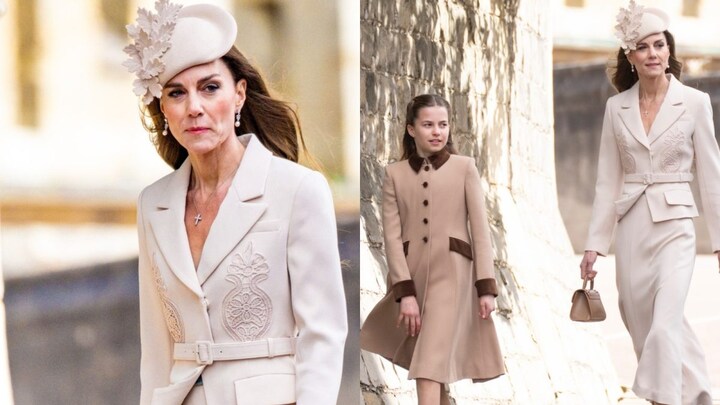
For the Easter service, Princess Catherine elected to don a cream Self‑Portrait dress that blurs the line between structured blazer and flowing midi skirt. The garment, originally celebrated for its tailored silhouette and delicate lace appliqués, functions as a testament to Princess Catherine’s reputation as a champion of thoughtful wardrobe reuse.
Often hailed as the “Queen of Rewears,” Princess Catherine has cultivated a legacy of repurposing beloved pieces across multiple public appearances. This philosophy aligns with broader conversations about sustainable and eco‑friendly fashion, positioning Princess Catherine as both a style icon and an advocate for responsible consumption.
The blazer‑like top of the dress showcases expert tailoring, while lace appliqués introduce a subtle texture that catches the light during the ceremony. The design’s versatility permits a seamless transition from formal religious observance to regal public appearance.
In addition to the dress, Princess Catherine selected a set of Bahrain pearl drop earrings, a Nano Montreal bag rendered in a toffee hue, and gold calfskin pumps from Ralph Lauren. Each accessory was chosen to complement the cream palette while adding layers of refinement and contemporary flair.
Beyond the primary ensemble, Princess Catherine introduced a brand‑new teardrop‑shaped hat crafted from cream fabric. The hat, sourced from the milliner Juliette Botterill, features delicate leaf appliqués that echo the dress’s lace detailing. Juliette Botterill, a London‑based millinery house, enjoys a longstanding relationship with the royal family, supplying multiple pieces for various members.
Princess Charlotte Mirrors Mother’s Sustainable Style
Princess Charlotte, following the established pattern set by Princess Catherine, also embraced the concept of rewearing for her Easter appearance. After a period of absence from public engagements, Princess Charlotte returned to the spotlight wearing a Self‑Portrait dress that had previously featured in a holiday celebration.
The baby‑blue Self‑Portrait dress, previously observed on a festive occasion, reappeared as part of Princess Charlotte’s Easter attire. The choice reflects an intentional alignment with the broader family approach to sustainable fashion and a desire to echo the elegance of the occasion.
Princess Charlotte paired the dress with ballet flats from Tory Burch, and a modest plait adorned her hair, completing a look that married youthful exuberance with regal poise.
Observations of Princess Charlotte’s sartorial selections reveal a preference for blue hues during Easter, a trend that Princess Catherine herself has embraced across multiple past celebrations.
Stylistic Details and Symbolism
The cream Self‑Portrait dress worn by Princess Catherine embodies a palette that suggests purity, renewal, and the early light of spring—a fitting visual metaphor for the Easter season. The lace appliqués, reminiscent of delicate filiGree, contribute a sense of handcrafted artistry, underscoring the garment’s timeless appeal.
Accessories such as the Bahrain pearl drop earrings bring a subtle iridescence that reflects the soft ambient lighting of St George’s Chapel. The Nano Montreal bag, distinguished by its toffee coloration, provides a warm contrast to the cream silhouette while maintaining an understated elegance appropriate for a religious service.
Gold calfskin pumps from Ralph Lauren add a touch of classic luxury, their sleek lines complementing the structured nature of the dress’s upper portion. The teardrop hat, with its leaf appliqués, introduces a natural motif that aligns with the seasonal theme of rebirth and growth.
Princess Charlotte’s baby‑blue dress, by virtue of its hue, evokes the clear skies often associated with springtime celebrations. The ballet flats from Tory Burch reinforce a sense of comfort and youthful grace, allowing Princess Charlotte to navigate the ceremony with ease.
Impact on Public Perception and Sustainable Messaging
Princess Catherine’s decision to reutilize a previously worn ensemble sends a resonant message to the public regarding the value of mindful consumption. By showcasing a favorite dress in a new context, Princess Catherine illustrates how cherished pieces can remain relevant across diverse occasions.
The repeated choice of the Self‑Portrait dress also emphasizes a broader shift within the fashion industry toward circularity—encouraging designers, consumers, and public figures alike to view clothing as an enduring resource rather than a disposable commodity.
Similarly, Princess Charlotte’s echoing of this approach introduces the principle of sustainable style to a younger generation, suggesting that environmental stewardship can be interwoven with personal expression from an early age.
Media coverage of the family’s attire has highlighted the intentionality behind each element, reinforcing the notion that royal fashion can serve a dual purpose: honoring tradition while advancing contemporary values.
Conclusion: A Celebration of Renewal and Responsibility
The Easter gathering at St George’s Chapel afforded Princess Catherine, Prince William, Prince George, Princess Charlotte, and Prince Louis an opportunity to celebrate renewal not only in the religious sense but also in personal and public realms. Princess Catherine’s reappearance after a period of focused health attention signaled a return to public life, while the sartorial choices made by Princess Catherine and Princess Charlotte underscored a commitment to sustainable fashion practices.
Through the thoughtful reuse of a beloved cream Self‑Portrait dress and a coordinated ensemble for Princess Charlotte, the royal family presented a cohesive narrative that intertwines heritage, modernity, and environmental consciousness. The visual harmony of the outfits, complemented by tasteful accessories and subtle detailing, contributed to an overall impression of elegance, responsibility, and hopeful anticipation for future engagements.
In sum, the Easter service served as a stage upon which familial unity, personal resilience, and an evolving approach to fashion converged, offering a compelling illustration of how tradition can be refreshed and reinterpreted without compromising core values.