Torrent Gas Lifts CNG Price by Rs 2.50 per Kilogram, Prompting Concerns Among Auto Drivers and Commuters
Price Revision by Torrent Gas
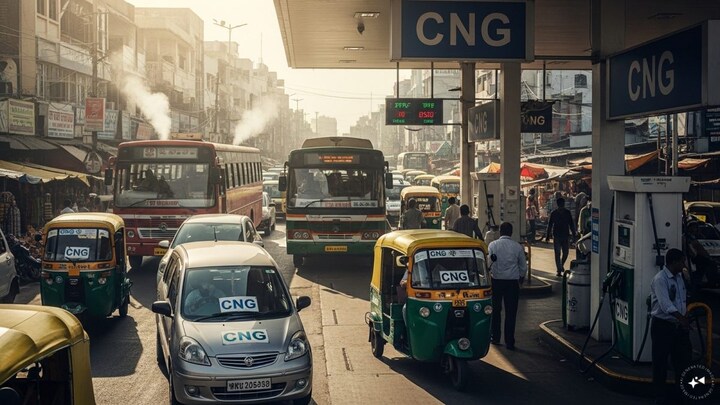
Torrent Gas has officially announced an increase of Rs 2.50 per kilogram in the price of compressed natural gas (CNG) supplied to urban customers. The adjustment takes effect immediately and reflects the cumulative impact of higher procurement costs, logistical expenses, and broader movements in the energy market. By raising the per‑kilogram charge, Torrent Gas aims to preserve its operational margins while continuing to provide a relatively affordable fuel option for a spectrum of transport users.
The new CNG price set by Torrent Gas adds a tangible burden to the already tight financial calculations of daily commuters and professional drivers who depend on CNG as their primary energy source. The shift aligns with a series of recent price movements across the fuel sector, where private retailers have also adjusted rates for petroleum products.
Impact on Auto Drivers
Auto drivers, particularly those operating auto‑rickshaws, have voiced immediate concern over the Torrent Gas price rise. For many of these operators, CNG constitutes the core of daily operating expenditures, and any upward adjustment translates directly into reduced profitability when fare structures remain static.
Auto drivers report that the added cost per kilogram forces a re‑evaluation of daily work schedules. With the same fare income and a higher fuel outlay, the net earnings per shift shrink noticeably. Auto drivers describe a scenario where the only viable response involves extending working hours, thereby sacrificing personal time to preserve a baseline income.
One auto driver articulated the situation succinctly: “The fuel cost has risen, but the fare does not change. The only realistic choice is to keep the engine running for longer periods to bridge the gap.” This sentiment reflects a broader sentiment among the driver community, where the balance between earnings and expenses is increasingly precarious.
Beyond the individual financial strain, the collective impact on the auto‑rickshaw sector could manifest as reduced availability of vehicles during peak demand periods, as drivers weigh the cost‑benefit equation of extended operation versus personal well‑being.
Commuter Concerns Over Potential Fare Adjustments
While official fare adjustments have not yet been announced, commuters express apprehension that the persistence of rising fuel costs may eventually compel transport authorities or private operators to increase passenger fares. For regular travelers who budget for daily transportation, even a modest fare hike could disrupt monthly financial planning.
Commuters illustrate the potential fallout by referencing the direct link between fuel price and fare structures. In a typical scenario, a rise in the per‑kilogram cost of CNG contributes to higher operating expenses for auto drivers, which, in turn, can lead to upward pressure on the fares charged to passengers.
Given that many commuters rely on affordable auto‑rickshaw services for work, education, and personal travel, any shift in fare levels could have ripple effects across households, particularly for those with limited disposable income.
Parallel Increases in Petrol and Diesel Prices by Private Retailers
In addition to the CNG price hike announced by Torrent Gas, private fuel retailers have undertaken their own series of price adjustments for traditional petroleum products. Shell India has raised both petrol and diesel rates, mirroring a similar move by Nayara Energy. These adjustments are driven by sustained elevations in crude oil market prices, which place pressure on downstream margins and compel retailers to recalibrate retail rates.
Shell India’s revised petrol rates now stand at Rs 119.85 per litre for the standard variant and Rs 129.85 per litre for the premium Power variant. These figures represent a noticeable increase from prior levels and underscore the competitive pressure faced by consumers across multiple fuel categories.
Similarly, Nayara Energy has increased petrol prices by Rs 5 per litre and diesel prices by Rs 3 per litre. At Nayara Energy outlets, petrol now sells for Rs 100.71 per litre, while diesel is priced at Rs 91.31 per litre. These adjustments further illustrate the broader upward trend affecting the entire fuel ecosystem.
It is noteworthy that the magnitude of price changes varies across geographic locations, as local tax structures and distribution costs influence the final retail price. For instance, in Bengaluru, the revised petrol rates set by Shell India reflect the regional tax framework, while other cities may experience slightly different pricing outcomes.
Stability in State‑Owned Fuel Retailers
Contrasting the upward adjustments by private retailers, state‑owned fuel retailers—responsible for nearly nine‑tenths of the national fuel market share—have chosen to maintain existing price levels for both petrol and diesel. This decision provides a measure of price stability for consumers who source fuel from publicly managed stations.
In Delhi, state‑owned fuel retailers continue to dispense petrol at Rs 94.77 per litre and diesel at Rs 87.67 per litre. The unchanged rates at these outlets serve as a reference point for market participants, highlighting the divergent strategies between public and private entities in response to fluctuating global commodity prices.
The steady pricing approach adopted by state‑owned fuel retailers may partly stem from policy considerations aimed at cushioning the impact of global price volatility on the domestic consumer base. By holding rates constant, state‑owned fuel retailers provide a deGree of predictability for commuters and transport operators alike.
Broader Implications for Affordable Transportation
The concurrent rise in CNG, petrol, and diesel prices intensifies the conversation around the affordability of everyday transportation. As fuel costs climb, transport operators—including auto‑rickshaw drivers, taxi services, and bus operators—face mounting pressure to absorb higher expenditures while maintaining service levels.
In the short term, many operators opt to shoulder the additional expense without passing it on to passengers, preserving fare structures at the expense of reduced profit margins. However, sustained pressure on operating costs could eventually necessitate fare revisions, subsidies, or targeted relief measures to safeguard the financial viability of transport services.
Stakeholders across the transportation ecosystem—policy makers, fuel retailers, and driver associations—may find themselves engaged in dialogues aimed at balancing market realities with the need to keep mobility accessible to the broader population. Potential interventions could include temporary subsidies for CNG, adjustments in taxation, or the introduction of alternative fuel incentives.
For commuters, the evolving fuel price landscape underscores the importance of budgeting for transportation as a core component of household expenses. The ripple effect of fuel price adjustments extends beyond the pump, influencing daily commuting choices, vehicle ownership decisions, and even broader urban planning considerations.