Republican Leaders Call for End of H‑1B Visa After Viral 7‑Eleven Footage Shows Indian Worker
A clip captured at a convenience store in Texas has set off a firestorm of discussion about the United States H‑1B visa system, drawing sharp commentary from elected officials and a wide array of social‑media users.
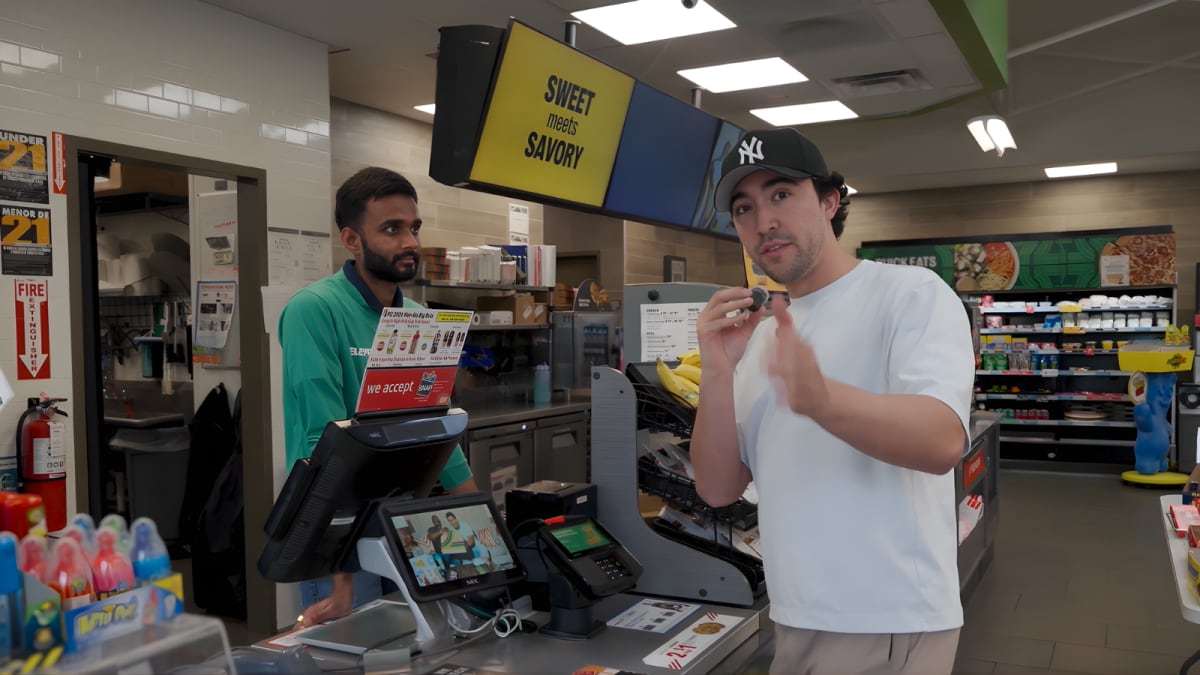
A viral 7‑Eleven video showing an Indian H‑1B worker sparks outrage in the US, with Republican leaders calling the visa programme a 'scam' and demanding its abolition
The online clip was originally uploaded by YouTuber Tyler Oliveira. In the recording, Tyler Oliveira approaches a 7‑Eleven employee and directly asks the employee about immigration status. The employee answers that the employee is from Andhra Pradesh and is in the United States on an H‑1B visa, a visa category that is officially intended for highly skilled specialists.
As the conversation proceeds, the employee appears uncomfortable and indicates an intention to contact a manager for further guidance. The exchange quickly became a focal point of discussion across multiple platforms, prompting a range of responses that range from accusations of exploitation to broader reflections on labor market dynamics.
One commentator wrote, "Why don’t you work at the same salary as him. Wasn’t similar argument used to refute Gender pay gap?" The comment reflects a perspective that likens the situation to other ongoing debates about compensation equity.
Another online participant remarked, "Do the same thing in Indian gas station, liquor store, restaurant, and motels everywhere! I’m sure you can find more than 50% paid under the table." This observation expands the conversation to a global context, suggesting that similar patterns may exist in other nations.
The video soon attracted the attention of Brandon Gill, a Republican representative for Texas’s 26th congressional district. In a public statement, Brandon Gill declared, "H‑1B is a scam and should be abolished." The declaration aligns with a longstanding critique that Brandon Gill has voiced regarding immigration policy and the perceived impact of the H‑1B system on domestic workers.
Brandon Gill’s remarks have also drawn scrutiny because of personal connections. Brandon Gill is married to Danielle D’Souza, who is the daughter of Mumbai‑born political commentator and Trump ally Dinesh D’Souza. The familial link has become a point of interest for observers tracking the intersection of personal relationships and policy positions.
Additional members of Congress have echoed the sentiment expressed by Brandon Gill. Greg Steube, another Republican legislator, argued that the visa programme disadvantages American workers by allowing corporations to replace domestic talent with lower‑cost foreign labor. Greg Steube has introduced legislation known as the EXILE Act, a proposal that seeks to eliminate the H‑1B visa programme entirely as part of a larger policy framework that emphasizes an "America First" approach.
Social‑media discourse surrounding the viral video displays a sharp division. Some participants criticize what they perceive as a misuse of a visa category that was originally designed for specialized occupations. Other participants point to broader labor market realities, emphasizing that the H‑1B system serves as a conduit for highly educated professionals to enter the United States, often with the intention of pursuing long‑term residency and contributing to the economy.
The current resurgence of debate aligns with a pattern of heightened scrutiny of the H‑1B system over recent years. The visa programme was originally introduced with the goal of attracting global talent for niche roles that require advanced expertise. Over time, the majority of approvals have been awarded to professionals from India, making Indian nationals a significant demographic within the H‑1B population.
Beyond its role as a temporary work authorization, the H‑1B visa also functions as a stepping stone toward permanent residency. Visa holders are permitted to bring immediate family members to the United States, allowing them to establish long‑term careers and integrate into American communities.Critics of the system argue that the programme enables companies to sidestep higher domestic wages, thereby creating a competitive disadvantage for American workers. Proponents contend that the programme fills essential skill gaps and drives innovation within sectors that rely on specialized knowledge.
The viral footage has amplified existing tensions and has prompted calls for legislative overhaul. Supporters of reform argue that a more transparent and merit‑based allocation process could address concerns about wage suppression and job displacement. Opponents of repeal caution that eliminating the visa altogether could hinder the United States’ ability to attract top talent in fields such as technology, engineering, and research.
Public opinion appears to be split along ideological lines, with many Republican officials leveraging the video to emphasize a narrative that the H‑1B programme benefits foreign workers at the expense of American citizens. Conversely, several commentators highlight the importance of maintaining a flexible immigration system that can adapt to the evolving demands of a globalized economy.
Even as the political debate intensifies, the underlying facts of the case remain unchanged: an Indian‑origin employee, working at a Texas 7‑Eleven store, holds an H‑1B visa that was intended for specialized occupations. The employee’s interaction with the 7‑Eleven staff, captured on video, has become a flashpoint for broader discussions about immigration policy, labor rights, and economic strategy.
Legislative initiatives such as the EXILE Act, proposed by Greg Steube, underscore a strategic push toward eliminating the H‑1B visa programme. The proposals seek to replace the existing framework with policies that prioritize domestic hiring and reduce reliance on foreign labor sources. The long‑term implications of such proposals remain a subject of debate among policymakers, industry leaders, and the general public.
In summary, the viral 7‑Eleven video has served as a catalyst for renewed scrutiny of a visa system that has long been a cornerstone of the United States’ approach to attracting specialized talent. The discourse reflects a complex intersection of economic, social, and political considerations, with Republican lawmakers such as Brandon Gill and Greg Steube actively calling for the repeal of the H‑1B programme while highlighting perceived inequities faced by American workers.