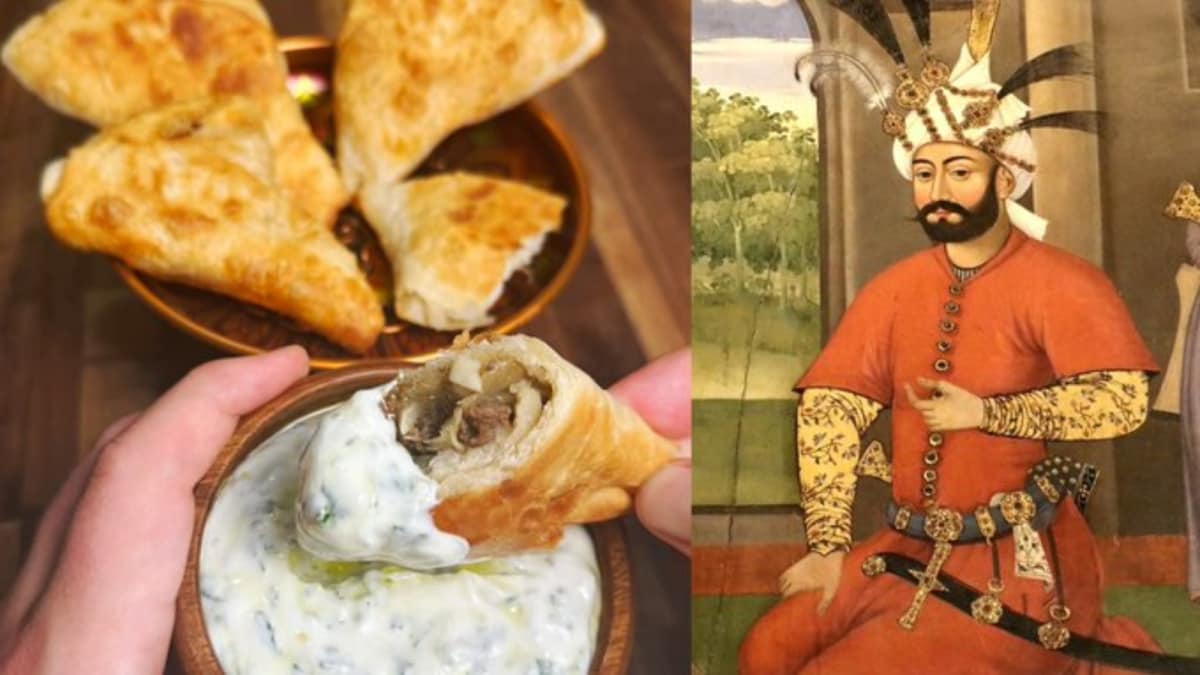
This recipe, passed through the hands of emperors like Akbar and Tipu Sultan, eventually made its way to the British India before being housed in what is now the British Museum
A post on a popular social networking platform highlighted a culinary document dating back five centuries, showcasing a version of the familiar triangular pastry that omits the modern staple of potato filling. The document originates from a Persian manuscript compiled in the early years of the 16th century and was originally intended for the Sultan of Mandu, a historic polity located in central India.
The manuscript, known to scholars as Ni’matnama – translated as “Book of Delights” – was authored between the early years of the 16th century for the Sultan of Mandu. This text later became part of the personal libraries of imperial figures such as Akbar and Tipu Sultan, reflecting the high regard in which royal kitchens held the recipe. Subsequent to its time in these regal collections, the manuscript was transferred to the British East India Company, ultimately finding a permanent home within the British Museum’s holdings.
Origins in the Ni’matnama and Early Imperial Patronage
The Ni’matnama was compiled during a period when Persian literary culture flourished across the Indian subcontinent. Its pages contain a diverse array of culinary instructions, ranging from elaborate banquet dishes to everyday fare. Within its compendium, the samosa entry stands out for several reasons. First, the recipe calls for roasted aubergine pulp as the primary vegetable component, a choice reflective of the prevalence of eggplant in Persian cooking traditions of the era.
Second, the meat element of the dish features lamb that has been slow‑cooked with onion, garlic, and dried ginger. The inclusion of dried ginger, rather than fresh, aligns with preservation techniques common in the early modern period, when spices were prized for both flavor and longevity. The final cooking step demands that the assembled pastries be fried in ghee, a clarified butter that imparts a luxuriant mouthfeel and a subtle nutty aroma.
It is noteworthy that the recipe makes no reference to potatoes or chilies. Both of these crops entered the Indian culinary landscape several decades after the manuscript’s composition, following their introduction via European traders and subsequent diffusion across the subcontinent. The absence of these ingredients underscores the authenticity of the preparation as a true representation of gastronomic practices before the Columbian exchange reshaped regional cuisines.
Transition Through Imperial Kitchens: Akbar and Tipu Sultan
Historical records indicate that the Ni’matnama, and specifically its samosa recipe, were treasured by successive rulers who prized the culinary sophistication of their courts. The Mughal emperor Akbar, renowned for his patronage of the arts and his eclectic taste in food, incorporated the samosa into his royal menu. Akbar’s court was a melting pot of culinary influences, blending Central Asian, Persian, and indigenous Indian elements. Within this milieu, the samosa served as a testament to the emperor’s appreciation for refined pastries that combined meat, vegetables, and aromatic spices.
Later, the ruler Tipu Sultan of the Kingdom of Mysore, whose reign was marked by both military resistance and cultural patronage, also embraced the samosa. Tipu Sultan’s kitchens were known for embracing diverse culinary traditions, and the continued presence of the Ni’matnama’s samosa recipe within his culinary repertoire illustrates the dish’s enduring appeal across centuries and dynastic changes.
The movement of the manuscript from imperial kitchens to the agencies of the British East India Company reflects the broader patterns of cultural transmission during the era of colonial expansion. As British officials acquired copies of valuable texts, they facilitated the transport of these works back to the metropolitan center, where they entered institutional collections.
Preservation in the British Museum
Upon its arrival in the archives of the British Museum, the manuscript was catalogued among other valuable Persian and Indo‑Persian works. The British Museum’s collection now serves as a repository for scholars interested in the culinary history of South Asia, allowing researchers to examine the original script, ink, and illustration techniques used in the Ni’matnama. The preservation of this samosa recipe within a major museum ensures that the knowledge of pre‑potato, pre‑chili pastries remains accessible to future generations.
Modern digital reproductions of the relevant pages have been disseminated through academic platforms and social media, enabling a broader audience to engage with the gastronomy of the past. The recent social media post that sparked widespread discussion used a high‑resolution photograph of the manuscript page, inviting readers to compare the historic preparation with contemporary street‑food versions.
Contrasting the Historic Recipe with Contemporary Samosas
When juxtaposed with the snack commonly found at roadside stalls today, the historic version presents a stark contrast in both composition and technique. Contemporary samosas typically feature a filling of boiled and spiced potatoes mixed with peas, chilies, and a medley of herbs, all encased in a thin, crisp pastry that is deep‑fried. This modern incarnation reflects the incorporation of New World crops such as potatoes and chilies, which became staples in Indian cooking only after their introduction by European traders.
In contrast, the historic recipe relied on roasted aubergine pulp, which provides a smoky, velvety texture, and lamb, which adds a robust, savory depth. The use of dried ginger contributed a warm, slightly sweet spice note, while the generous frying in ghee resulted in a pastry that was richer and more decadent than the leaner oil‑fried versions common today. The overall flavor profile of the historic samosa can be described as layered, with each bite offering a balance of earthiness from the aubergine, pungency from the lamb and aromatics, and indulgence from the ghee‑infused crust.
These differences illustrate how the evolution of ingredients, economic considerations, and changing consumer preferences transformed a royal delicacy into an everyday street snack. As potatoes and chilies became widely available and affordable, cooks adapted the recipe to suit local tastes and constraints, simplifying preparation while retaining the triangular shape that defines the samosa.
Social Media Reaction and Cultural Reflection
The online community’s response to the rediscovered recipe has been a mixture of fascination, pride, and debate. Numerous users highlighted the significance of food as a historical document, noting that culinary practices can serve as markers of cultural exchange, migration, and socioeconomic change. One comment emphasized that the samosa’s journey illustrates how dishes evolve alongside the societies that enjoy them.
Other participants expressed surprise at learning that the modern snack does not have origins solely within India. A user remarked that the association of the samosa with India is a relatively recent development, pointing out that the pastry’s earliest known references lie in Persian literature and that its diffusion into the Indian subcontinent occurred through trade routes and imperial patronage.
Conversely, a handful of commentators contested the historical narrative, insisting that the samosa originated within the Indian subcontinent and was later carried abroad by Arab traders. While these differing perspectives underscore the complexity of tracing culinary lineages, the documented evidence from the Ni’matnama provides a clear timestamp for the existence of a samosa‑like preparation predating the arrival of certain New World ingredients.
Overall, the discourse surrounding the recipe underscores a broader appreciation for the ways in which food ties together histories of empire, commerce, and everyday life. The conversation has prompted many to explore other historic food manuscripts, fostering a renewed interest in culinary archaeology and the preservation of gastronomic heritage.
From Royal Courts to Street Stalls: A Culinary Odyssey
The transformation of the samosa from an imperial delicacy to a ubiquitous street snack encapsulates a narrative of adaptation. In the centuries following the manuscript’s creation, the dish migrated across regions, evolving with each new host culture. As local cooks incorporated readily available vegetables and adjusted cooking fats to suit economic realities, the core triangular structure remained a constant, offering continuity amid change.
Economic considerations played a pivotal role in this evolution. Lamb, the primary protein in the historic version, was a costly meat often reserved for special occasions and elite tables. In contrast, potatoes and peas offered a more affordable, plant‑based alternative that could be produced in large quantities, making them ideal for mass preparation in bustling market environments.
Technological shifts also contributed to the recipe’s metamorphosis. The traditional use of ghee required access to high‑quality butter, a resource that could be scarce in certain regions. The advent of vegetable oils provided a cheaper, more stable frying medium, further democratizing the snack’s production.
Despite these adaptations, the essential concept of a spiced filling encased in a crisp, fried pastry endures. This continuity speaks to the resilience of culinary ideas and their capacity to transcend temporal and geographic boundaries.
Implications for Understanding Food History
The rediscovery of the samosa recipe within Ni’imatnama reinforces the importance of textual sources in reconstructing the dietary habits of past societies. Recipes, unlike other historical records, provide tangible insight into everyday life, revealing preferences, trade connections, and technological capabilities. By examining the ingredients listed—roasted aubergine, dried ginger, lamb, onion, garlic, and ghee—researchers can infer trade routes that supplied spices, agricultural practices that cultivated eggplant, and livestock management that produced lamb.
Moreover, the manuscript’s survival through the hands of Akbar, Tipu Sultan, and the British East India Company illustrates how culinary knowledge can be preserved, transformed, and transmitted across political and cultural divides. Each custodian of the text contributed to its longevity, whether by incorporating it into royal banquets or by cataloguing it within a colonial repository.
In contemporary scholarship, such documents serve as anchors for interdisciplinary studies that blend history, anthropology, and gastronomy. They enable scholars to trace the diffusion of flavors, examine the impact of colonial trade on local cuisines, and explore how dishes acquire new meanings as they travel across societies.
Conclusion: A Timeless Snack with a Rich Heritage
The samosa, as it appears on modern street corners, carries within its golden crust a layered history that stretches back five centuries. From its origins in a Persian manuscript crafted for the Sultan of Mandu, through its esteemed presence in the kitchens of Akbar and Tipu Sultan, to its eventual preservation in the British Museum, the pastry has witnessed the ebb and flow of empires, the introduction of new crops, and the changing tastes of countless generations.
Understanding the original preparation—roasted aubergine pulp, dried ginger, lamb, onion, garlic, and ghee—offers a window into a culinary world that prized richness, depth, and a certain regal indulgence. As the recipe traveled beyond royal courts, it evolved to accommodate the practicalities of everyday life, giving rise to the potato‑filled, chili‑spiced variation that dominates today’s snack landscape.
In reflecting on this journey, one appreciates how food serves as a living chronicle, capturing the intersections of culture, trade, and innovation. The samosa’s enduring popularity, whether enjoyed in a palace banquet hall or at a bustling market stall, underscores its ability to adapt while retaining a core identity that continues to delight palates around the globe.
As scholars, chefs, and food enthusiasts explore historic texts like Ni’matnama, they not only preserve culinary knowledge but also honor the countless hands that have shaped a simple pastry into a symbol of shared heritage.
Kerala Elections Assam Elections Puducherry Elections Kerala Voter Turnout Assam Voter Turnout Puducherry Voter Turnout