Shehbaz Sharif’s Draft Tweet on Iran Conflict: Is Pakistan’s Messaging Being Scripted Elsewhere?
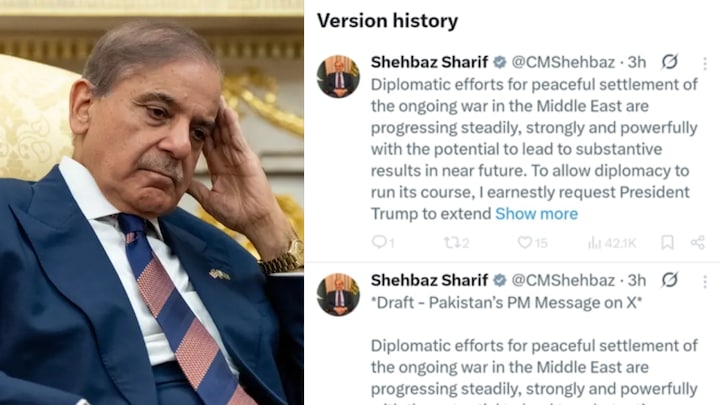
The phrasing “Pakistan’s PM” in the draft further fueled suspicion. Critics argue it sounds less like a leader speaking in his own voice and more like a template prepared for him.
Introduction
At a moment when geopolitical friction is heightened and diplomatic language must be precise, a recent social‑media post attributed to Shehbaz Sharif ignited a vigorous discussion among observers. The conversation revolves not only around the substance of the message but also around the circumstances under which the message was released.
In the post, a conspicuous label reading “Draft” appeared before the text that was intended for public consumption. The presence of this label, coupled with the self‑referential description “Pakistan’s PM,” prompted a wave of commentary that questioned the authenticity of the communication and the possible involvement of external actors.
What Does the “Draft” Label Imply?
The word “Draft” typically signals a work‑in‑progress, a version that is meant for internal review before final approval. When such a marker surfaces in a public platform, it creates an impression that the communication was not finalized by the author himself. The question therefore arises: was the inclusion of the word “Draft” an accidental oversight by the communication team, or does it reveal a deeper procedural flaw?
If the omission was accidental, the incident reflects a lapse in editorial control. If, however, the word was left intentionally, it may suggest that the text was prepared by individuals other than Shehbaz Sharif, perhaps employing a pre‑written template that was never fully customized. The distinction matters because it influences how foreign audiences interpret the agency behind the statement.
Moreover, the phrase “Pakistan’s PM” that appears in the draft adds another layer of ambiguity. Instead of a first‑person articulation (“I believe…”), the message adopts a third‑person reference, reminiscent of a placeholder used in a form or briefing note. This stylistic choice fuels speculation that the content was generated by a team rather than by Shehbaz Sharif in his personal capacity.
Perception of External Influence
The incident feeds into a long‑standing narrative within strategic circles that Pakistan’s foreign‑policy pronouncements are sometimes shaped by actors beyond its own borders. While no concrete evidence has emerged to prove that the specific wording was authored outside Pakistan, the visual cue of an unfinished draft contributes to a perception of foreign guidance.
In diplomatic practice, perception often proves as influential as factual reality. A post that appears to be a pre‑packaged script can be interpreted by observers as a sign that the leadership is not fully in command of its messaging, thereby weakening the credibility of the statement.
Critics point to a pattern of similar occurrences, arguing that the balance of power among Pakistan’s civilian leadership, its military establishment, and international stakeholders has historically tilted the country’s public discourse. The current episode, by showcasing a visibly unpolished draft, appears to reinforce that pattern.
When a sovereign’s official communication looks like a template, the audience—whether it be other governments, regional actors, or global media—may question the authenticity of the position being expressed. This skepticism can translate into diplomatic costs, especially when the issue at hand involves sensitive regional dynamics.
Impact on Diplomatic Credibility
Diplomatic credibility rests on two pillars: authenticity and authority. Authenticity demands that a statement reflect the unmediated voice of the decision‑maker. Authority requires that the decision‑maker be seen as fully controlling the content that bears his name.
A seemingly minor oversight—such as leaving the term “Draft” visible—has the potential to erode both pillars. International observers may interpret the slip as an indicator that the message was vetted by external advisors, thereby diluting the perceived authority of Shehbaz Sharif.
In practical terms, the erosion of credibility can manifest as increased scrutiny, demands for clarification, and a heightened tendency among other governments to seek confirmation before accepting Pakistan’s stance on any matter. The ripple effect can be especially pronounced in negotiations that involve high‑stakes security or economic aGreements.
Pakistan PM’s Identity Crisis
The stylistic choice to label the author as “Pakistan’s PM” within the draft is reminiscent of an internal memorandum rather than a personal address. In everyday note‑taking, a person would typically write a simple reminder, such as “Buy milk,” without appending a title or a designation. The decision to embed the title suggests either an inflated sense of self‑importance or a reliance on a pre‑written format that was never fully edited.
This observation fuels a broader critique that Pakistan’s leadership may be dependent on bureaucratic scaffolding that shapes the public voice. When the official voice sounds more like a form letter than a personal pronouncement, it raises questions about the deGree of personal engagement that Shehbaz Sharif has with the messaging process.
Some analysts interpret this as an “intern‑forgot‑to‑delete‑the‑template” moment, where a junior staff member failed to remove placeholder language before publishing. Whether the oversight is the result of inexperience, haste, or a systemic reliance on scripted communication, the outcome remains the same: the public perceives a disconnect between the individual occupying the office and the words that appear under his name.
International Context and Timing
The timing of the draft tweet coincided with heightened rhetoric from the United States regarding Iran. At the same moment, the language of the post presented Pakistan as a neutral facilitator offering a ten‑point plan aimed at defusing regional tensions. The juxtaposition of a polished proposal with a seemingly accidental “Draft” label struck many observers as a striking irony.
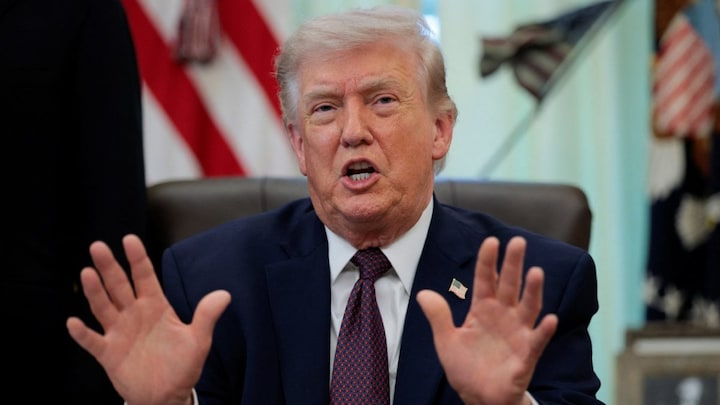
Online commentators quickly drew a parallel, suggesting that the United States—through its leading figure—might be subtly steering Pakistan’s diplomatic output. The metaphor of a remote control plugged directly into a foreign capital’s communication hub became a common meme, emphasizing the perception that the message may have been crafted under external direction.
Such narratives, while speculative, highlight the fragile nature of trust in international diplomacy. When a state’s official channel appears to echo the phrasing of another power’s leader, the perception of autonomy erodes, regardless of the factual basis for the claim.
Potential Consequences for Regional Stability
Pakistan occupies a strategically pivotal position in South Asia, often acting as a bridge—or a buffer—between competing regional interests. A perceived loss of control over its own messaging could undermine its ability to serve as an impartial interlocutor.
Stakeholders who rely on Pakistan’s mediation capabilities may question the nation’s independence, thereby reducing the willingness of conflicting parties to engage. In a landscape where trust is already scarce, even the appearance of external scripting can diminish the effectiveness of diplomatic overtures.
Moreover, the incident may encourage rival powers to cast doubt on Pakistan’s neutrality, further complicating efforts to achieve consensus on contentious issues such as the Iran situation. The cumulative effect could be a slowdown in diplomatic progress, heightening the risk of escalation.
Conclusion
The discovery of a “Draft” label and the use of the designation “Pakistan’s PM” in a high‑visibility post have opened a window onto deeper anxieties about the origin and authenticity of Pakistan’s diplomatic communication. Whether the slip was a simple editorial error or a symptom of a more systemic reliance on pre‑written scripts, the episode has already influenced how external audiences interpret Pakistan’s stance.
For Shehbaz Sharif, the incident underscores the importance of meticulous editorial oversight, especially in an era where every word is amplified across digital platforms. For Pakistan as a whole, the lesson is equally clear: the perception of autonomous decision‑making remains a critical asset in the conduct of foreign policy, and safeguarding that perception requires both procedural rigor and transparent messaging.
As regional dynamics continue to evolve, the ability of Pakistan’s leadership to convey unambiguous, self‑authored statements will be essential for maintaining credibility, fostering trust, and ultimately contributing to a more stable diplomatic environment.