US‑Israel‑Iran Conflict: President Donald Trump Announces Two‑Week Suspension of Strikes on Iran After Ceasefire Conditions
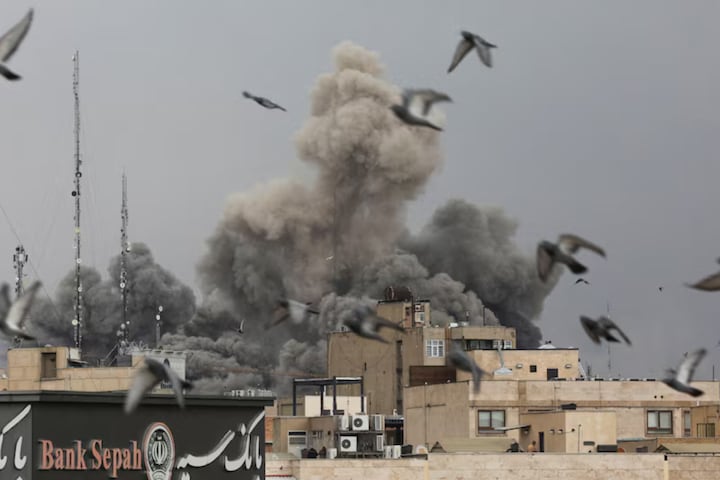
Latest Updates on the Ceasefire AGreement
US‑Israel‑Iran Conflict Latest News, Ceasefire Updates: President Donald Trump announced a suspension of aerial and naval attacks on Iran for a period of two weeks. The suspension is directly tied to a condition that the Islamic Republic of Iran must fully reopen the vital waterway known as the Strait of Hormuz without delay. The announcement follows a prior warning in which President Donald Trump threatened that a failure to secure an aGreement could result in the loss of an entire civilization.
President Donald Trump articulated the terms of the suspension on his official social media platform, stating, “Subject to the Islamic Republic of Iran aGreeing to the COMPLETE, IMMEDIATE, and SAFE OPENING of the Strait of Hormuz, I aGree to suspend the bombing and attack of Iran for a period of two weeks.” The language underscores a direct link between the opening of the strait and the temporary cessation of hostilities.
Iran’s Commitment to the Ceasefire
Iran AGrees To Ceasefire, Warns Against Violation
Iran responded to the proposal by confirming its willingness to observe the ceasefire. In its official statement, Iran pledged to guarantee the safe passage of all maritime traffic through the Strait of Hormuz for the aGreed two‑week interval. The statement emphasized that the ceasefire does not constitute an end to the broader conflict, indicating that hostilities could resume once the stipulated conditions are no longer in effect.
The phrasing of Iran’s declaration highlights a strategic intent to maintain leverage while providing a narrow window of maritime security. By guaranteeing safe navigation, Iran signals a readiness to cooperate on a limited basis without relinquishing broader strategic objectives.
Supreme National Security Council’s Warning
Iran’s Supreme National Security Council issued a stark warning aimed at any party contemplating a breach of the ceasefire terms. The council declared that any violation would trigger decisive and forceful retaliation. The exact wording of the warning reads, “Our hands remain upon the trigger, and should the slightest error be committed by the enemy, it shall be met with full force.” This statement reinforces the seriousness with which Iran views the ceasefire aGreement and its readiness to respond robustly to any infractions.
By emphasizing that the “hands remain upon the trigger,” the Supreme National Security Council signals that the option for immediate military response remains active throughout the ceasefire period. The council’s language is designed to deter potential provocations and to maintain a posture of strength while the diplomatic process unfolds.
Strategic Importance of the Strait of Hormuz
The Strait of Hormuz serves as a chokepoint through which a significant proportion of the world’s petroleum supplies transit daily. Control over the safe and unimpeded flow of vessels through this narrow waterway carries profound economic and geopolitical implications. The condition set by President Donald Trump—that the Islamic Republic of Iran must achieve an immediate and complete opening of the strait—underscores the strategic calculus underpinning the ceasefire aGreement.
Secure navigation through the Strait of Hormuz not only stabilizes global energy markets but also reduces the risk of accidental confrontations that could arise from clogged shipping lanes. By linking the suspension of attacks to the swift reopening of the strait, President Donald Trump aims to encourage a rapid de‑escalation that benefits both regional stakeholders and the international community dependent on steady oil flows.
Implications of the Two‑Week Suspension
The two‑week timeframe establishes a short‑term window for diplomatic engagement, humanitarian relief, and strategic reassessment. Within this period, both President Donald Trump and Iran have the opportunity to evaluate compliance, monitor maritime traffic, and gauge the intentions of allied and adversarial actors in the region.
Should the Islamic Republic of Iran fulfill the requirement of a complete and safe opening, the ceasefire will hold for the aGreed duration, providing a temporary lull in combat operations. Conversely, any perceived or actual violation by either side could trigger the immediate activation of the punitive language outlined by Iran’s Supreme National Security Council, potentially reigniting hostilities with heightened intensity.
Communications From President Donald Trump
President Donald Trump’s public address on the matter employed unequivocal language to delineate the expectations placed upon the Islamic Republic of Iran. By specifying “COMPLETE, IMMEDIATE, and SAFE” as the criteria for opening the Strait of Hormuz, President Donald Trump left little room for incremental or partial measures. The explicit demand for a full reopening reflects a strategic insistence on maximal compliance before any reduction in military pressure.
The rhetoric, including the earlier warning that a failure to reach a deal could result in catastrophic consequences for an entire civilization, demonstrates the high stakes perceived by President Donald Trump. Such statements serve to amplify pressure on the Islamic Republic of Iran while simultaneously signaling resolve to domestic and international audiences.
Iran’s Public Position and Future Outlook
In its public pronouncement, Iran balanced a willingness to cooperate on the narrow issue of maritime safety with a clear reminder that the broader conflict remains unresolved. The phrase “It is emphasised that this does not signify the termination of the war” conveys an intention to preserve strategic objectives while temporarily pausing active combat measures.
Looking ahead, the next phases of the confrontation will likely hinge upon the observed behavior of both parties during the two‑week ceasefire. International observers will monitor compliance, the safety of shipping, and any covert maneuvers that may influence the balance of power in the region.
Continuous Coverage
Follow live updates here
Follow live updates here
Follow live updates here